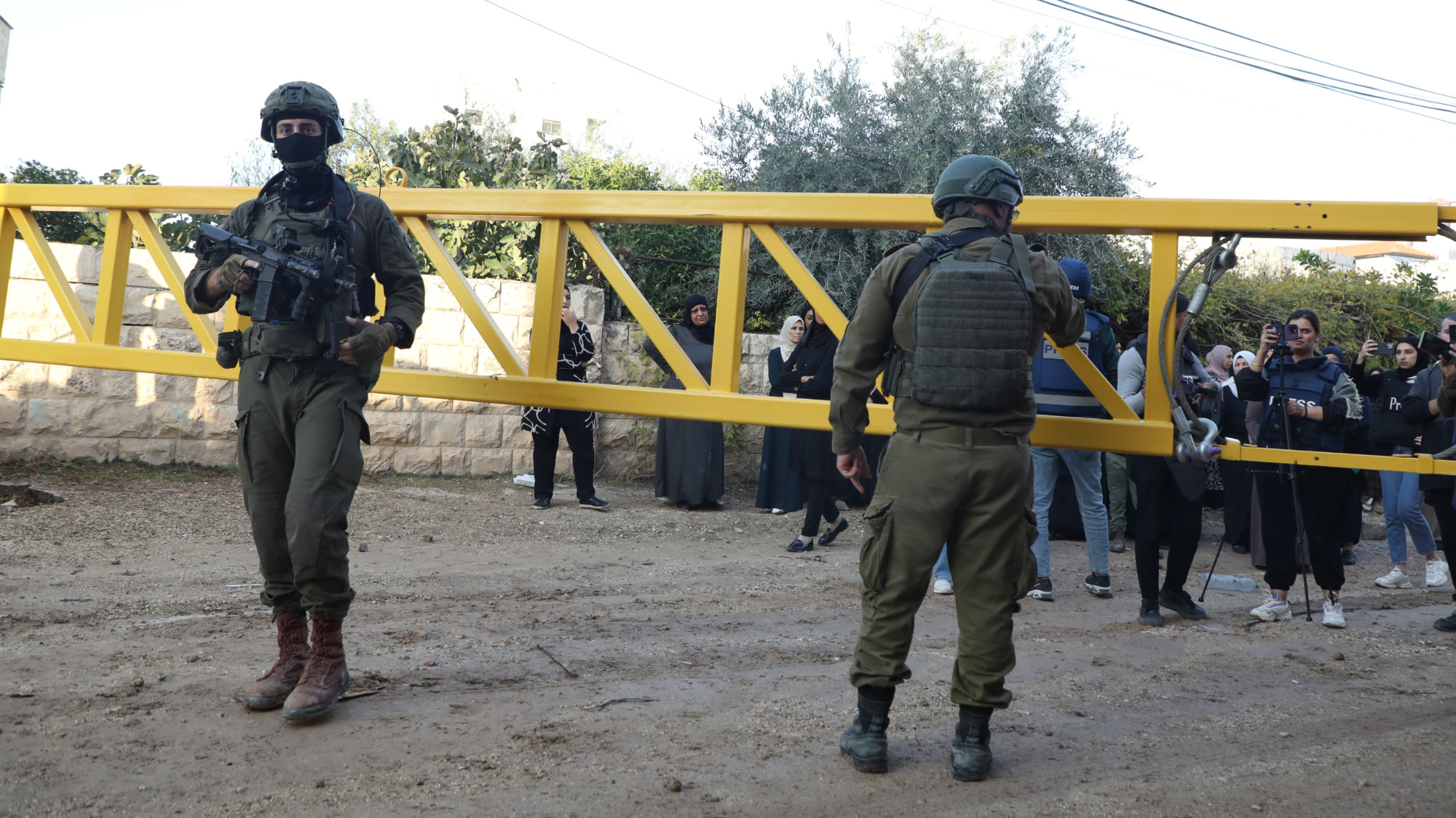
Israeli military authorities are advancing plans to construct an additional separation barrier deep within the occupied West Bank’s northern Jordan Valley region. This 22-kilometer security structure will position itself approximately 12 kilometers west of the Jordanian border, creating significant concerns among experts about territorial redesign and de facto annexation.
The proposed barrier mirrors the existing separation wall’s impact by severing connections between Palestinian communities and disconnecting agricultural families from their farmlands. Particularly affected will be the herding community of Khirbet Yarza, where approximately 70 residents relying on thousands of sheep will become encircled within an isolated enclave.
Jamal Juma, coordinator of the Anti-Apartheid Wall Campaign, characterized the initiative as “extremely dangerous,” stating it represents accelerated annexation efforts targeting the Jordan Valley region. According to Juma, this construction forms part of a broader campaign affecting herding communities throughout the West Bank.
United Nations documentation indicates that violent settler attacks have displaced over 2,200 Palestinians since October 2023, predominantly from herding backgrounds. Juma further asserts that these geographic re-engineering efforts aim to confine Palestinian populations into controlled cantons while establishing Israeli dominance over the West Bank.
The Israeli military plans to establish a 50-meter-wide security corridor alongside the barrier, requiring demolition of all existing Palestinian infrastructure including homes, agricultural structures, storage facilities, and water pipelines. Anonymous security sources estimate approximately 60 structures will be affected.
Major General Avi Bluth, head of Israel’s Central Command, justifies the barrier as necessary for preventing weapons smuggling and protecting Israeli settlers. Military authorities argue that Palestinian structures in the area increase sabotage risks against security forces, making their removal an operational necessity.
Local residents fear catastrophic economic consequences as the barrier will prevent access to farmlands and livestock grazing areas. Tubas Governorate, representing 370 square kilometers of primarily agricultural land supporting significant livestock populations, faces particular hardship.
Anti-wall activist Rashid Khudairi reports that approximately 70% of Tubas farmlands will become inaccessible, severely impacting economic stability. Many northern Jordan Valley communities will become completely separated from Tubas and the broader West Bank.
The International Court of Justice previously deemed Israel’s existing 700-kilometer separation wall illegal under international law in a 2004 advisory opinion, ruling that the barrier should be dismantled due to its violations of international statutes.