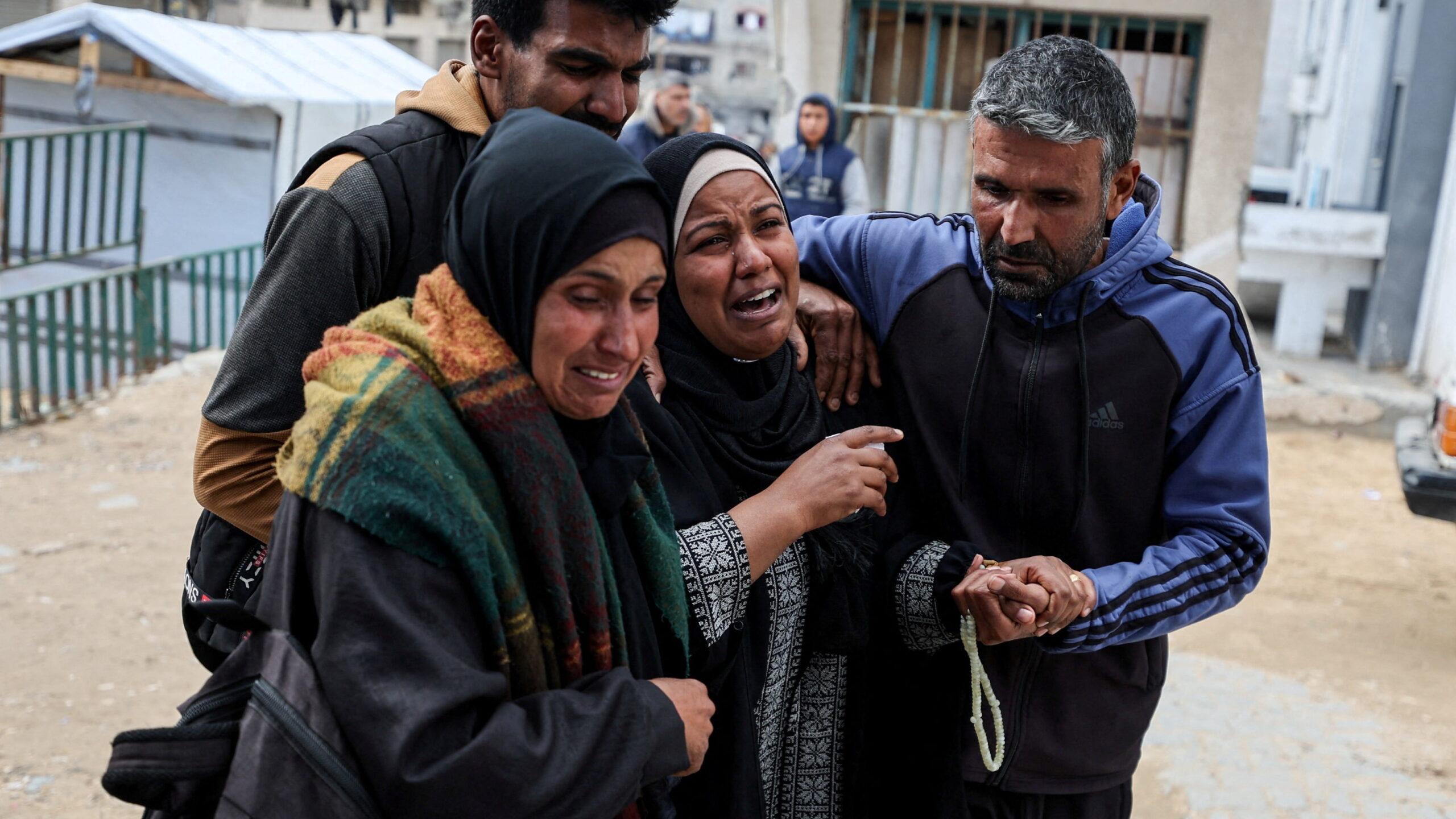
Israeli military operations in central and southern Gaza have resulted in the deaths of at least five individuals, including a police officer, marking a significant escalation during a period of purported ceasefire negotiations. The attacks targeted two police stations in the besieged enclave, further straining the fragile calm.
According to local medical sources, a drone strike near the Bureij refugee camp in central Gaza claimed two Palestinian lives and left multiple others wounded. Simultaneously, a separate assault in the al-Mawasi region of southern Gaza killed three people, with reports indicating several casualties were in critical condition.
Notably, these operations occurred beyond the established ‘Yellow Line’ boundary, outside Israel’s declared field of control. This continues a pattern of Israeli incursions beyond this demarcation since the October ceasefire agreement.
Hazem Qassem, spokesperson for Hamas, condemned the attacks as evidence of Israel’s ‘blatant disregard for the mediators’ efforts’ and stated that ongoing violence demonstrates the emptiness of ceasefire discussions. He characterized Israel’s actions as ‘a war of extermination and destruction against the Palestinian people.’
The context of these developments includes the controversial Board of Peace initiative unveiled by US President Donald Trump at the World Economic Forum. This body, comprising major Middle Eastern nations including Qatar, UAE, Saudi Arabia, and Turkey, plus additional members Pakistan, Armenia, Azerbaijan and Indonesia, has drawn international scrutiny.
The Board’s charter grants President Trump extensive authority as chair, including power to appoint and remove member states—a decision reversible only by a two-thirds majority. EU Foreign Affairs Representative Kaja Kallas noted concerning discrepancies between the UN Security Council resolution that initially mandated post-war Gaza governance and the Board’s actual framework. She highlighted that the Board’s statute omits reference to Gaza, lacks temporal limitations, and excludes provisions for Palestinian representation.
Originally conceived to address the Gaza conflict, the Board has expanded its mandate to encompass global conflicts, leading some analysts to suggest it could emerge as a potential rival to the United Nations. Meanwhile, the humanitarian situation in Gaza remains dire, with nearly 618 Palestinians killed since October in repeated violations of the ceasefire, and over 72,000 total fatalities since the conflict’s escalation in 2023.