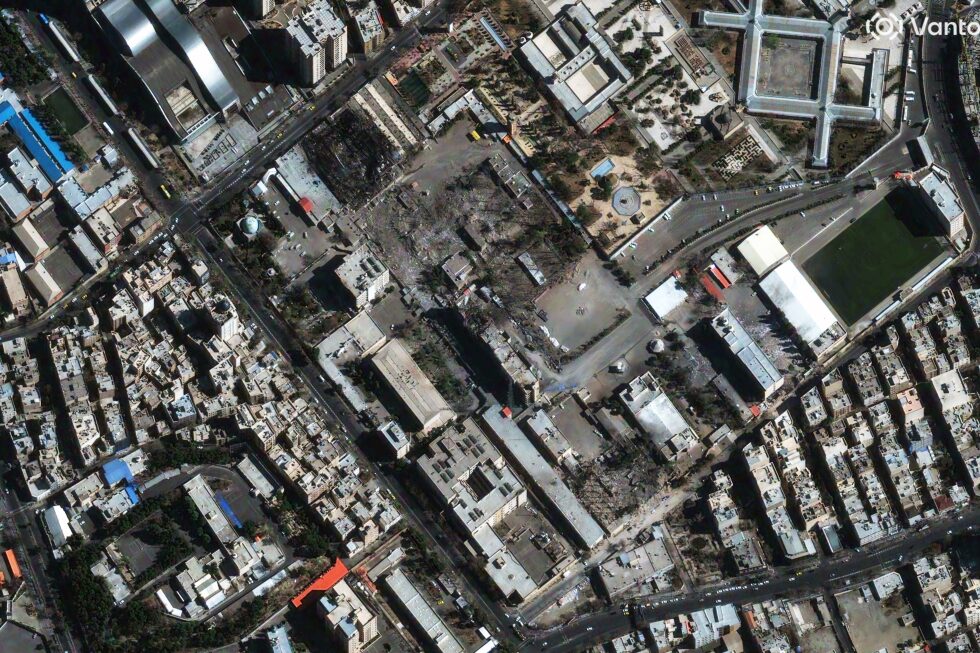
DUBAI, United Arab Emirates — The Middle East conflict entered a dangerous new phase Wednesday as coordinated U.S.-Israeli airstrikes targeted Tehran and multiple Iranian cities, marking the fifth day of intense warfare. The attacks represent a significant escalation in the ongoing confrontation between the Western-allied forces and the Islamic Republic.
Residents of Iran’s capital awoke to thunderous explosions as Israeli F-35 stealth fighter jets engaged Iranian Air Force aircraft and struck strategic locations throughout the city. Iranian state television broadcast images of destroyed buildings in central Tehran, while the religious center of Qom and several other cities also came under attack. The bombardment was so intense that authorities postponed mourning ceremonies for Supreme Leader Ayatollah Ali Khamenei, who was killed earlier in the conflict.
The Israeli military confirmed shooting down a piloted Iranian YAK-130 fighter jet over Tehran and activating air defense systems to intercept missile barrages targeting Jerusalem and other locations. Meanwhile, regional tensions expanded as an Iranian naval frigate, the IRIS Dena, was reported in distress off the coast of Sri Lanka, prompting rescue operations for 32 crew members.
The economic consequences of the conflict continued to mount with Brent crude prices surging to $84 per barrel—a 15% increase since hostilities began—as Iran maintains its strategic control over the Strait of Hormuz. Global financial markets have experienced significant volatility amid concerns that rising oil prices could destabilize the world economy.
Regional infrastructure has become increasingly targeted, with Saudi Arabia reporting additional attacks on its Ras Tanura oil refinery, though without significant damage. U.S. diplomatic facilities in Saudi Arabia and the United Arab Emirates have also faced drone attacks, leading the State Department to authorize evacuation of non-emergency personnel.
According to U.S. Navy Adm. Brad Cooper, head of U.S. Central Command, allied forces have struck nearly 2,000 targets with over 2,000 munitions, severely degrading Iran’s air defenses and destroying hundreds of ballistic missiles, launchers, and drones. The conflict has expanded beyond Iran’s borders, with attacks reported in Lebanon, Qatar, Bahrain, and Iraq involving Iranian-backed militant groups.
The human toll continues to rise with at least 787 confirmed fatalities in Iran and 11 in Israel, according to official reports. Casualties have also been reported in Kuwait, the United Arab Emirates, and Bahrain, including six U.S. Army Reserve soldiers killed in Kuwait.
Political uncertainty grips Iran as leadership scrambles to select a successor to Khamenei, while Israeli Defense Minister Israel Katz declared that whoever assumes the supreme leader position would become “a target for elimination.” The conflict shows no signs of abatement as both sides continue their military operations with increasing intensity.