In a sharp escalation of the month-long Middle East conflict that began with coordinated US-Israeli attacks on Iran on February 28, Israel carried out a wide-ranging wave of airstrikes targeting Iran’s capital Tehran early Wednesday, just hours before US President Donald Trump was set to deliver a highly anticipated national address on the future of the war. The conflict, which has already spread across the region, has sent global energy markets into chaotic volatility and placed the entire global economy at serious risk of disruption.
Iranian state media first confirmed the assault, reporting loud explosions across northern, eastern, and central districts of the capital. Shortly after the strikes, the Israeli military officially confirmed the operation and later announced it was intercepting a new missile launch launched from Iran — the first retaliatory missile attack from Iran in roughly 20 hours. Beyond the capital, the violence spilled across multiple regional fronts on Wednesday, underscoring the conflict’s rapid expansion.
Yemen’s Iran-aligned Houthi movement, which joined the conflict over the weekend, fired a missile toward Israel. Israeli air defense systems intercepted the projectile, and no casualties were reported. However, the Houthi’s ongoing threats to disrupt Red Sea shipping have added new strain to global trade, already disrupted after Iran effectively closed the Strait of Hormuz, one of the world’s most critical energy chokepoints. In Lebanon, the Israeli military confirmed it carried out strikes that killed a senior Hezbollah commander, with Lebanon’s health ministry reporting seven civilian fatalities in strikes on southern Beirut and surrounding areas. Since Israel launched its campaign against the Iran-backed militant group, more than 1,200 people in Lebanon have been killed and over a million have been displaced from their homes. To the east across the Gulf, Iran launched retaliatory drone strikes against US-aligned regional nations that Tehran accuses of serving as launching pads for American attacks. Kuwait’s civil aviation authority reported a major fire at fuel storage tanks at Kuwait International Airport following a drone attack, while Bahrain recorded a fire at a commercial facility tied to Iranian aggression, and Saudi air defenses intercepted and destroyed multiple incoming drones. A British maritime security firm also reported that a commercial tanker was hit by a projectile off the coast of Doha, Qatar’s capital, causing structural damage but no reported injuries or deaths.
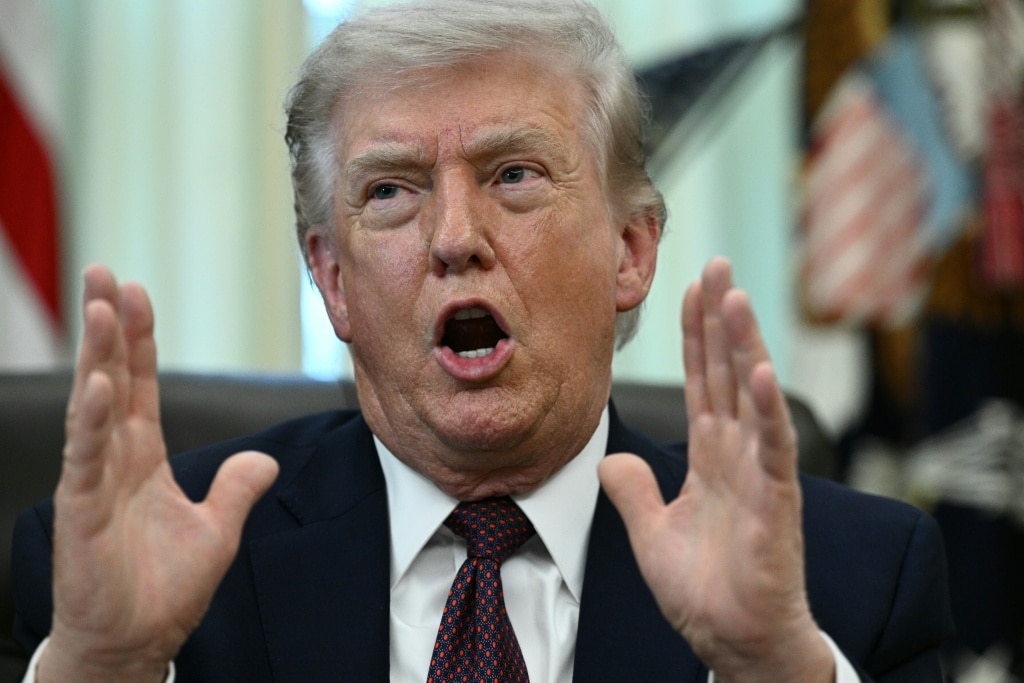
On the diplomatic front, the status of any negotiations to end the conflict remains murky. Trump, whose public comments on the war have shifted repeatedly between combative rhetoric and hints of diplomacy, has publicly predicted the conflict will end within two to three weeks. “But we’re finishing the job,” he insisted, ahead of his scheduled 9:00 pm Wednesday address (0100 GMT Thursday), which the White House described as an “important update on Iran.” Iranian President Masoud Pezeshkian responded by confirming his country has the political will to end the war, but only if hostile powers provide guarantees that the conflict will not reignite in the future. In a stark warning to the United States, Iran’s Islamic Revolutionary Guard Corps threatened major damage to 18 leading American technology firms — including industry giants Intel, Tesla, and Palantir — accusing the companies of complicity in previous targeted assassinations of Iranian leaders. The IRGC warned that any further killings of senior Iranian figures would lead to “destruction” for the firms.
Israeli Prime Minister Benjamin Netanyahu has remained unyielding, saying the Israeli campaign will continue despite his claims that the conflict has already “changed the face of the Middle East” and eliminated Iran’s ballistic missile and nuclear program threats. “We had to act, and we acted,” he said in a televised address on the eve of the Passover holiday. “We will continue to crush the terror regime.” The Israeli military reported Wednesday that it has struck approximately 7,000 targets across the region since the war began, including 4,000 targets inside Iran, and claims to have eliminated more than 2,000 Iranian soldiers and senior commanders.
US Defense Secretary Pete Hegseth, who recently visited American troops deployed in the Middle East, told reporters Tuesday that the coming days will be the most decisive of the conflict to date. “Iran knows that, and there’s almost nothing they can militarily do about it,” he said. US Central Command also released video Tuesday showing American forces using precision munitions to strike underground military targets deep inside Iranian territory. Trump ramped up pressure on Iran Monday, threatening to “obliterate” Iran’s critical oil infrastructure including its main Kharg Island export terminal, and even civilian water desalination plants, if Tehran refuses to accept a US-brokered deal.
The Iranian government has repeatedly denied it is engaged in formal negotiations with the United States, though Iranian Foreign Minister Abbas Araghchi confirmed that he still receives direct communications from US envoy Steve Witkoff. “This does not mean that we are in negotiations,” Araghchi told Al Jazeera.
Global financial markets have reacted sharply to conflicting signals around the conflict. Crude oil prices have jumped amid persistent concerns over the closure of the Strait of Hormuz, through which roughly a fifth of global oil supplies pass daily. However, Asian stock markets rallied Wednesday following Trump’s comments hinting the war could end soon: Japan’s Nikkei 225 index opened more than 3 percent higher, while South Korea’s Kospi gained nearly 5 percent. Trump has drawn criticism for his comments saying that France, China, and other nations dependent on passage through the Strait of Hormuz will have to “fend for themselves” if they refuse to assist the US in securing the waterway during the conflict.
Domestically, surging fuel prices driven by the regional standoff have emerged as a political liability for Trump. During a stop at a suburban Washington gas station Wednesday, 83-year-old Jeanne Williams expressed widespread public frustration with the rising costs and the conflict itself. “That is horrible,” she said. “I’m just bewildered, confused, unhappy. Because we didn’t ask for this war.” Trump has brushed off concerns about rising prices hurting American consumers, telling reporters that prices will fall rapidly once the US withdraws from the conflict. “All I have to do is leave Iran,” he said. “And we’ll be doing that very soon, and they’ll come tumbling down.”