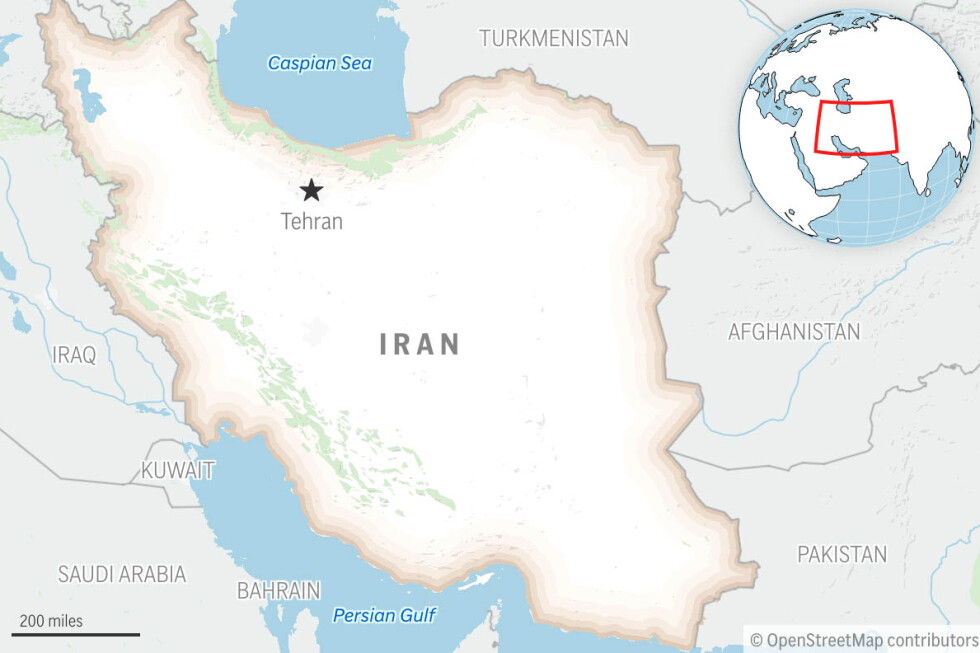
In a dramatic escalation that has sent shockwaves across the Middle East, Israel launched early-morning airstrikes on Monday targeting military sites across central and western Iran, a direct retaliatory strike against Tehran’s recent missile attack that has pushed the region closer to a full-scale regional war.
Multiple explosions were reported across several major Iranian cities, including Isfahan, Karaj, Tabriz and the capital Tehran, according to Iranian state media, which did not immediately release further details on casualties or damage. A local witness in Tehran confirmed hearing at least one large explosion west of the capital. In the immediate aftermath of the strikes, Iranian authorities closed the airspace surrounding Imam Khomeini International Airport, the country’s busiest and most strategically important international air hub, while still withholding information on what infrastructure or targets were hit. Iran’s Revolutionary Guard confirmed that Israel used air-launched ballistic missiles to carry out the morning assault, but offered no additional context on the attack’s outcomes.
In an official statement released as the strikes commenced, the Israeli military confirmed its action: “A short while ago, the Israeli Air Force struck military targets belonging to the Iranian terror regime in western and central Iran.” The military declined to elaborate further on the scope of the operation.
Shortly after Israel’s airstrikes, alerts were triggered across multiple locations. In Israel, air raid sirens sounded after the military confirmed a missile had been launched from Yemen toward Israeli territory, though no casualties or damage have been reported by Israeli rescue services. The missile launch comes from territory controlled by the Iran-aligned Houthi rebel movement, which has launched intermittent strikes against Israel since the outbreak of the Israel-Hamas war but has not yet been drawn into direct, large-scale conflict between Iran and Israel. The Houthi movement has not yet claimed responsibility for the launch, a delay that is consistent with the group’s past pattern of waiting hours or days to acknowledge attacks.
Across the border in Saudi Arabia, missile warning sirens activated in Al Kharj governorate, the location of Prince Sultan Air Base which hosts U.S. military personnel. Saudi state media later confirmed that the missile threat had passed, offering no further details on the incident.
The Israeli strike directly contradicts public and private appeals for restraint from U.S. leadership. A senior anonymous U.S. official revealed Sunday that former President Donald Trump, in a private call with Israeli Prime Minister Benjamin Netanyahu, urged Netanyahu to delay any retaliation against Iran following Tehran’s missile strike. The official claimed Trump believed he had successfully convinced Netanyahu to hold off on immediate action, saying “Trump got Bibi to hold off for the time being.” No immediate comment was issued by Netanyahu’s office in response to the claim, and the White House has not responded to requests for comment on whether Monday’s strike was coordinated with U.S. officials.
In multiple public comments before the airstrike, Trump made clear his opposition to immediate escalation. Speaking to Fox News, Trump stated he wanted Iran to cease missile fire and return to diplomatic negotiations, and added that Israel’s Sunday airstrikes on Beirut’s southern suburbs were not coordinated with the U.S., saying “I’m not happy about it.” In a pre-strike interview with the Financial Times, Trump went further, claiming he sets the terms for Israel’s military campaign in the region. “He won’t have any choice,” Trump said in the phone interview. “I call the shots. I call all the shots. He (Netanyahu) doesn’t call the shots.”
The current escalation comes after weeks of rising tensions that have derailed fragile ceasefire negotiations. Diplomatic talks between Iran and the U.S. focused on de-escalating the broader regional war have been stalled for days by ongoing fighting between Israeli forces and the Iran-backed Lebanese militia Hezbollah. Israeli forces have advanced into southern Lebanon, seizing territory the country has not controlled in 25 years, amplifying fears that the conflict would widen beyond Gaza and Lebanon. The cycle of violence that led to Monday’s strike began Sunday, when Israel carried out airstrikes in southern Beirut; Iran retaliated with its own missile strike against Israel, setting the stage for the current escalation.