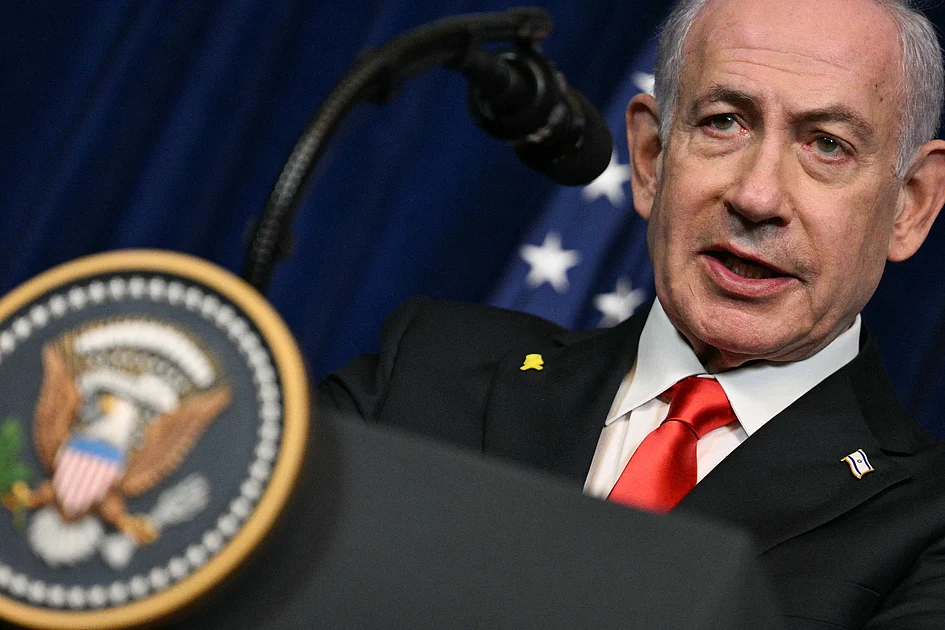
Israeli Prime Minister Benjamin Netanyahu has articulated a stringent set of demands for any prospective nuclear agreement between the United States and Iran, emphasizing that the complete removal of all enriched uranium from Iranian territory is non-negotiable. Speaking at a conference for major American Jewish organizations in Jerusalem on Sunday, Netanyahu outlined a tripartite framework essential for Israeli endorsement of any deal.
The Prime Minister’s first condition mandates the expulsion of Iran’s entire stockpile of enriched uranium. His second requirement calls for the comprehensive dismantlement of Tehran’s uranium enrichment infrastructure, including all related equipment and facilities. Thirdly, Netanyahu insisted that any final accord must conclusively address Iran’s ballistic missile program, a persistent point of contention in previous negotiations.
These declarations coincide with Iranian Foreign Minister Abbas Araghchi’s departure for Switzerland, where a second round of renewed nuclear talks with U.S. officials is scheduled this week. The negotiations, which resumed on February 6th in Muscat following a prolonged hiatus, occur against a backdrop of heightened regional tensions. Previous diplomatic efforts collapsed in June 2025 when Israel initiated an unprecedented bombing campaign against Iranian nuclear sites, triggering a 12-day conflict.
Adding complexity to the current talks is the considerable uncertainty surrounding Iran’s nuclear inventory. International Atomic Energy Agency inspectors last documented Tehran’s stockpile of over 400 kilograms of 60-percent enriched uranium in June, prior to the Israeli and American military strikes on Iranian nuclear facilities.
Netanyahu revealed that he presented these identical conditions to U.S. President Donald Trump during their discussions earlier this month. Beyond the three core demands, the Israeli leader emphasized the necessity of ‘real, substantive inspections’ without lead-time notifications to ensure verifiable compliance with any agreement.
The renewed diplomatic engagement unfolds amid continued military posturing, with Washington having previously threatened Tehran with military action and deployed an aircraft carrier group to the region following Iran’s lethal suppression of anti-government protests last month.