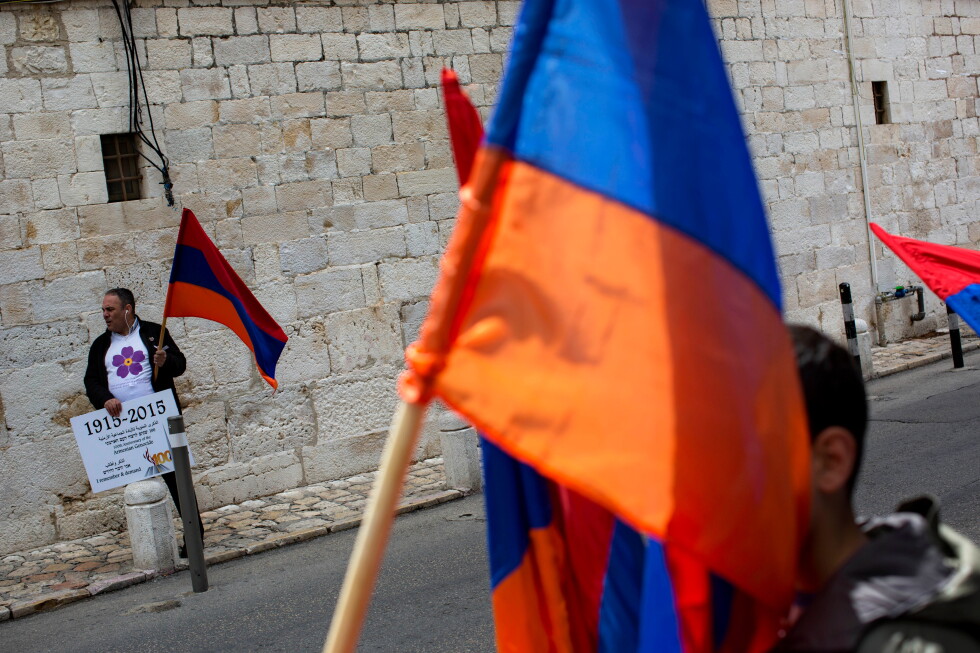
In a landmark decision that underscores the growing rift between Jerusalem and Ankara, Israel’s Cabinet voted unanimously on Sunday to advance a formal recognition of the 1915 mass killing of Armenians by the Ottoman Empire during World War I as a genocide. The groundbreaking proposal, which still requires a final vote of approval in Israel’s parliament the Knesset, marks a major shift from decades of Israeli policy that avoided formal classification to protect diplomatic relations with Turkey.
Scholars widely accept that roughly 1.5 million Armenians were systematically killed between 1915 and 1917, an event most historians label as the first systematic genocide of the 20th century. For more than a century, successive Turkish governments have rejected the genocide label, arguing the death toll is exaggerated and that the casualties stemmed from widespread civil conflict and regional unrest, not a coordinated campaign of extermination. Turkey has also lobbied aggressively against formal recognition by governments across the globe, while Armenian communities and advocacy groups have spent decades pushing for international acknowledgment of the atrocities.
For generations, Israeli leaders avoided taking an official stance out of diplomatic caution, but the once-closely strategic alliance between Israel and Turkey has eroded steadily over the past 20 years, with tensions accelerating sharply in recent years amid ongoing conflicts in Gaza, Lebanon and tensions with Iran. Israeli Foreign Minister Gideon Saar, who sponsored the cabinet resolution, delivered sharp criticism of Turkey’s longstanding denial campaign following Sunday’s vote.
“Despite the extensive and unambiguous historical documentation, the Armenian Genocide remains to this day the subject of an institutionalized campaign of denial and minimization, including a manipulative rewriting of history, mainly by the Turkish government,” Saar told the cabinet. He added that multiple senior Israeli leaders, including current Prime Minister Benjamin Netanyahu, have previously characterized the 1915 violence as genocide, but no formal government vote had ever enshrined that designation into official Israeli policy.
Calling formal recognition “a moral and historical duty,” Saar noted that 32 other countries, including the United States, Syria and Lebanon, have already formally classified the atrocities as a genocide. As of Sunday evening, it remained unclear when the cabinet-approved proposal would be brought to the Knesset for a final vote, and there was no immediate public response from Turkish authorities following the cabinet’s announcement.
Analysts trace the shift in Israel’s position to the steady deterioration of bilateral relations after Recep Tayyip Erdogan took power as Turkey’s president, with Erdogan’s increasingly Islamist foreign policy and open support for Palestinian armed groups pushing ties between the two countries to their lowest point in decades.
The vote comes as Israel itself faces widespread international accusations, including from a United Nations-appointed independent expert panel, that its ongoing military offensive in the Gaza Strip constitutes genocide. Israel, which was founded in the aftermath of the Nazi Holocaust that killed six million European Jews, has forcefully rejected these accusations, calling the claims baseless and antisemitic. Last week, the UN expert panel released a report accusing Israeli forces of deliberately targeting children in Gaza and repeated the genocide allegations, prompting Israeli officials to dismiss the document as a “libelous sham.”
Israel launched its current military campaign in Gaza in response to the October 7, 2023, attack carried out by Hamas that killed roughly 1,200 people, most of them civilians, and took roughly 250 hostages. Gaza’s Hamas-run Ministry of Health reports that more than 73,000 people have been killed in Israeli strikes to date, approximately half of whom are women and children. Israeli officials maintain they do not intentionally target civilian populations, and accuse Hamas of operating military infrastructure in densely populated civilian areas and using residents as human shields.