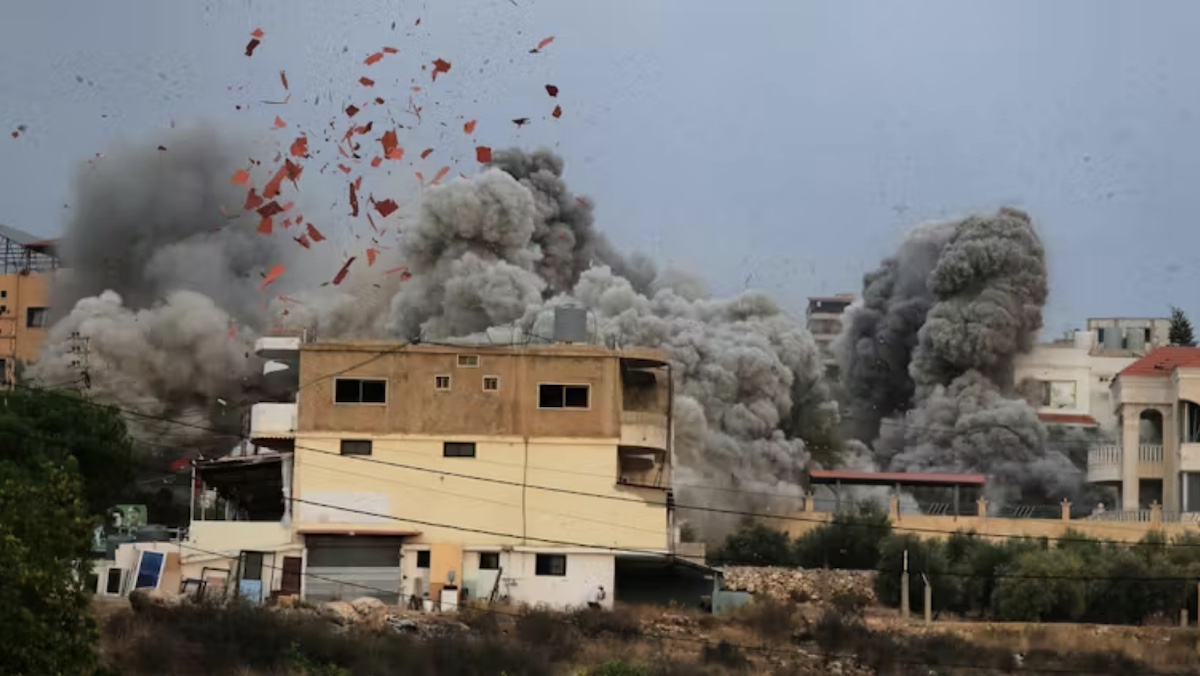
The November 2024 ceasefire agreement between Israel and Lebanon stands on increasingly precarious ground as violations mount and diplomatic efforts stall. According to UNIFIL’s latest report, Israeli forces have conducted over 10,000 air and ground incursions into Lebanese territory since the truce took effect, significantly undermining the agreement’s stability.
The situation deteriorated further with recent Israeli strikes across the northern border, resulting in the assassination of Hezbollah’s top military commander and deadly attacks on Palestinian refugee camps. Israel maintains these operations target Hezbollah’s rearmament efforts, with Israeli military sources indicating preparations to ‘finish the job’ against the militant group.
From a historical perspective specializing in Israeli-Lebanese relations, Israel’s emergence as regional military hegemon has failed to translate into Middle Eastern stability or constructive change. The deteriorating ceasefire demonstrates that military power alone cannot substitute for diplomatic engagement and long-term stabilizing agreements.
The ceasefire originally aimed to conclude the latest Israel-Hezbollah conflict that escalated following Hamas’ October 7, 2023 attack on Israel. The agreement stipulated Lebanon’s disarmament of nonstate military forces south of the Litani River, with the Lebanese army remaining the sole armed authority. In exchange, Israel committed to withdrawing from occupied southern territories within 60 days and participating in US-brokered border delineation negotiations.
One year later, none of these objectives have materialized. Israel continues occupying five border posts inside Lebanon while conducting daily raids, some of which have endangered UNIFIL peacekeeping forces. The February 2025 formation of a new Lebanese government—the first since 2008 without Hezbollah veto power—initially presented opportunity for state sovereignty reclamation and economic recovery following Lebanon’s 2019 financial collapse.
However, disarming Hezbollah remains profoundly challenging given the group’s military dominance and political entrenchment. The Lebanese army lacks sufficient capacity, political influence, or will to coercively disarm Hezbollah without risking civil conflict. Complicating matters, U.S. pressure on Lebanon to disarm Hezbollah has created diplomatic friction, including the canceled November 25 trip of Lebanon’s army chief to the United States.
Meanwhile, reports indicate Iran channeled approximately $1 billion to Hezbollah despite its weakened regional position, providing critical support while Lebanon struggles to secure foreign aid. These dynamics create continued friction between Israel and Hezbollah, with Israel adopting a zero-tolerance security doctrine post-October 7.
Domestic Israeli politics further complicate matters, as Prime Minister Benjamin Netanyahu faces accusations of prolonging conflicts to deflect from legal troubles and governmental deficiencies. Border disputes remain unresolved due to deep mistrust and active conflict, despite being a constant source of tension since 2000.
The current trajectory suggests a return to the vicious cycle characterizing Israel-Lebanon relations since the 1960s: nonstate actors respond to Israeli incursions, triggering further retaliation that weakens the Lebanese state. Breaking this cycle requires strengthened Lebanese state capacity as sole arms holder and foreign policy authority. Ultimately, sustainable resolution depends primarily on internal Lebanese political processes rather than Israeli military pressure, potentially facilitated by US diplomacy that applies balanced pressure to all parties.