For decades, mainstream discourse around Israel’s role in the Middle East has centered on a narrative of reaction: responding to imminent threats, countering aggression, and shaping policy around external events. But a new analysis of recent regional developments reveals a far more proactive posture, one that sees Israel actively reshaping the strategic conditions across the Middle East and adjacent regions to expand its own influence and redefine its regional standing.
This new approach operates along two interconnected core dynamics that work in tandem to advance Israeli interests: direct military and political intervention in neighboring states that erodes their governing capacity, and deliberate cultivation of regional partnerships that sustain low-grade but persistent tensions across key geopolitical blocs. Grasping how these two threads interact is critical to understanding why the region remains trapped in chronic instability today.
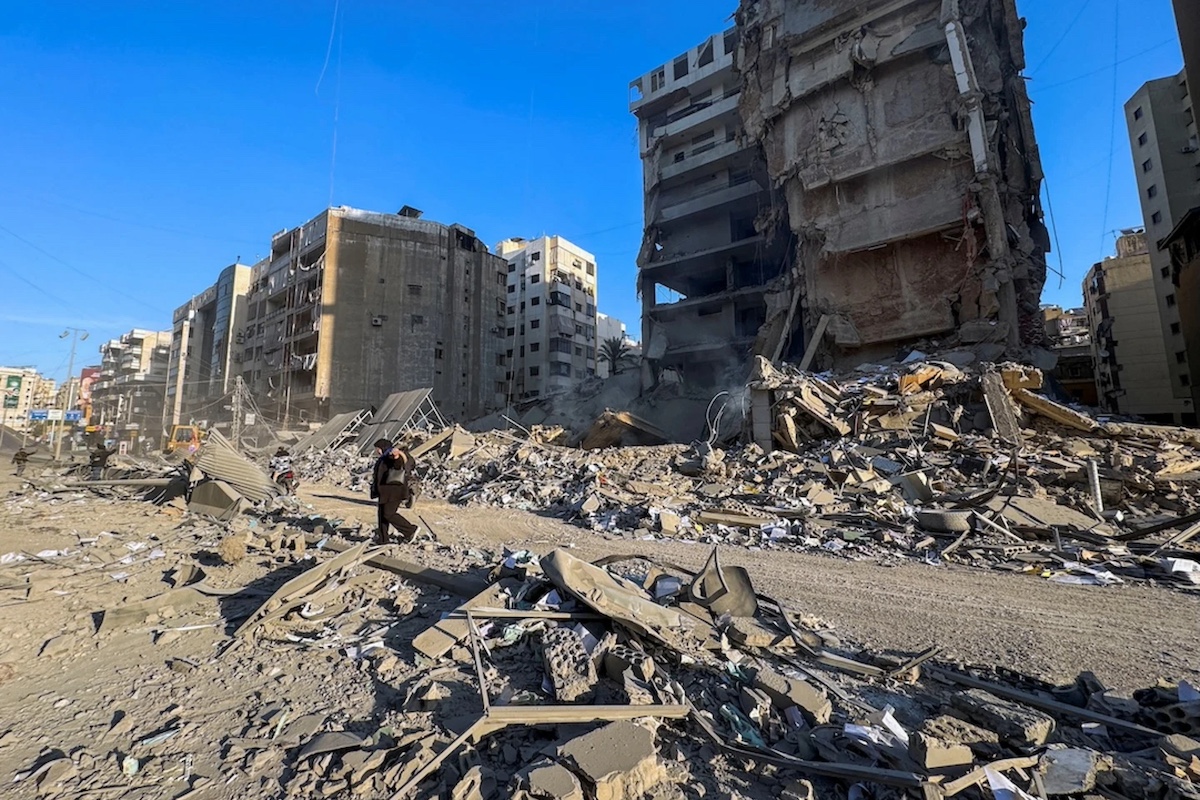
The first pillar of this strategy targets weakening the internal cohesion of actual and perceived adversary states. This pattern plays out clearly across multiple flashpoints: Gaza, Lebanon, Syria, and now Iran, where Israeli military operations regularly extend far beyond immediate tactical deterrence goals. Rather than simply neutralizing short-term threats, these actions systematically erode state infrastructure, weaken institutional governance capacity, and fracture territorial unity. The strategic end goal, analysts argue, is not just deterrence, but the creation of a permanent political environment where central state authority remains fragmented, too weak to consolidate power and mount a coordinated challenge to Israeli interests.
This logic is not triggered only by imminent threats; it reflects a deliberate long-term preference for a regional order where all potential adversaries remain internally divided and constrained. Crucially, this strategy has been enabled by a shifting global context, most notably the current bilateral relationship between Israel and the United States, which grants Israel unprecedented operational autonomy and significantly lowers the political costs of undertaking unilateral military action.
The second pillar of the strategy operates at the regional level, working to entrench inter-state divisions and sustain persistent tensions. This is most visible in the Eastern Mediterranean, where Israel’s deepening security partnerships with Greece and the Republic of Cyprus have evolved into a fully integrated security alliance, built on shared intelligence, joint military exercises, defense technology integration, and converging strategic priorities. Greece’s growing procurement of Israeli defense systems—covering air defense, surveillance, and drone warfare—has further interoperability between the three parties and embedded Israel more deeply into the Eastern Mediterranean’s security architecture.
This alignment is not a passive reflection of shared interests; it actively reshapes the regional strategic landscape. Israeli policymakers have increasingly framed Turkey as a long-term strategic challenger, identifying it as a major priority for countering in the aftermath of the Iran conflict. This framing has pushed Greece and Cyprus to adopt more assertive positions in their long-running disputes with Turkey over maritime boundaries, energy exploration rights, and airspace jurisdiction. While from the perspective of the alliance this is standard defense cooperation for aligned partners, from Ankara’s vantage point it amounts to coordinated encirclement by potentially hostile neighbors. Even so, open conflict is not the end goal: Israel’s core objective is not to go to war with Turkey, but to entrench a permanent state of low-grade tension across the region that it can manage to its own advantage.
This dual dynamic of internal fragmentation and regional division is not limited to the Middle East. A clear parallel can be seen in the Horn of Africa, where Israel’s 2025 recognition of Somaliland as an independent state injected a new disruptive actor into the strategically critical Bab el-Mandeb Strait, the vital waterway connecting the Arabian Peninsula to Africa and linking the Red Sea to the Suez Canal. This move directly counters Turkish influence in Somalia, where Ankara has built close political ties and taken a leading role in providing military and maritime security to the Somali government. Since Somaliland remains a breakaway region unrecognized by the vast majority of the international community, Israel’s decision raises the risk of new open conflict along the Somali coast and complicates the maritime security architecture that Turkey has worked to build in the area. Just as in the Eastern Mediterranean, the goal is not direct confrontation: it is inserting a new player into the regional balance, diversifying existing alignments, and blocking the consolidation of rival influence.
Looking at this broader pattern, analysts argue that this approach constitutes a radical evolution of Israel’s long-standing security doctrine, which has deep historical roots emphasizing proactive force, strategic autonomy, and coercive power over negotiated regional order. Under Prime Minister Benjamin Netanyahu, these long-held principles have been further expanded, radicalized, and implemented across every domain of regional policy.
This new doctrine has reshaped the regional order into one inherently defined by instability and persistent hostility. Under this framework, peace is not a lasting end goal, but a temporary, reversible condition. Power, including the unilateral use of military force, is not viewed as a tool to achieve a stable peace—it is treated as the only reliable guarantee of Israeli survival. By systematically weakening neighboring states and keeping the broader Middle East and Eastern Mediterranean divided, Israel has created a regional status quo where no country or opposing alliance can achieve full stabilization. Israel’s strategic advantage, in this framework, comes from managing and manipulating ongoing tensions, not working to resolve them.