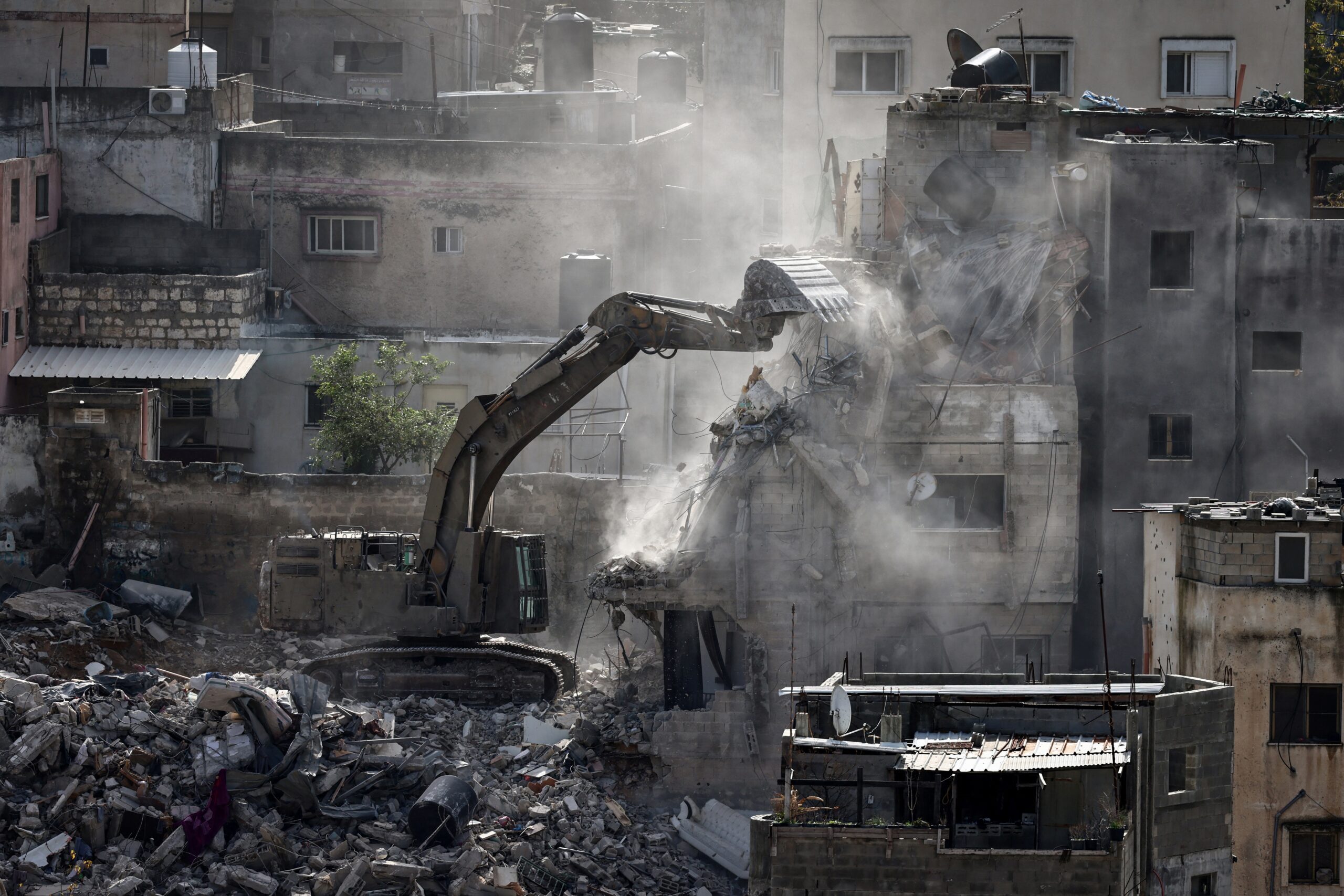
The Israeli military initiated extensive demolition operations in the occupied West Bank on Wednesday, leveling residential structures in the Nur Shams refugee camp near Tulkarm and rendering approximately 100 Palestinian families homeless. This action represents one of the largest single-day displacement events in recent months.
According to eyewitness accounts and local officials, at least 25 buildings containing roughly 100 apartments were destroyed, affecting an estimated 400 residents. The demolitions followed a December 24th Israeli Supreme Court decision that rejected appeals from Palestinian residents against military demolition orders. The court reportedly relied on classified intelligence material submitted by the Israeli Public Prosecution, which was not disclosed to the petitioners or their legal representatives.
Yasser al-Sayes, one of the displaced residents, described watching Israeli bulldozers demolish his family home remotely, nearly one year after Israeli forces initially expelled them during a major military operation in the northern West Bank. His building housed sixteen people, predominantly children, who were forced to evacuate under military pressure at the beginning of the incursion.
Residents received merely two weeks’ notice before the demolitions and were granted only brief access to retrieve minimal belongings. Many salvaged nothing more than a few clothing items, with possessions now scattered throughout the streets without storage options. The displaced families face severe economic hardship, with most adults unemployed and unable to afford stable housing.
The Tulkarm Governorate condemned the demolitions as a ‘dangerous escalation’ and symbolic attack on refugee camps that represent living monuments to the Nakba. Local authorities characterized the policy as collective punishment that violates international law and human rights conventions.
According to Ibrahim al-Nimr of the Nur Shams camp emergency committee, approximately 60% of the camp’s homes—about 400 residential units—have been either fully or partially destroyed since the Israeli military operation began eleven months ago. All 11,300 original residents have been displaced, with many forced to inhabit substandard rental accommodations while facing winter conditions without adequate shelter, employment, or financial resources.
International and local support systems have proven inadequate, with insufficient assistance from UNRWA, the Palestinian Authority, and the Department of Refugee Affairs. Despite repeated protests demanding cessation of demolitions and permission to return, Israeli officials have indicated the army will maintain its presence indefinitely, with troops having established barracks within abandoned Palestinian homes.