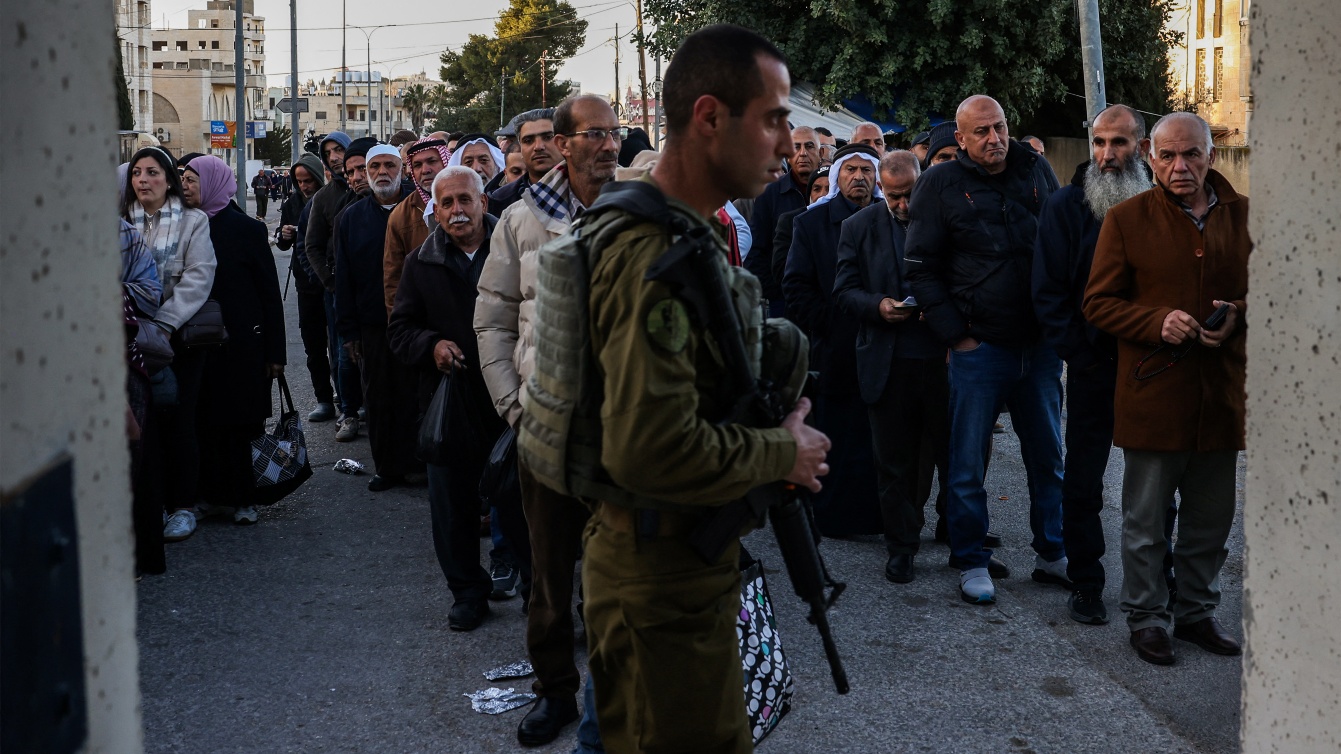
Israeli authorities implemented stringent access limitations at Al-Aqsa Mosque in occupied East Jerusalem during the inaugural Friday prayer of Ramadan, preventing thousands of Palestinian worshippers from entering despite their possession of previously authorized permits.
Contrary to the typical Ramadan gatherings numbering in the hundreds of thousands, Israeli officials enforced a strict cap of 10,000 worshippers from the West Bank for weekly prayers throughout the holy month. The Israeli Coordinator of Government Activities (Cogat), which administers operations in Palestinian territories, specified that only individuals above 50 or below 12 years old would receive approval after military authorization.
At the Qalandiya military checkpoint, approximately 2,000 Palestinians managed to cross according to Israeli reports, while thousands more faced rejection despite valid documentation. The Palestinian Authority’s Jerusalem Governorate reported severe overcrowding as Israeli authorities turned away worshippers after reaching the predetermined quota.
Maarof al-Rifaai, media advisor to the Palestinian Governor of Jerusalem, detailed the extensive bureaucratic requirements imposed on worshippers, including magnetic cards, dual fingerprint scanning, and conditional permits. He characterized these measures as deliberate complications designed to reduce attendance. Israeli forces further escalated tensions by preventing ambulance crews from entering and detaining volunteer medical personnel.
Personal accounts emerged from worshippers like Jihad Basharat from Tammun, who described obtaining permits early only to face last-minute cancellations at restricted access points. The situation developed alongside recent Israeli detention of Sheikh Mohammed al-Abbasi, Imam of Al-Aqsa, without explanation—an action condemned by Hamas as part of systematic violations against religious freedom.
Sheikh Ikrima Sabri, the former grand mufti of Jerusalem currently barred from the mosque, accused Israel of deliberately disrupting Muslim observance of Ramadan. The escalating restrictions occur within the broader context of Al-Aqsa’s significance as one of Islam’s holiest sites and a symbol of Palestinian identity and resistance. Since Israel’s 1967 occupation of East Jerusalem, gradual erosion of Islamic administrative control has coincided with expanded Jewish presence, challenging longstanding international agreements governing the site’s religious status.
The current tensions unfold against intensified Israeli military operations across the West Bank since October 2023, involving increased settler violence, demolitions, and displacement activities.