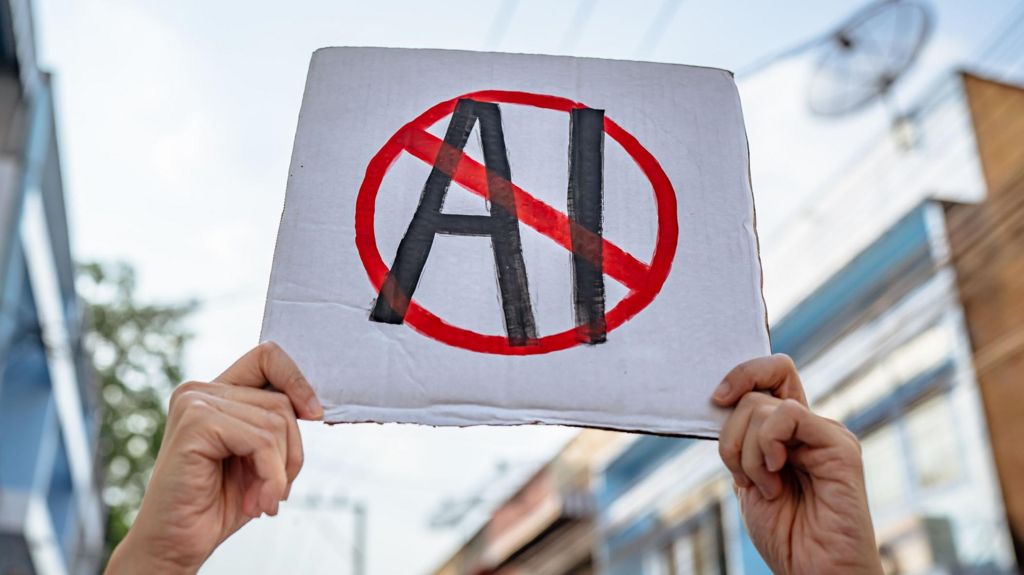
A worldwide movement is gaining momentum as organizations scramble to establish a universally recognized certification system for human-created products and services. This emerging trend represents a significant cultural pushback against the pervasive integration of artificial intelligence across creative and commercial sectors.
Multiple initiatives from the UK, Australia, and the United States are developing distinctive labels including “Proudly Human,” “Human-made,” “No A.I,” and “AI-free” declarations. These markings are increasingly appearing across films, marketing materials, literary works, and digital platforms. The movement stems from growing concerns that AI-powered automation threatens to displace entire professions and diminish the value of human creativity.
BBC News has identified at least eight separate initiatives competing to develop a certification standard that could achieve global recognition comparable to the Fair Trade logo. However, experts warn that this proliferation of competing labels, coupled with fundamental confusion about what constitutes “AI-free” content, risks creating consumer uncertainty rather than clarity.
Dr. Amna Khan, consumer behavior expert at Manchester Metropolitan University, emphasizes: “AI is creating significant disruption, and competing definitions of what is ‘human made’ are confusing consumers. A universal definition is essential to build trust, clarification and confidence.”
The certification landscape varies dramatically between organizations. Some platforms like no-ai-icon.com, ai-free.io and notbyai.fyi offer downloadable badges for free or minimal fees with little to no verification process. In contrast, systems like aifreecert require payment and implement rigorous vetting procedures utilizing professional analysts and AI-detection software.
Technical challenges present substantial obstacles to standardization. AI Research Scientist Sasha Luccioni explains: “AI is now so ubiquitous and integrated into different platforms and services that establishing what ‘AI free’ means is truly complicated. From a technical perspective, it’s hard to implement. I think AI exists on a spectrum, and we need more comprehensive certification systems rather than a binary AI/AI-free approach.”
The creative industries have emerged as ground zero for this movement. The 2024 Hugh Grant thriller Heretic explicitly stated in its closing credits that “No generative AI was used in the making of this film.” Film distributor The Mise en scène Company has incorporated a ‘No AI was used’ stamp into promotional materials for its latest production.
CEO Paul Yates articulates the industry perspective: “We support the AI industry and think it’s an exciting time, but we believe AI content creates an economic premium for human-made content, and we want to leverage that.”
Publishing has similarly embraced authentication efforts. Faber and Faber began applying “Human Written” stamps to select titles, with author Sarah Hall requesting the designation for her novel Helm, describing unauthorized use of books to train AI models as “creative larceny at scale.”
UK company Books by People has established a certification system requiring publishers to complete detailed questionnaires about their practices and author vetting procedures, supplemented by periodic sample testing. Meanwhile, Australia’s Proudly Human implements even more rigorous verification throughout the publication process, including monitoring changes from manuscript to ebook formats.
Alan Finkel of Proudly Human asserts the necessity of third-party verification: “A certification of ‘human origin’ is needed, but self-certification isn’t sufficient. We’ve established a full verification process to ensure truly human-originated material.”
As these competing standards evolve, the fundamental challenge remains establishing technical and ethical consensus around what constitutes human creativity in an age of increasingly sophisticated artificial intelligence.