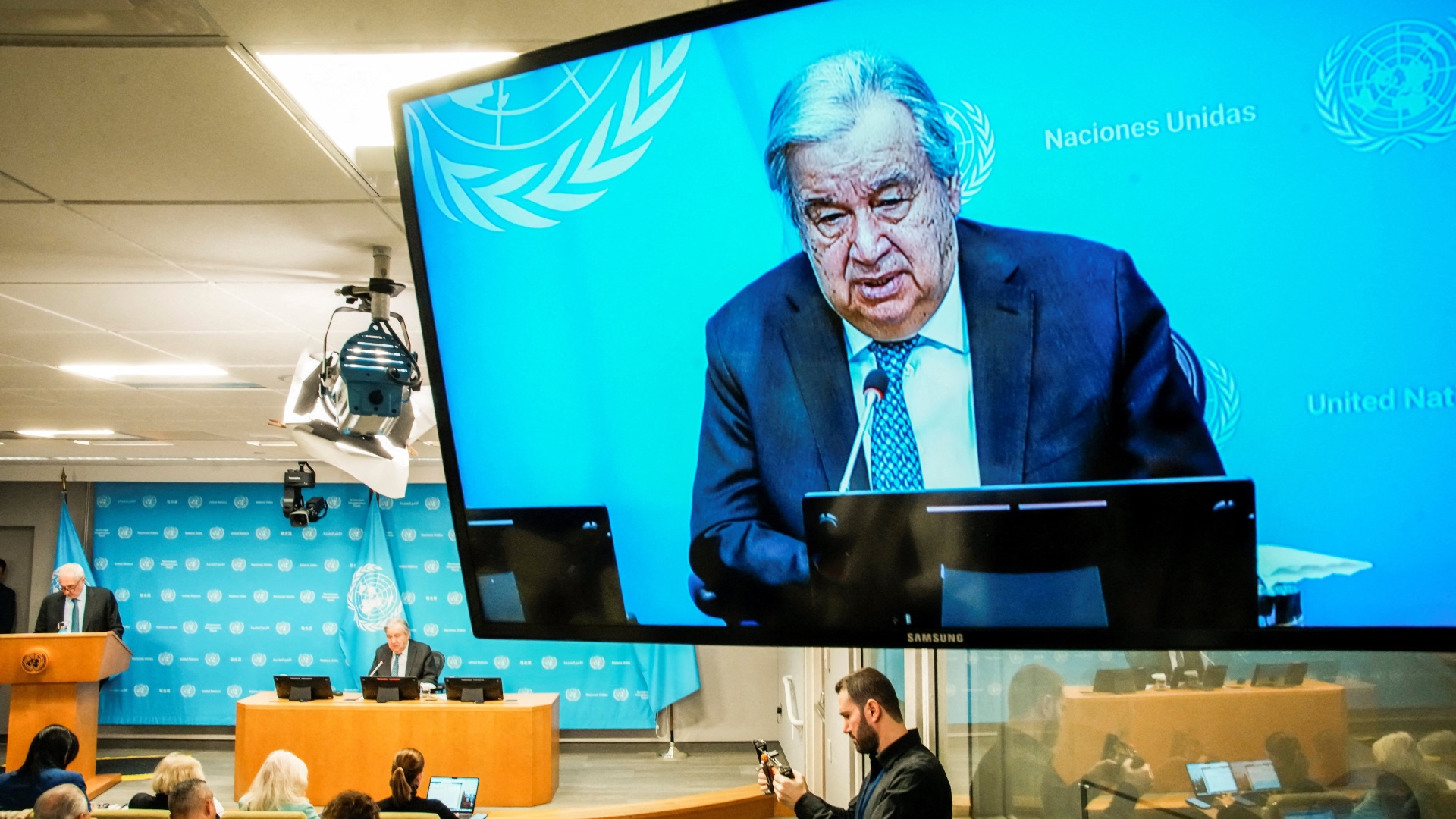
The United Nations faces an unprecedented financial crisis as chronic non-payment of dues by its largest contributor threatens to paralyze the international organization. At the recent Munich Security Conference, U.S. Secretary of State Marco Rubio delivered scathing criticism of the UN’s effectiveness, declaring the institution had “no answers” in resolving global conflicts while praising American leadership for achieving fragile truces.
This rhetorical confrontation mirrors tangible financial pressures. The United States currently owes approximately $4 billion in unpaid dues, with Washington having ceased regular payments since the Trump administration took office thirteen months ago. Although the Biden administration resumed some contributions, significant arrears accumulated during both administrations.
UN Secretary-General Antonio Guterres has issued dire warnings to all 196 member states, indicating the organization could face financial collapse as early as July without urgent payment. This would potentially force cancellation of September’s General Assembly meetings and even shutdown of its New York headquarters.
The funding crisis stems from a structural arrangement where the U.S. contributes 22% of the UN’s operating budget and 25% of peacekeeping operations—a percentage tied to its Security Council veto power and economic size. For 2026, the UN requires $3.5 billion for agencies and $5.7 billion for peacekeeping operations worldwide.
Complicating matters, the Trump administration has withdrawn from 66 multilateral organizations, approximately half being UN initiatives addressing climate change, counterterrorism, and children in armed conflict. Previous withdrawals included UNESCO, the UN Human Rights Council, and funding for Palestinian refugee agency UNRWA, citing anti-Israel bias.
Analysts describe the situation as dire. Daniel Forti of the International Crisis Group noted that “the root cause of this financial crisis lies at the feet of Washington,” while emphasizing that U.S. financial obligations reflect institutional privilege rather than penalty.
Simultaneously, the Trump administration appears to be developing alternative mechanisms. The newly established “Board of Peace,” initially focused on Gaza, is being positioned as a complementary conflict resolution body that would operate alongside rather than replace UN structures.
However, former State Department official Allison Lombardo cautioned that the Board of Peace lacks proven capability to provide funding or political leverage comparable to the UN’s international mandate. The funding crisis has reignited calls from Global South nations to reform the UN’s funding structure and Security Council representation to better reflect contemporary global realities.