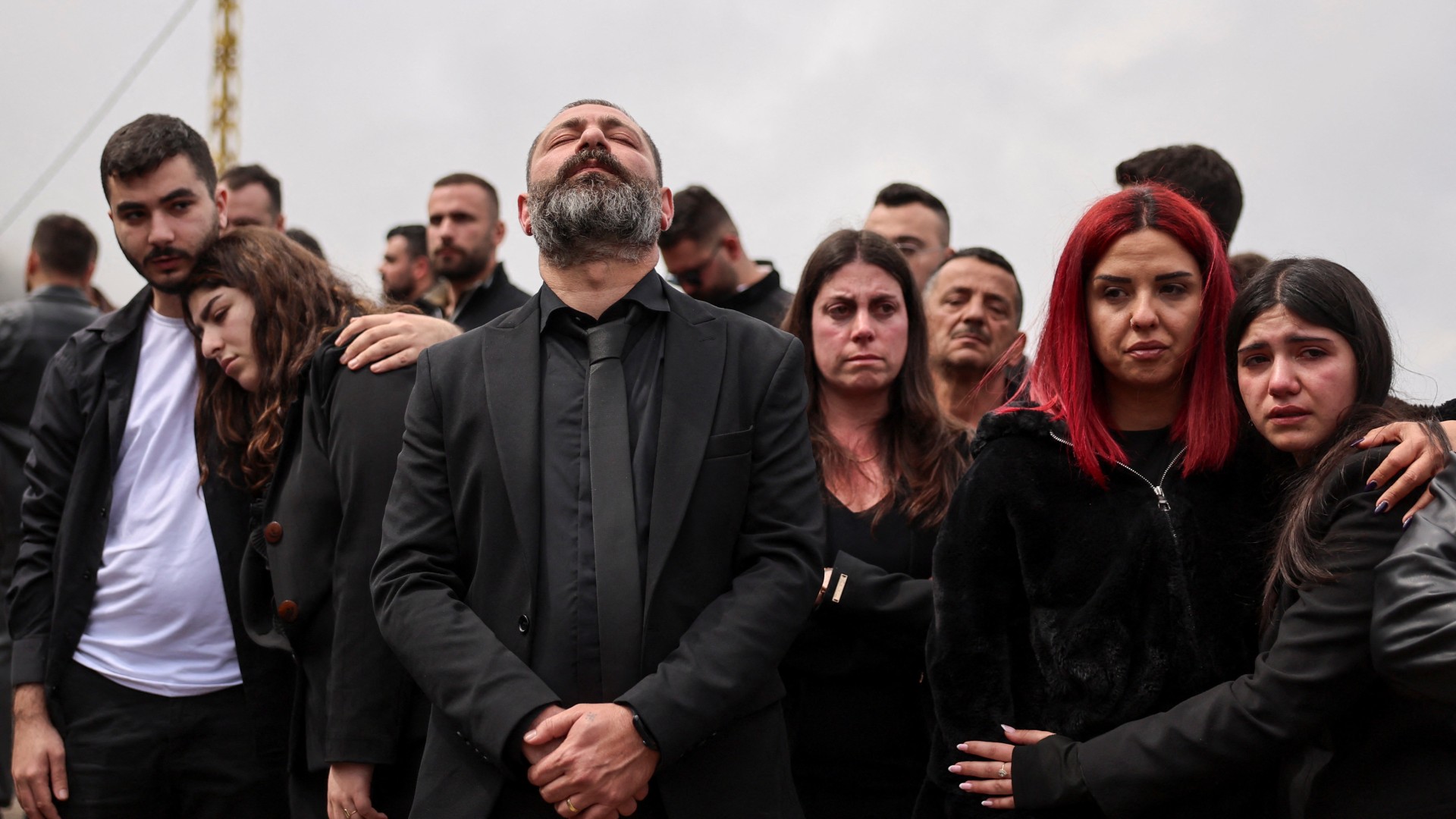
In the days following the announcement of a landmark two-week temporary ceasefire between the United States and Iran, deep uncertainty and contradiction have clouded whether the de-escalation agreement extends to neighboring Lebanon, where Israeli forces have continued offensive operations for more than a month. Pakistan, which served as the primary mediator for the bilateral truce, confirmed early on that the pause in hostilities would cover all fronts, including Lebanon. But Israel — which has been carrying out air bombardments and a ground invasion of Lebanon since early March — has flatly rejected this claim, maintaining its military campaign against Lebanese armed movement Hezbollah unabated. As of press time, Hezbollah itself has not released an official formal position on the ceasefire, though anonymous Lebanese sources close to the group told Reuters the movement had halted its own cross-border fire following the truce announcement, with a formal statement expected imminently.
The expansion of conflict into Lebanon followed the outbreak of US-Israeli attacks on Iran in late February. Hezbollah launched a large-scale rocket barrage into northern Israel in direct response to the killing of Iran’s Ayatollah Ali Khamenei, a key spiritual leader for the Lebanese resistance movement. The group has also maintained its actions were a preemption of a planned Israeli invasion of Lebanese territory, a assessment that has been corroborated by independent reporting in Israeli media outlets.
Long before the ceasefire was reached, Iran had made any cessation of hostilities with the US conditional on an end to Israeli attacks on Lebanon, and Iranian officials have repeatedly stated the new agreement explicitly includes a halt to fighting on Lebanese soil. In an official statement, Iran’s Supreme National Security Council said the US had made a “fundamental commitment” to the “cessation of war on all fronts, including against the heroic Islamic Resistance of Lebanon” as a core term of the truce.
US President Donald Trump, who negotiated the deal with Tehran, made no mention of Lebanon in his public announcement of the ceasefire, only noting that Washington considered Iran’s 10-point negotiation framework “workable”. Iranian state media has since confirmed the framework includes provisions to end active conflict across four zones: Iran itself, Lebanon, Iraq, and Yemen. Nearly four hours after the truce was made public, Israeli Prime Minister Benjamin Netanyahu’s office released a statement confirming Israel supported Trump’s decision to suspend strikes on Iran for the 14-day period — but added a critical caveat that “the two-week ceasefire does not include Lebanon.”
On the ground, the discrepancy in terms has translated to continued bloodshed. The Israeli military announced it had halted offensive operations inside Iran starting at 3 a.m. local time in line with the truce, but explicitly stated it would “continues fighting against Hezbollah.” In the early hours of Wednesday, Lebanese health ministry officials confirmed Israeli fighter jets carried out an air strike on the coastal Lebanese city of Sidon that killed eight people and wounded 44 more. The attack damaged a seaside cafe in the city, with photos of the destruction circulating widely across regional media. Additional heavy strikes were reported across multiple villages in southern Lebanon and in the eastern Beqaa Governorate.
Amid the ongoing violence, the Lebanese army has issued an urgent advisory calling on thousands of displaced residents to avoid returning to their homes in southern Lebanon. The Israeli military has also ordered all residents in the coastal city of Tyre to evacuate the area ahead of planned planned strikes. International leaders have pushed back against Israel’s continued offensive. Spanish Foreign Minister Jose Manuel Albares called the continuation of attacks after the ceasefire announcement “unacceptable,” telling public radio RNE that “All fronts must cease, and all fronts also means Lebanon.” Earlier, French President Emmanuel Macron welcomed the US-Iran truce and publicly expressed hope that the agreement would be “fully extended to include Lebanon.”
The current full-scale Israeli military campaign in Lebanon launched on March 2, breaking a previous ceasefire agreement signed between Israel and Hezbollah in November 2024 that had held for more than a year amid repeated violations. Since resuming offensive operations, Israeli ground forces have advanced up to five kilometers into southern Lebanese territory, expanding their incursion beyond the UN-monitored border. Lebanese authorities report that more than 1,500 people have been killed in Israeli air strikes and ground operations, and more than one million Lebanese residents have been displaced from their homes since fighting resumed.