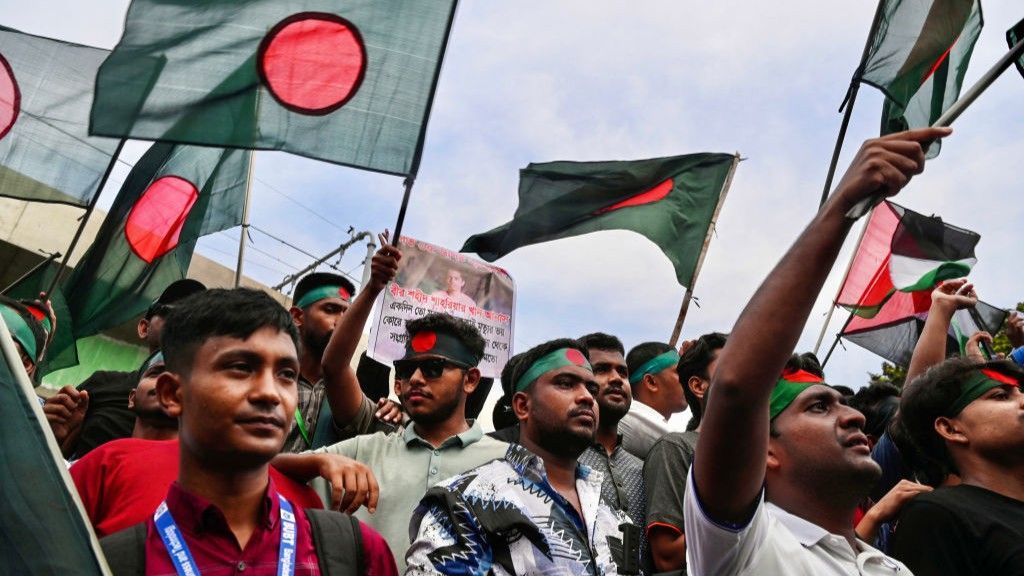
The political landscape of Bangladesh is undergoing a profound transformation as anti-Indian sentiment reaches unprecedented levels following the ouster of former Prime Minister Sheikh Hasina. The walls of Dhaka University now bear witness to this shift, adorned with graffiti proclaiming ‘Dhaka, not Delhi’—a slogan that has even been stitched onto traditional saris, symbolizing the deep-seated resentment against perceived Indian hegemony.
This dramatic deterioration in bilateral relations marks a stark contrast to the previously touted model of neighborhood diplomacy. The crisis stems from India’s decision to grant asylum to the deposed leader Sheikh Hasina, who fled to Delhi after her resignation amid the July 2024 uprising that claimed approximately 1,400 lives according to UN estimates. India’s refusal to extradite Hasina to face an in absentia death sentence for her government’s brutal security crackdown has become a focal point of public outrage.
Analysts identify multiple layers to this diplomatic rupture. The younger generation, particularly students who led the pro-democracy movement, accuse India of enabling Bangladesh’s democratic erosion by consistently endorsing disputed elections in 2014, 2018, and 2024. ‘People think the destruction of democracy was supported by India,’ states Mosharraf Hossain, a 24-year-old sociology student, echoing a widespread sentiment.
Long-standing grievances have converged into a perfect storm of anti-Indianism: border killings, water-sharing disputes, trade restrictions, and inflammatory rhetoric from Indian politicians have created a perception that India views Bangladesh as ‘a pliant backyard’ rather than a sovereign equal. The recent suspension of most visa services and cultural retaliation—including calls to boycott Indian goods and suspension of IPL broadcasts—demonstrate how political strain is spilling into economic and cultural spheres.
Despite tactical diplomatic outreach by India, including Foreign Minister S Jaishankar’s engagement with opposition figures like BNP’s Tarique Rahman and unprecedented contacts with Islamist party Jamaat-e-Islami, these efforts have failed to arrest the relationship’s decline. Kamal Ahmed, consulting editor of The Daily Star, confirms this is ‘the lowest point of the bilateral relationship’ in decades.
The upcoming February 12 election represents a critical juncture. With Hasina’s Awami League barred from contesting, the political landscape is realigning, though all parties recognize that resetting relations with India is unavoidable. As academic Ali Riaz notes, ‘The burden of repair lies largely with Delhi’ and requires moving beyond managing Dhaka through favored intermediaries. While geography, history, and shared cultural heritage make complete separation impossible, rebuilding trust will require India to align its policy with the aspirations of Bangladeshi citizens rather than governmental preferences.