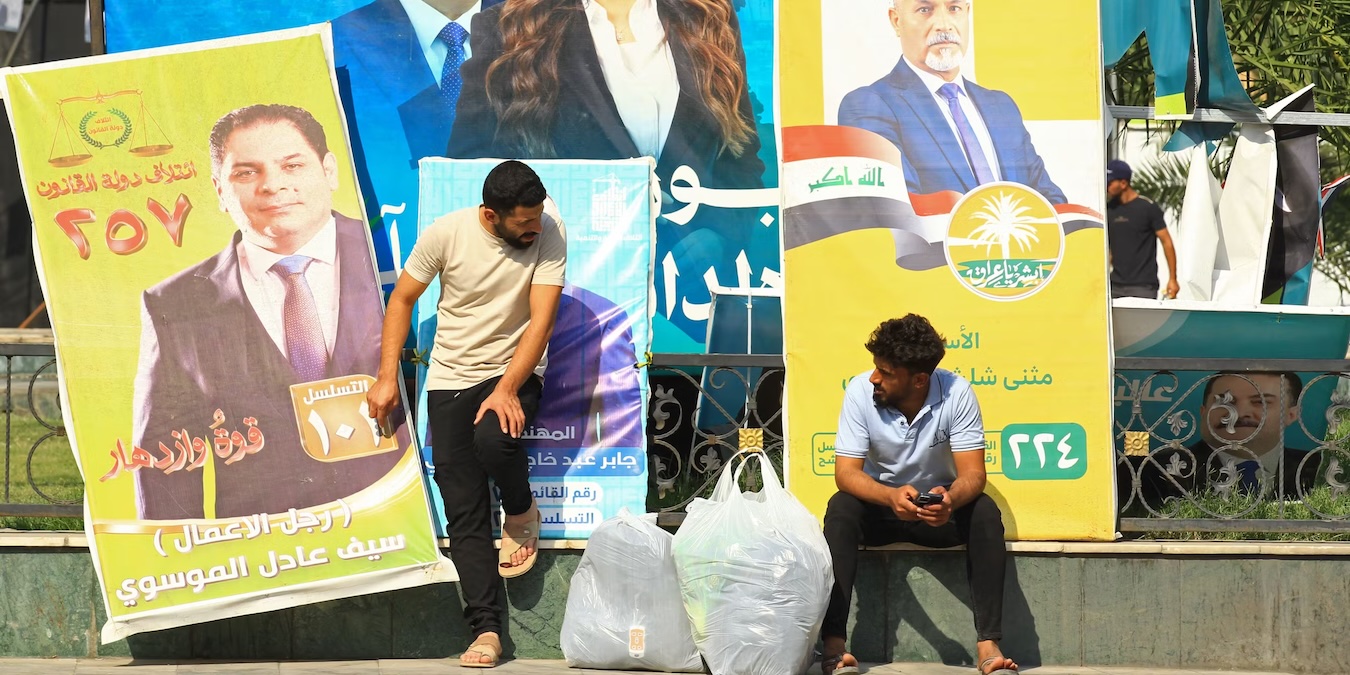
Iraq held its parliamentary elections on November 11, 2025, with Prime Minister Mohammed Shia al-Sudani’s coalition emerging as the frontrunner. However, no political bloc secured a governing majority in the 329-seat parliament, setting the stage for months of elite negotiations to form the next government. This pattern of coalition-building has persisted since the fall of Saddam Hussein in 2003, turning elections into a ritual of continuity rather than a catalyst for change. While officials celebrated a rise in voter turnout to 55%, this figure masks a deeper issue: only 21.4 million of Iraq’s 32 million eligible voters registered, a decline from 24 million in 2021. Early voting, which saw an 82% turnout among soldiers, police, and displaced persons, further inflated the overall participation rate. Over the past two decades, voter turnout has steadily declined, from 79% in 2005 to 44% in 2018, reflecting growing disillusionment among citizens. Iraq’s oil-dependent economy fuels a vast public sector, with nearly 38% of the workforce employed by the state. This system blurs the line between voter and employee, making elections less about choice and more about compliance. Political parties often control ministries as private fiefdoms, distributing jobs and contracts to supporters. The 2019 protest movement, which demanded an end to sectarianism and corruption, was met with violent repression, further eroding public faith in the political process. The assassination of Sunni candidate Safaa al-Mashhadani ahead of the election underscored the dangers of dissent. For many Iraqis, especially the youth, politics is seen as a source of danger rather than opportunity, with 46% expressing a desire to emigrate. The 2025 election reveals a deeper crisis: a society trapped in a cycle of learned helplessness, where hope for change has been extinguished. Substantial economic and political reforms are needed to break this cycle and restore faith in Iraq’s democratic process.