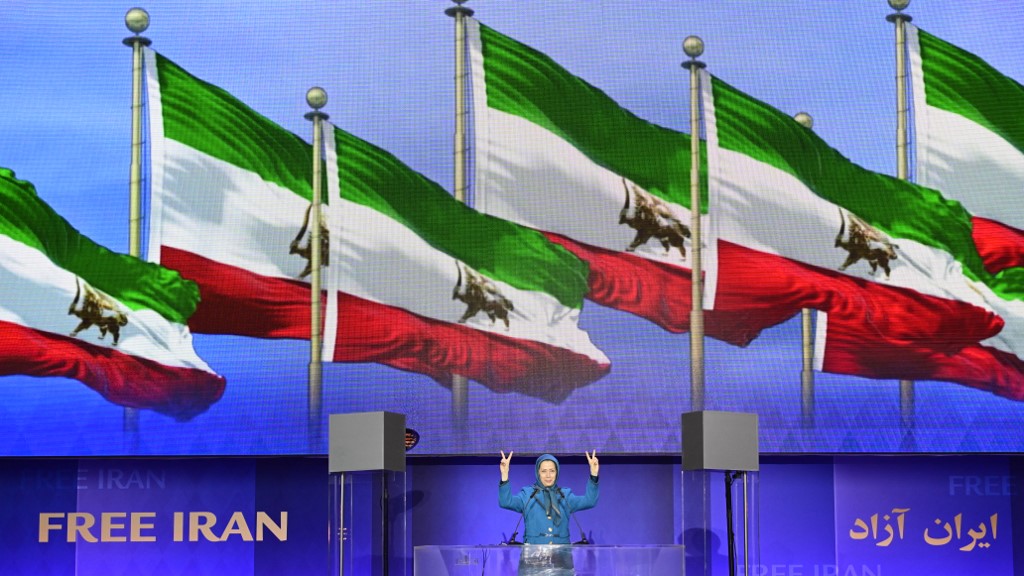
Amidst escalating military actions against Iran initiated by Israel and the United States on February 28th, the Mujahedin-e Khalq (MEK) – an opposition group long marginalized in exile – has launched a strategic maneuver to position itself as a viable alternative to Tehran’s Islamic Republic.
The organization’s 72-year-old leader, Maryam Rajavi, proclaimed the establishment of a provisional government tasked with overseeing the transition to a democratic republic under her leadership. This declaration comes as the group, which maintains approximately 3,000 members in a fortified Albanian compound near Tirana, seeks relevance in a conflict that has suddenly created political opportunities.
Originally founded as an Islamist-Marxist student militia during the 1960s, the MEK has undergone significant ideological transformation. The group relocated to Albania’s Manze village in 2013 following a Washington-brokered agreement that resettled members previously based in Iraq. Despite its current marginalization, the MEK played a substantial role in the 1979 revolution before being suppressed by Ayatollah Khomeini’s regime.
The organization’s relationship with Western powers has been complex and controversial. Designated as a terrorist organization by the U.S. in 1997, the MEK successfully lobbied for removal from the list in 2012. The group gained international attention in 2002 when it exposed Iran’s previously concealed uranium-enrichment program, demonstrating its intelligence capabilities.
Analysts remain skeptical about the MEK’s domestic appeal. Professor Thomas Juneau of the University of Ottawa characterizes the group as “a thuggish and corrupt cult that is unpopular inside Iran.” Similarly, Iran expert Sajjad Safaei notes that the MEK’s utility to foreign powers stems precisely from its lack of political future within Iran, making it an ideal instrument for external interests.
The organization maintains sophisticated infrastructure in Albania, including media rooms and communication centers that monitor Iranian developments and distribute content online. This operational capacity, combined with an extensive lobbying network in Washington, has enabled the MEK to cultivate support among prominent Western politicians. Financial disclosures reveal substantial speaking fees paid to figures including Mike Pence ($190,000), John Bolton ($40,000), and numerous other former officials from the U.S. and Europe.
As speculation about regime change intensifies, tensions have emerged within the exiled Iranian opposition community. Rudy Giuliani, a prominent MEK ally, recently attacked Reza Pahlavi on social media, highlighting the fractious nature of the opposition movement. Despite these developments, Washington has maintained caution regarding official endorsement, recognizing the potential consequences of supporting groups with limited domestic legitimacy.