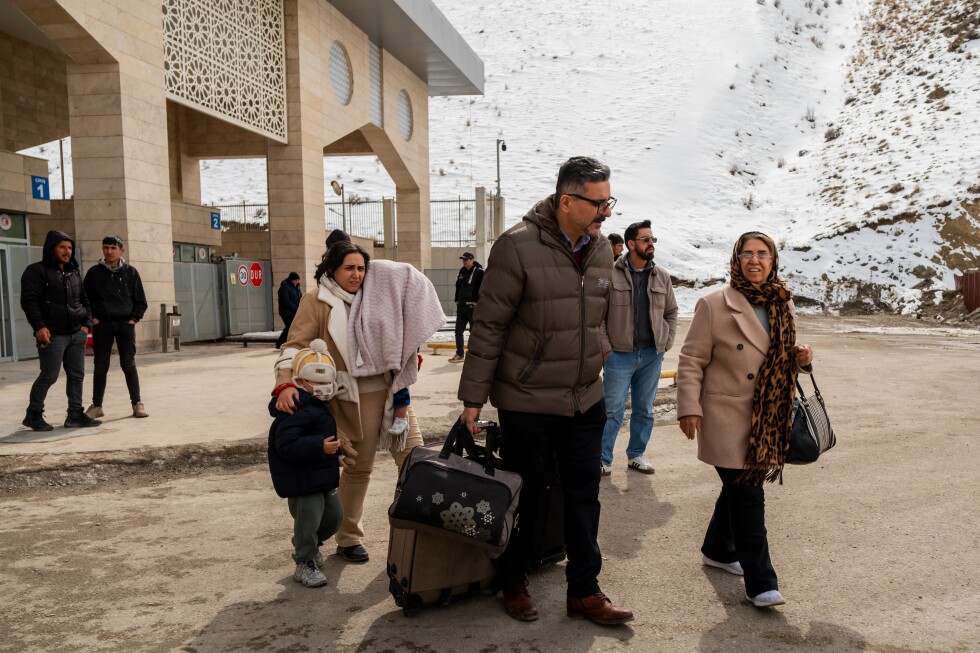
KAPIKOY BORDER CROSSING, Turkey — Merve Pourkaz, a 32-year-old hairdresser from Iran’s eastern city of Golestan, made the arduous 1,500-kilometer journey to this alpine border crossing after explosions rocked her neighborhood. Her destination: the relative safety of Van, Turkey. ‘If they permit me, I’ll remain in Van until the war concludes,’ she told The Associated Press. ‘Otherwise, I may return home to face whatever fate awaits.’
Pourkaz represents one of approximately 3.2 million Iranians internally displaced since the outbreak of the U.S.-Israel conflict with Iran, according to UN estimates. While many seek refuge within Iran’s borders or in neighboring nations, a counter-movement sees citizens returning from abroad to protect familial homes and loved ones.
Current migration patterns reveal complexity: UN data indicates only about 1,300 Iranians cross into Turkey daily, with some days witnessing more returnees than departures. However, neighboring countries and European nations are developing contingency plans amid concerns that prolonged conflict could trigger a full-scale migration crisis.
This duality of movement is embodied by individuals like Leila Rabetnezhadfard, 45, who abandoned wedding preparations in Istanbul to return to her family in Shiraz, southern Iran. ‘How could I feel secure in Istanbul while my family endures wartime conditions?’ she questioned, citing practical constraints including limited housing space, medical needs, and high costs.
The International Organization for Migration reports that while large-scale exodus hasn’t materialized, significant internal displacement continues toward rural areas near the Caspian Sea. Salvador Gutierrez, IOM’s mission chief in Iran, attributes this to ‘people prioritizing family unity, safety concerns, and logistical limitations.’
Experts warn that infrastructure collapse could change this calculus dramatically. ‘If Tehran, a metropolis of 10 million, loses water supply, population movement becomes inevitable,’ noted Alex Vatanka of the Middle East Institute. Such development could strain borders with Pakistan, Afghanistan, Turkmenistan, Azerbaijan, Armenia, Turkey, and Iraq.
Turkey, having absorbed millions during Syria’s civil war under its previous open-door policy, has adopted a different approach. Reports indicate preparations for border ‘buffer zones’ and temporary settlements, complemented by enhanced border security including 380 kilometers of concrete barriers and numerous observation posts.
European officials simultaneously grapple with the potential renewal of the 2016 EU-Turkey migration agreement, which provided €6 billion for refugee support in exchange for border control. This comes amid rising anti-immigrant sentiment in Europe and fresh displacement crises elsewhere in the region, including over 800,000 displaced in Lebanon.
Humanitarian organizations express alarm over dwindling resources. ‘We face potential grave humanitarian consequences precisely when funding has been severely reduced,’ stated Ninette Kelley of the World Refugee & Migration Council, highlighting concerns about global readiness for another large-scale displacement event.