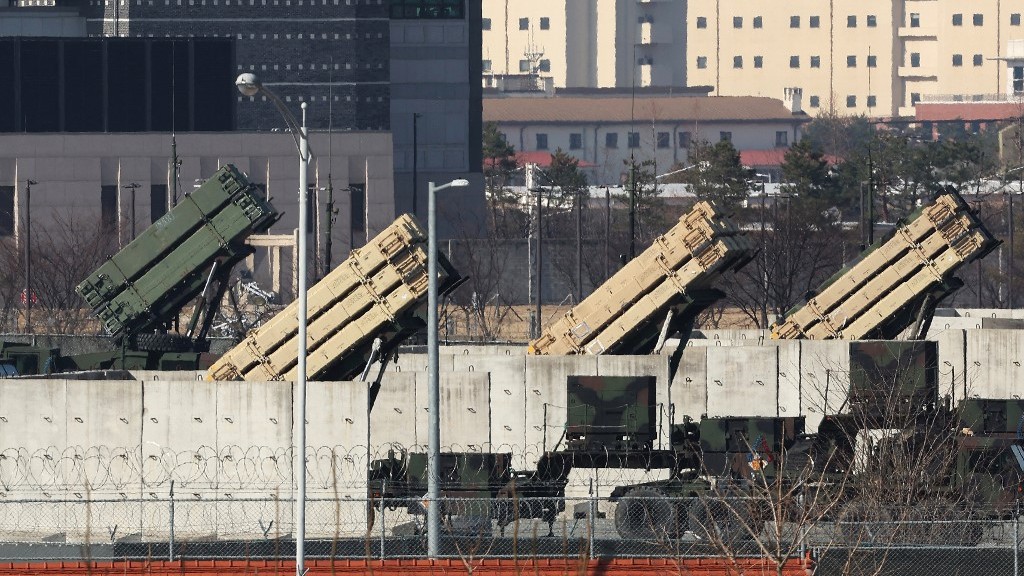
Israeli officials have issued an urgent warning to the United States regarding critically depleted stocks of ballistic missile interceptors as the military confrontation with Iran extends into its third consecutive week, according to U.S. officials who spoke with Semafor.
The current conflict finds Israel’s air defense networks already strained from previous engagements with Iran last year, during which substantial quantities of interceptors were deployed to neutralize incoming missile threats. The persistent barrage from Iranian forces has placed unprecedented pressure on Israel’s long-range defense capabilities, creating one of the most significant logistical challenges of the ongoing hostilities.
Complicating Israel’s defensive operations, intelligence assessments indicate that Iran has modified certain missiles to carry cluster munition payloads, presenting more complex interception scenarios that accelerate the consumption rate of defensive munitions. This tactical evolution has further exacerbated the depletion of Israel’s interceptor inventory.
Washington has monitored this developing situation for several months, with one U.S. official confirming: “This development aligns with our earlier projections and anticipations.” The same official emphasized that while Israel faces critical shortages, the United States maintains robust interceptor reserves without comparable supply constraints. This assurance comes amid growing concerns that prolonged regional conflict could rapidly diminish missile defense resources across allied nations.
The potential transfer of additional interceptors to Israel remains uncertain. While previous U.S. military assistance packages have included comprehensive missile defense systems, any further allocations could impact American strategic inventories. The U.S. official stated that American forces “maintain all necessary resources to safeguard our bases, personnel, and interests within the region,” adding that Israeli authorities are “developing innovative solutions to address their supply challenges.
Recent assertions by former President Donald Trump regarding America’s “virtually unlimited” munitions capacity could not be independently verified. Historical data reveals that during a 12-day confrontation with Iran in June, U.S. forces deployed over 150 Terminal High Altitude Area Defense (THAAD) interceptors—approximately one-quarter of the then-current inventory. In the initial phase of the present conflict, Washington reportedly expended Patriot interceptors valued at approximately $2.4 billion.