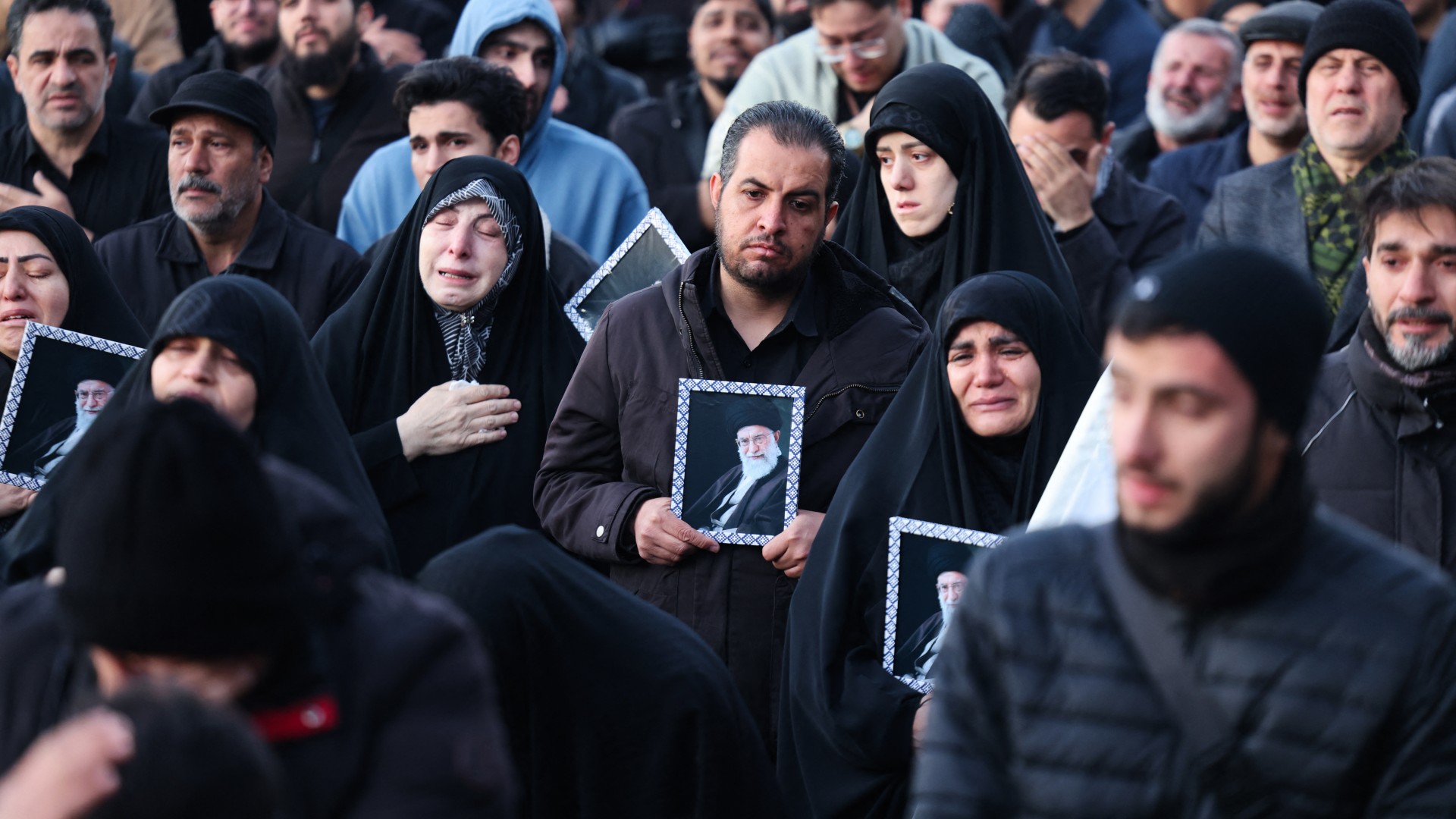
Iran has been plunged into a state of profound national mourning and outrage following the confirmed death of its Supreme Leader, Ayatollah Ali Khamenei, who was killed during a coordinated military strike by the United States and Israel on Saturday. The 86-year-old leader, who had held the Islamic Republic’s highest authority since 1989, was confirmed dead by Iranian state media in the early hours of Sunday, an announcement that triggered immediate and massive public demonstrations across the nation and in sympathetic regions abroad.
In Tehran, thousands of grief-stricken citizens flooded Enghelab Square, many clad in traditional black mourning attire, waving Iranian flags and holding aloft portraits of the deceased leader. The atmosphere was charged with emotion and calls for retribution, with crowds vehemently chanting slogans such as ‘Death to America’ and demanding severe retaliation against both Israel and the U.S. for the targeted operation.
The government’s response was swift, declaring an official seven-day holiday and a forty-day national mourning period to honor Khamenei. The profound sense of loss was visually symbolized when the flag atop the golden dome of the Imam Reza Shrine in Mashhad was replaced with a black standard, while weeping worshippers gathered nearby. Similar scenes of mass mourning and protest were documented in other major cities including Isfahan, Qom, and Zanjan, with state-run outlets like Press TV reporting the raising of a red flag—a potent symbol of a blood vow for revenge—at the Jamkaran Mosque.
The wave of grief transcended Iran’s borders, sparking solidarity gatherings in locations such as Baghdad, Iraq; Kashmir; and Karachi, Pakistan. The demonstrations in Karachi, however, turned deadly, resulting in violent clashes between protesters and local security forces that left at least six people dead.
The official confirmation on state television was delivered by a visibly emotional announcer who broke down in tears, hailing Khamenei’s death as a ‘long-cherished wish of martyrdom’ during the holy month of Ramadan. The broadcaster condemned the ‘evil attacks by the criminal Americans and wicked Zionists,’ prophesying that this martyrdom would ignite a ‘great uprising against the world’s oppressors.’
Further reports from the semi-official Fars news agency, which maintains links to the Islamic Revolutionary Guard Corps (IRGC), indicated that the strike also claimed the lives of Khamenei’s daughter, son-in-law, and granddaughter. Satellite imagery and social media videos corroborated reports of significant destruction at the leader’s compound, showing structures engulfed in black smoke.
In a stern declaration, Iran’s Supreme National Security Council vowed to avenge what it termed a ‘martyrdom,’ asserting that the event had ‘opened a new chapter of ruling in Islam’s history.’ This pledge sets a confrontational tone for the geopolitical landscape moving forward.
Conversely, U.S. President Donald Trump publicly claimed responsibility for the operation in a lengthy post on his Truth Social platform. He framed the killing as an act of justice ‘for the people of Iran and all Great Americans,’ boasting that Khamenei was unable to evade U.S. intelligence and sophisticated tracking systems. Trump characterized the event as the ‘single greatest chance for the Iranian people to take back their country,’ signaling a clear objective of regime change.