Six months into the open conflict between the U.S.-Israeli coalition and Iran, the strategic Middle East landscape has shifted into a new phase of overlapping diplomatic, economic and territorial tensions, with three major developments unfolding over the weekend.
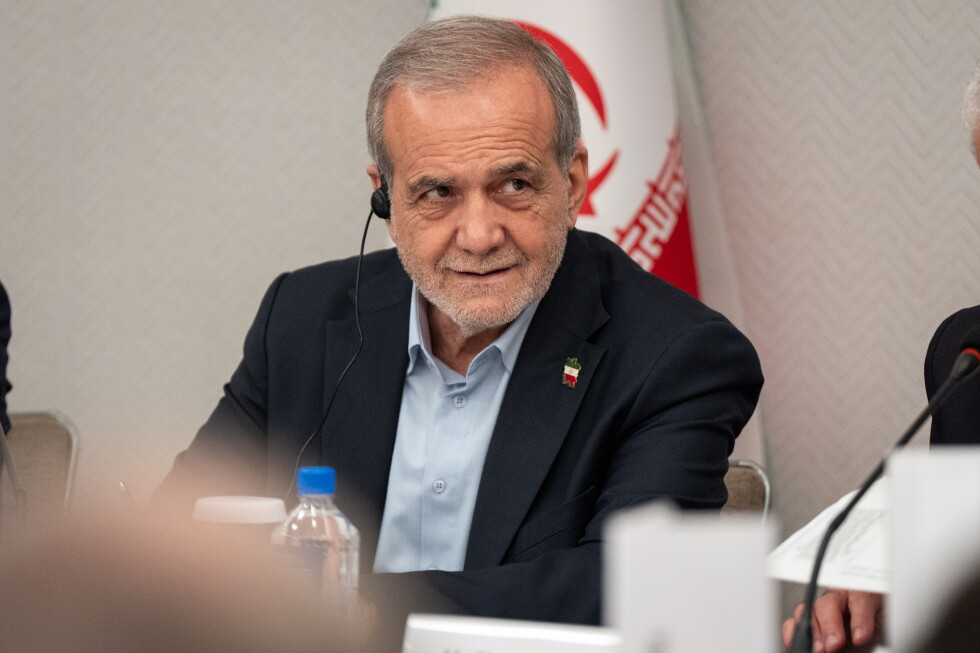
Iran’s President Masoud Pezeshkian announced Friday that the international community has effectively acknowledged Iran’s victory in the war, according to statements carried by Iran’s official state news agency IRNA. Pezeshkian framed Iran’s sustained control over the Strait of Hormuz and its refusal to capitulate to U.S. negotiating demands as clear markers of its success. “The entire world approved our victory and the U.S. is hated,” Pezeshkian was quoted as saying. The Strait of Hormuz, one of the world’s most critical energy chokepoints through which roughly a fifth of global oil supplies pass, has remained effectively closed to commercial international shipping since the outbreak of the conflict.
Iran’s claim of victory comes as the Trump administration doubles down on its aggressive economic pressure campaign against Tehran, with the White House promising an “economic D-Day” that would bring unprecedented levels of trade isolation and financial sanctions against Iran. The administration’s stated goal for the pressure campaign is to force Iran’s leadership to abandon its nuclear program and fully reopen the Strait of Hormuz to global oil and natural gas tankers. The escalating sanctions have already pushed millions of ordinary Iranian households into hardship, with widespread reports of inability to afford basic food and essential goods.
In a separate development that exposes a rift in official U.S. Middle East policy, Tom Barrack, the U.S. Ambassador to Turkey and special envoy for Syria, publicly contradicted long-stated official U.S. position on the disputed Golan Heights in a Friday interview with Lebanese-Australian entrepreneur Mario Nawfal. Barrack stated that Israel “still occupy the Golan, against the U.N. resolutions” — a framing that directly reverses the 2019 Trump administration policy shift that recognized full Israeli sovereignty over the territory. Israel seized the Golan Heights from Syria during the 1967 Six-Day War and unilaterally annexed the region in 1981, a move that the United Nations has repeatedly ruled null and void under international law, with binding resolutions calling for Israel’s full withdrawal to the pre-1967 armistice line. Only the U.S. and, earlier this month, Colombia, have formally recognized Israeli sovereignty over the territory. Barrack’s remarks drew immediate pushback from hardline conservative U.S. activist Laura Loomer, a close ally of former President Trump, who called for Barrack’s immediate resignation over what she labeled a fundamental misunderstanding of U.S. foreign policy.
Amid the ongoing closure of the Strait of Hormuz, French President Emmanuel Macron is set to hold talks with Saudi Crown Prince Mohammed bin Salman during the crown prince’s two-day visit to Paris starting Sunday, where the two leaders will discuss alternative energy and trade routes to bypass the closed strait. Anonymous senior French presidency officials, speaking on condition of anonymity, confirmed that multiple workarounds are currently under active consideration. These include expanding commercial cargo throughput at Omani ports located outside the Persian Gulf, doubling capacity or expanding existing oil pipelines across Saudi Arabia and neighboring states, and developing new cross-regional rail links to move energy exports to global markets. France and Saudi Arabia have already established a joint task force focused on energy security and logistics connectivity between the Middle East and Europe, which is scheduled to hold its first minister-level meeting on Monday. Officials noted that planning for the alternative route projects is already well advanced, with work focused on identifying high-priority strategic projects, securing project financing, and defining roles for French private sector firms. The Paris visit marks Mohammed bin Salman’s first international trip since he traveled to Washington in November 2025.