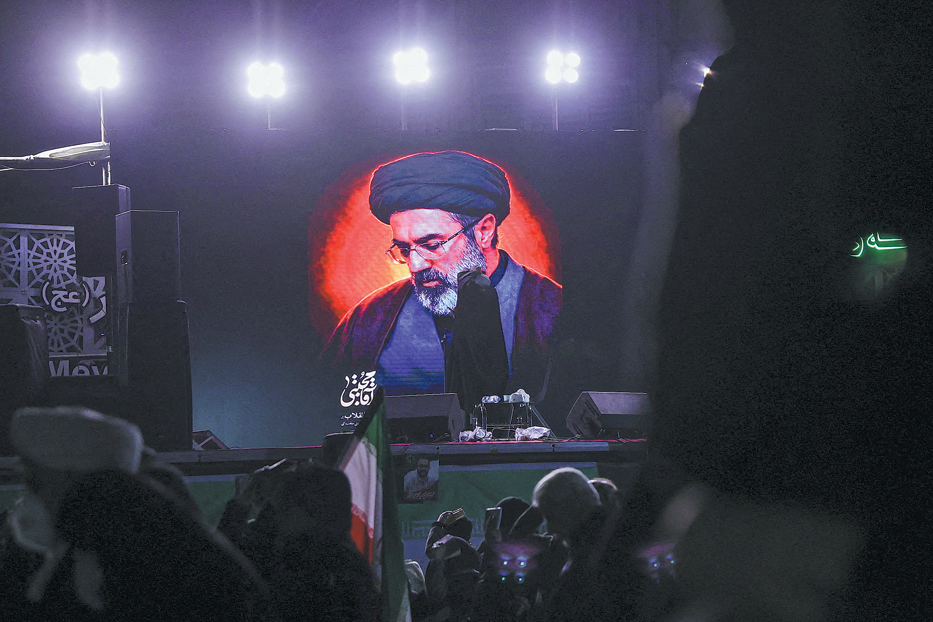
In a pivotal development reshaping Iran’s political landscape, Mojtaba Khamenei has been formally designated as the nation’s third supreme leader following the fatal joint military operation by the United States and Israel that claimed numerous lives, including children. The 56-year-old cleric, son of the late Ayatollah Ali Khamenei, assumes leadership with strong connections to Iran’s Islamic Revolutionary Guard Corps, marking a significant transition since the 1979 Islamic Revolution.
Concurrently, China has intensified its diplomatic engagement in the Middle East, with Foreign Minister Wang Yi conducting separate telephone discussions with counterparts from Kuwait and Bahrain. Wang emphasized China’s commitment to regional stability, disclosing that Beijing’s special Middle East envoy has initiated mediation efforts throughout the area. He characterized the ongoing conflict as an unnecessary war benefiting no involved party, while condemning attacks on civilian populations and non-military infrastructure.
During communications with Bahrain’s Foreign Minister Abdullatif bin Rashid Al Zayani, Wang advocated for immediate cessation of military activities and reaffirmed the principle of respecting national sovereignty and territorial integrity. Iranian diplomats, led by Foreign Minister Seyed Abbas Araghchi, concurrently pledged unwavering loyalty to the new supreme leader, framing the appointment as crucial for preserving national sovereignty.
The geopolitical turbulence has triggered substantial economic repercussions, with oil prices surging over 25% to peak levels unseen since 2022. Major Middle Eastern producers including Iraq, Kuwait, and the United Arab Emirates have curtailed output amid market instability and concerns regarding prolonged shipping disruptions in the strategically vital Strait of Hormuz.
Military confrontations persist as Israel conducted strikes against Iranian internal security command centers and missile sites shortly after the leadership transition. Saudi Arabia reported intercepting drones targeting its Shaybah oilfield, while the UAE contained a fire at a Fujairah oil facility.
Beyond energy security concerns, the conflict threatens critical water infrastructure throughout the arid region. Hundreds of coastal desalination plants supplying millions remain vulnerable to missile and drone attacks. Bahrain has already accused Iran of damaging one facility, though water distribution continues uninterrupted. Earlier, Iran reported that a U.S. airstrike disabled a desalination plant serving 30 villages near the Strait of Hormuz.
With no immediate resolution apparent, the U.S. State Department has ordered nonessential personnel to evacuate Saudi Arabia following a drone incident at the Riyadh embassy, while President Trump affirmed that any ceasefire decision would be coordinated with Israeli leadership.