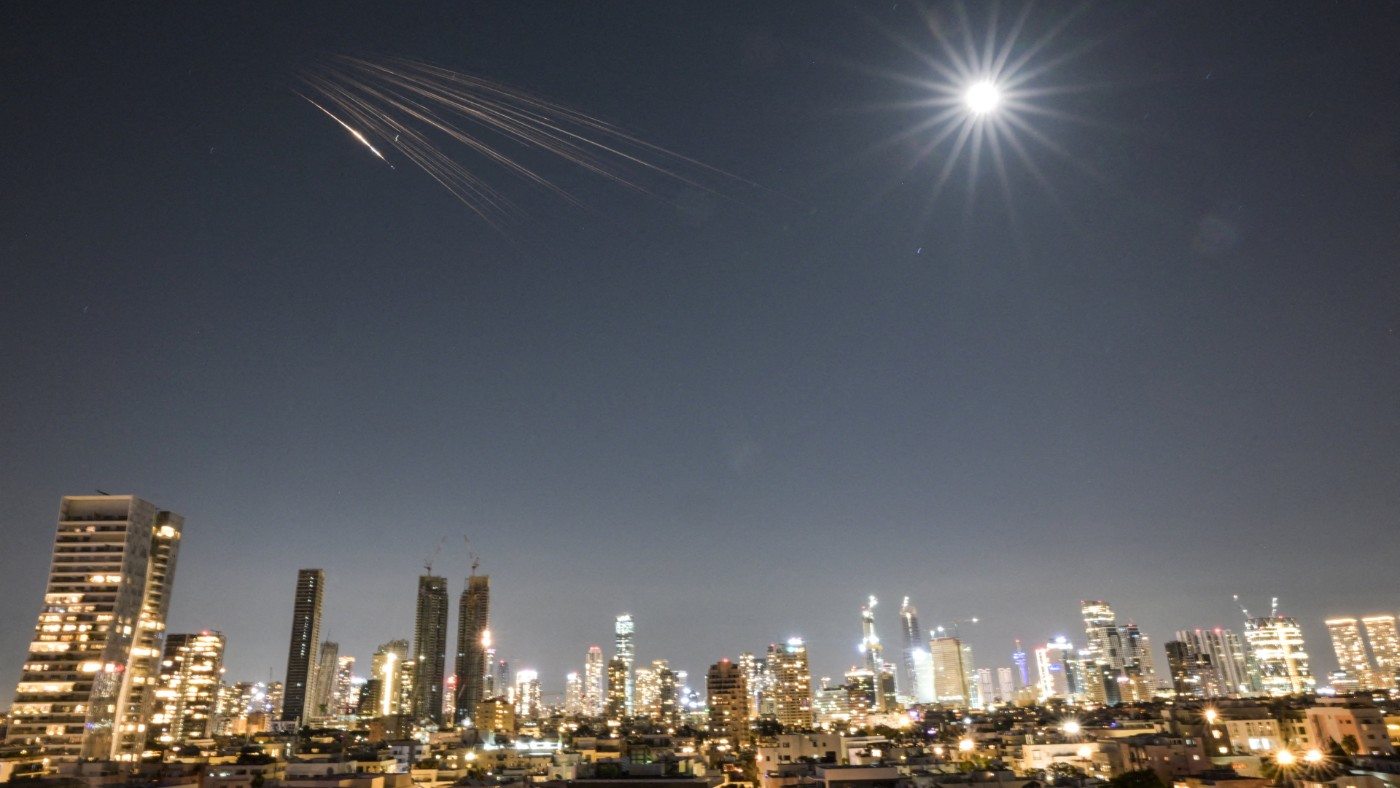
According to military analyst Arman Mahmoudian from the University of South Florida’s Global and National Security Institute, Iran possesses the capability to maintain its military response against the United States and Israel for several weeks through strategic adjustments to its missile deployment tactics.
In an exclusive interview with Middle East Eye, Mahmoudian revealed that Iran’s substantial missile stockpile could support a prolonged engagement in the ongoing conflict initiated by US and Israeli forces on February 28th. The expert specializing in Iran’s military doctrine emphasized that the critical factor would be reducing the volume of missiles launched in individual attacks.
“By limiting each barrage to under fifty missiles, Iran could potentially extend this confrontation for multiple weeks,” Mahmoudian stated. “The nation maintains a considerable inventory of projectiles, particularly short-range systems, especially advantageous given the expanded battlefield across the Middle Eastern theater.”
However, the military strategist acknowledged a significant tactical trade-off: scaled-down attacks would correspondingly diminish their destructive impact. “Reducing missile quantities per strike inevitably decreases the operational costs for adversaries, particularly for Israel given its geographical distance from Iranian launch sites,” he explained.
Mahmoudian identified two primary operational challenges hindering Iran’s missile deployment capabilities—issues that previously emerged during the June 2025 twelve-day bombing campaign by Israeli and US forces. “Iran confronts twin obstacles: the systematic destruction of launch platforms by US and Israeli strikes, and the frequently overlooked difficulty of accessing missiles stored in subterranean facilities,” he elaborated.
The Israeli military reported disabling over 300 ballistic missile launchers as of Thursday. Iran’s underground arsenal is housed in heavily fortified “missile cities” and deep storage facilities. During the previous conflict, Israeli precision strikes targeted entrance points to these bases, significantly impeding Iran’s ability to retrieve and deploy its missiles.
“Israeli operations effectively sealed access points to these underground facilities,” Mahmoudian described. “Iran’s retrieval capabilities were substantially compromised, creating an ongoing cycle where Iranian forces attempt to reopen access routes while US and Israeli forces systematically reclose them.”
Should the conflict persist and launcher destruction continue, Mahmoudian suggested Iran might employ improvised solutions, including converting commercial trucks into mobile missile platforms. “This concept has been previously proposed and occasionally implemented,” he noted, “though such adaptations require time and specialized facilities vulnerable to allied targeting.”
Regarding US involvement, recent developments indicate the conflict may prove more costly than initially anticipated. Mahmoudian referenced reports that the White House is seeking an additional $50 billion in wartime funding, while simultaneously Arab nations are requesting ammunition replenishment for their defense systems.
“The substantial budget request, coupled with regional ammunition needs, demonstrates the significant economic impact of Iran’s offensive capabilities,” the analyst stated. He also observed intensified US strikes over recent days, suggesting Washington aims to cripple Iran’s offensive military infrastructure.
Mahmoudian dismissed the possibility of direct Russian intervention, citing multiple strategic considerations. “Russia benefits economically from this conflict through elevated oil prices and disrupted East Asian markets,” he explained. “Additionally, prolonged hostilities might force European nations to redirect ammunition and defense systems originally destined for Ukraine to Arab allies.”
The expert further noted Moscow’s desire to secure favorable terms from Washington regarding Ukraine negotiations, making direct confrontation over Iran undesirable. Russia maintains extensive relationships with both Israel and Persian Gulf nations, with significant cultural and historical ties to Israel including a substantial Russian-speaking population and previous military technology cooperation.
“Israel has consistently avoided crossing Russian red lines,” Mahmoudian emphasized, “whether by withholding Iron Dome technology from Ukraine or carefully avoiding Russian facilities during Syrian operations.”