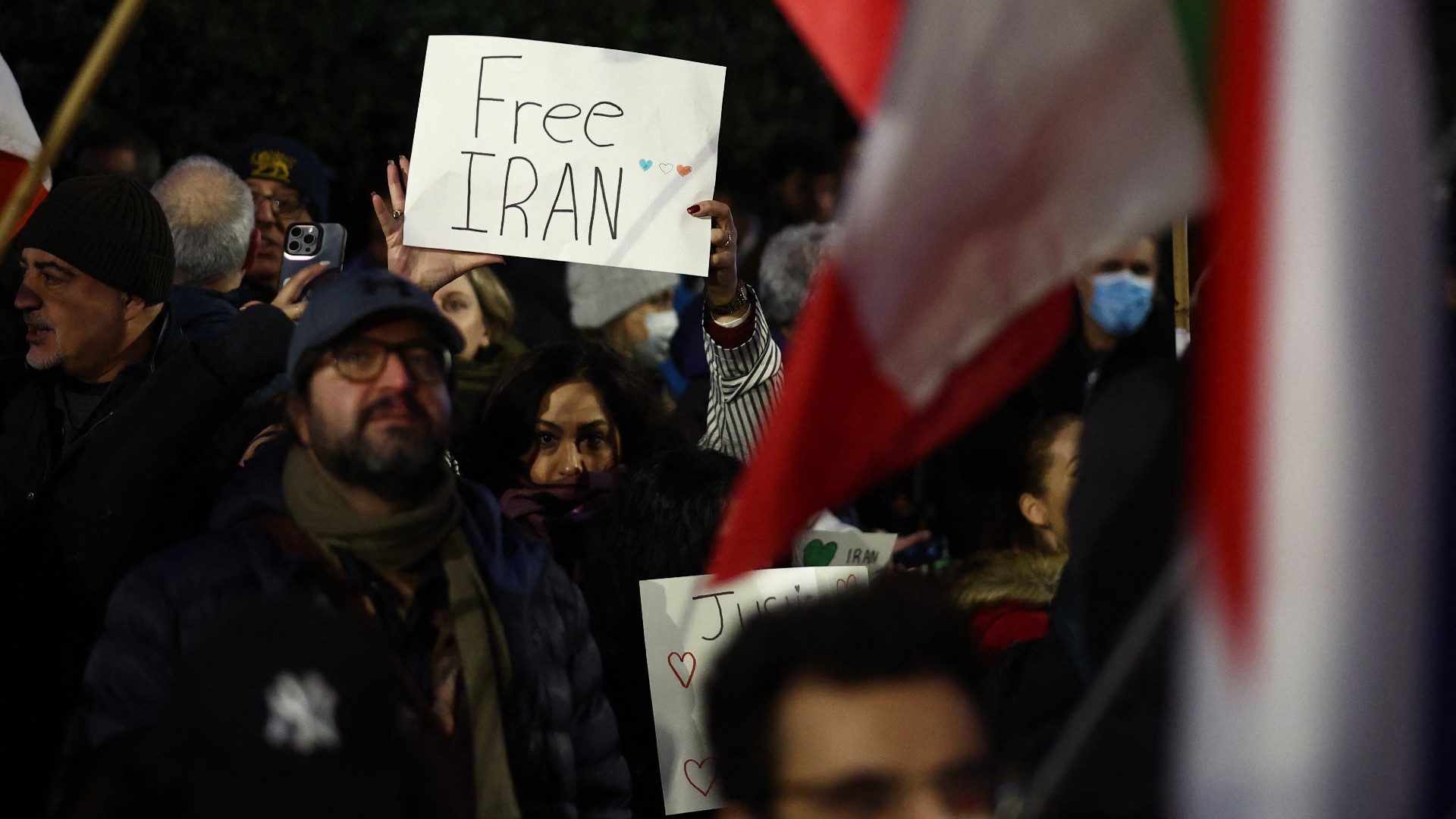
Iran’s Islamic Revolutionary Guard Corps (IRGC) has issued a stark warning, declaring the protection of national security an inviolable ‘red line’ as the nation experiences its most significant civil unrest in years. The elite military force, operating separately from Iran’s conventional army, pledged on Saturday to defend both the nation’s security apparatus and the foundational achievements of the 1979 Islamic Revolution.
The IRGC has attributed recent violence to ‘terrorist elements,’ accusing them of orchestrating attacks on military and law enforcement installations during overnight demonstrations. These alleged assaults reportedly resulted in casualties among both citizens and security personnel, alongside significant property destruction through arson attacks.
Parallel to the IRGC’s statements, Iran’s conventional armed forces—similarly under the command of Supreme Leader Ayatollah Ali Khamenei—vowed to safeguard national interests, critical infrastructure, and public property from further damage.
The protests, now entering their third week, initially emerged as economic demonstrations against spiraling inflation but have rapidly evolved into explicitly political movements. Some participants have openly called for the dismantling of the Islamic Republic itself, representing the most substantial challenge to Tehran’s authority since the 2022 ‘Woman Life Freedom’ demonstrations.
Medical professionals in Tehran reported alarming casualty figures, with just six capital hospitals documenting at least 217 protester fatalities, predominantly resulting from live ammunition injuries. Healthcare facilities described being overwhelmed by the influx of casualties.
Digital evidence suggests Iranian authorities have implemented a comprehensive internet blackout lasting over 36 hours, according to internet monitoring organization Netblocks. This digital suppression strategy has drawn criticism from prominent Iranian cultural figures, including filmmakers Mohammad Rasoulof and Jafar Panahi, who condemned the measures as attempting to conceal state violence against demonstrators.
Protesters interviewed by Middle East Eye described an economic collapse that has rendered basic subsistence unmanageable for ordinary households. ‘In just a few days, prices have multiplied. How can it be this disastrous?’ questioned Mani, a 27-year-old demonstrator from Mashhad. Another protester, Mehdi from Isfahan province, expressed generational despair: ‘Our lives and our youth have been wasted under the Islamic Republic.’
The human rights organization Hrana documented at least 65 confirmed deaths as of Friday, including 50 protesters and 15 security personnel. State media broadcast funeral processions for security officers allegedly killed in Hamedan, Qom, and Shiraz, while the IRGC reported three members of its Basij security force killed in confrontations with ‘armed rioters’ in Gachsaran.
International responses have escalated significantly, with U.S. President Donald Trump issuing a veiled threat of intervention if security forces employ lethal measures against protesters. European leaders from Germany, France, and the United Kingdom issued a joint statement condemning the violence and urging Tehran to exercise restraint, while U.S. Secretary of State Marco Rubio explicitly expressed support for Iranian demonstrators.