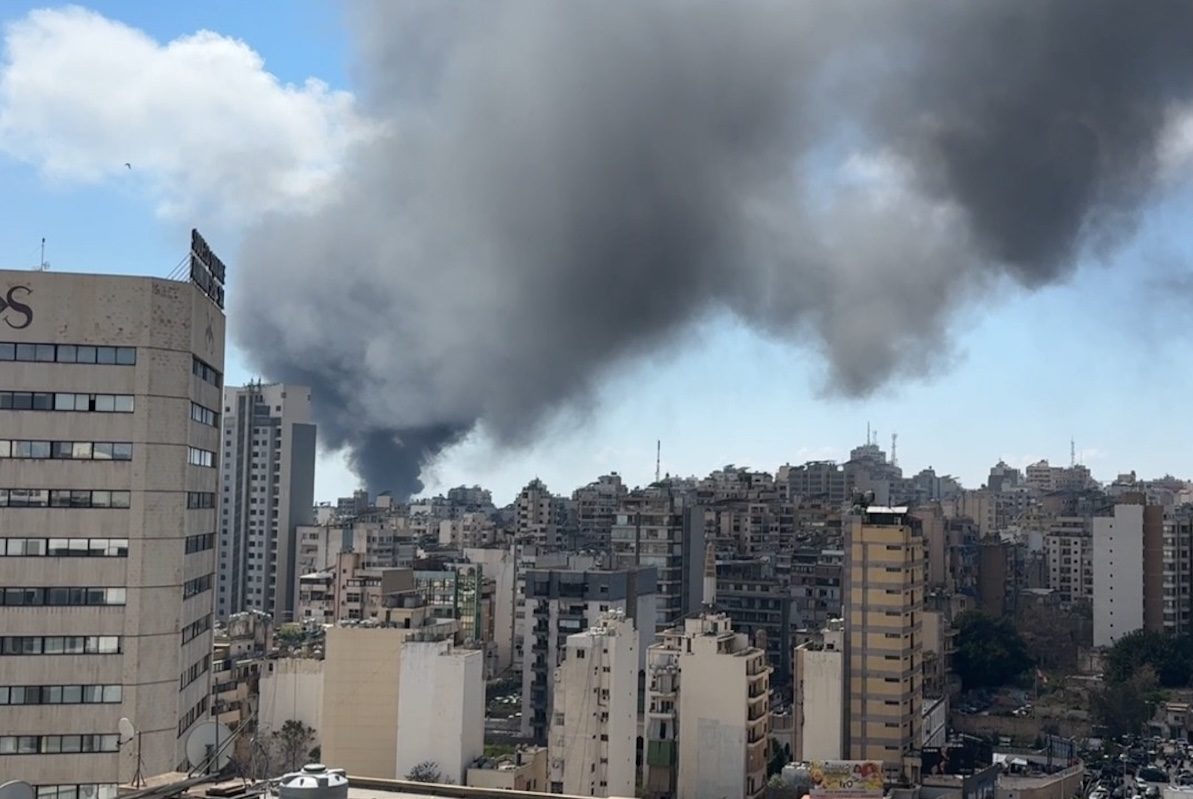
Less than 24 hours after a fragile Pakistan-brokered ceasefire between Iran, Israel, and the United States was announced, the entire agreement is on the brink of collapse after Israel launched an unprecedentedly intense bombing campaign across Lebanon, prompting Iran to halt all oil tanker traffic through the strategically critical Strait of Hormuz. This vital waterway handles roughly 20 percent of the world’s daily global oil shipments, and as of Wednesday, more than 180 tankers were already transiting the strait, with hundreds more queued for entry waiting to proceed, according to reporting from Reuters.
The crisis began unfolding shortly after the truce was finalized on Tuesday. While Israel formally agreed to the two-week cessation of hostilities with Iran, Israeli officials immediately asserted that the terms of the agreement did not extend to its ongoing military campaign against Hezbollah in southern Lebanon. Iran, however, counters that a full halt to Israeli attacks on Lebanon is one of the 10 core binding terms of the brokered deal, labeling Israel’s intensified strikes a clear violation of the agreement.
In the 24 hours following the ceasefire announcement, Israeli forces ramped up their bombardment of Lebanon to levels described by observers as “apocalyptic.” Lebanese health authorities confirm that at least 254 people have been killed in the strikes, with more than 1,160 others wounded — some local official estimates place the death toll as high as 300. More than 100 targets across the country, including densely populated residential urban areas, were hit in a coordinated wave of attacks that unfolded over just a few minutes. Among the fatalities in southern Lebanon are 12 medics who were serving on the front lines of emergency response, Reuters confirmed.
Lebanese Prime Minister Nawaf Salam issued an urgent public appeal on Wednesday, calling on allied and sympathetic nations to bring maximum pressure on Israel to immediately end the bombardment. “All of Lebanon’s friends are called upon to help us stop these attacks by all available means,” Salam said in his statement.
In response to Israel’s breach of the truce, Iran has taken rapid, dramatic action to enforce its commitments to the agreement. Iranian state media outlet Fars News first confirmed Wednesday that all commercial oil tanker traffic through the Strait of Hormuz has been suspended, timed to coincide with the expansion of Israel’s attacks on Lebanon. Top Iranian officials have also openly discussed two further escalatory steps: resuming full-scale counteroffensives against Israel, and withdrawing entirely from the ceasefire agreement entirely if the Lebanese bombing does not stop immediately.
“Iranian Foreign Minister Abbas Araghchi outlined the country’s red lines clearly in a post on his official Telegram channel Wednesday. “The conditions for a ceasefire between Iran and the United States are clear and explicit: America must choose either a ceasefire or the continuation of war through Israel; both cannot coexist,” he wrote. “The world is witnessing the killings in Lebanon. Now the ball is in America’s court, and global public opinion is watching to see whether this country will fulfill its commitments or not.”
Israeli political commentator Ori Goldberg offered a sharp critical assessment of his country’s actions during a Wednesday interview with Al Jazeera, framing the intensified strikes as a sign of political desperation rather than military strength. Goldberg described the expanded bombing as “a pyrotechnics show meant to demonstrate Israel’s effectiveness while ultimately demonstrating its despair.” He noted that Israeli Prime Minister Benjamin Netanyahu “bet it all” on aligning with U.S. President Donald Trump to advance his regional agenda and ultimately lost, after far-right Israeli leaders were sidelined from Trump’s decision to pause attacks on Iran.
Netanyahu, Goldberg argued, has now turned back to Lebanon, a territory that has faced repeated Israeli incursions and sovereignty violations for decades. Since the 1980s, Israeli military operations in Lebanon have killed more than 20,000 people, most of them civilians, and Israel occupied parts of southern Lebanon for 18 years through the end of the 20th century. Many far-right Israeli politicians still publicly claim all of Lebanon as part of their ideological “Greater Israel” project.
Israeli Defense Minister Israel Katz defended the strikes in a Wednesday statement, claiming the operation targeted hundreds of Hezbollah militants at command centers across Lebanon. Katz called the attack “the largest concentrated blow Hezbollah has suffered since Operation Beepers,” the 2024 strike that used booby-trapped communication devices to kill dozens of people, including multiple children. It is worth noting that both Katz and Netanyahu are currently accused of inciting genocide in Gaza before the International Court of Justice, and the pair are also wanted by the International Criminal Court on charges of crimes against humanity and war crimes stemming from Israel’s 29-month military campaign and siege in Gaza. That campaign has left more than 250,000 Palestinians dead, wounded, or missing, and has reduced most of the Gaza Strip to ruins, even as hundreds more Palestinians have been killed in the six months since a ceasefire was implemented there.
Regional and international actors across the political spectrum have widely condemned Israel’s escalation as a deliberate attempt to sabotage the truce. Iraqi government spokesperson Bassem al-Awadi called the strikes “evidence of its hostile plan to sabotage the truce” and “perpetuate conflict.” Qatar’s Ministry of Foreign Affairs issued a statement calling on the global community “to fulfill its responsibilities by compelling the Israeli occupation authorities to halt their barbaric massacres and repeated attacks on Lebanon, and to hold them accountable for respecting international covenants and laws.”
Major international humanitarian aid organizations have echoed these warnings, emphasizing that the partial ceasefire, which President Trump has touted as a landmark breakthrough for Middle East peace, will not survive unless the bombing of Lebanon stops immediately. David Miliband, president and CEO of the International Rescue Committee, noted that while the Tuesday ceasefire announcement was a “welcome step,” it remains “partial, fragile, and incomplete.” Miliband pointed to the core dispute over the truce’s scope: while Trump and Israel claim Lebanon was never included in the terms, Pakistan — the primary mediator that brokered the deal — confirms that a halt to attacks on Lebanon was part of the 10-point framework agreed to by all parties.
“Leaving one front of the conflict burning risks prolonging the crisis, not resolving it,” Miliband said.
Ahmad Alhendawi, Save the Children’s regional director for the Middle East, North Africa, and Eastern Europe, echoed that assessment, noting that the current truce structure “is not enough” to protect vulnerable civilian populations. “We’re urgently calling for a definitive ceasefire for the wider region, which includes Lebanon, to protect children from further harm,” Alhendawi said. “A whole generation of children bears the brunt of this conflict. A definitive ceasefire for the entire regional conflict, including Lebanon, is the only way to truly protect children’s lives and futures and end the suffering. The violence must end before more children suffer irreparable harm.”
The Wall Street Journal reported Wednesday that Iran has already notified regional mediators that it will not participate in planned in-person follow-up ceasefire talks in Islamabad, Pakistan’s capital, unless a full ceasefire is implemented in Lebanon first. That development comes as Netanyahu has publicly vowed to “continue to strike” Lebanon regardless of the truce.
“Sounds like somebody needs to rein in Israel ASAP,” Brian Finucane, senior adviser to the US Program at the International Crisis Group, wrote on social media Wednesday. “The American people want this war to end and bombing downtown Beirut is not a path to peace.”
Despite widespread calls to enforce a full truce, President Trump doubled down on his position Wednesday during an interview with PBS, insisting that Lebanon was “not included in the deal” and framing the Israeli assault as “a separate skirmish.” That position has been rejected by top Iranian officials, humanitarian leaders, and even U.S. lawmakers who support a lasting regional peace, who all argue that conflicts across the Middle East are deeply interconnected.
“Aggression towards Lebanon is aggression towards Iran,” Gen. Seyed Majid Mousavi, aerospace commander of Iran’s Islamic Revolutionary Guard Corps, stated Wednesday.
U.S. Representative Don Beyer (D-VA) called on the Trump administration to reverse course immediately. “The Trump administration must immediately make clear to Israel that the ceasefire agreement is not and cannot be functional without a ceasefire in Lebanon,” Beyer said. “The American people want this war to end, and bombing downtown Beirut is not a path to peace.”
Amitabh Behar, executive director of Oxfam International, emphasized in a statement that no durable peace can be achieved without ending all hostilities across the entire region. “Until there is an end to all hostilities, across the entire region, no one will feel truly safe,” Behar said. “Israel’s ongoing invasion in Lebanon, its destructive occupation of Palestinian territory, ground incursion and airstrikes in Syria, its continued attacks in Gaza, and violent attacks and territorial expansion in the West Bank are still continuing despite the provisional cessation of violence with Iran. This deadly toll across the Middle East is intolerable and must stop.”