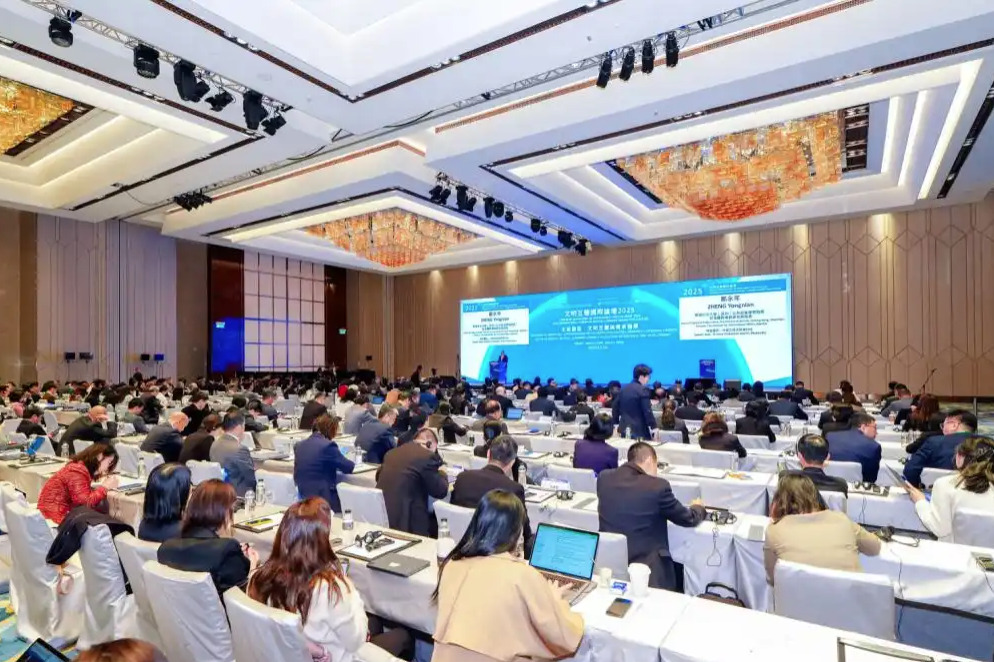
In a powerful response to escalating global divisions, Macao has positioned itself as a beacon for international cooperation with the unveiling of the groundbreaking “Macao Initiative” during the inaugural International Forum on Mutual Learning among Civilizations. The two-day gathering, held from December 17-18, 2025, brought together distinguished scholars and professionals from diverse regions including North Africa, Latin America, Southeast Asia, and Europe to address pressing global challenges through sustained intercultural dialogue.
The forum, presented by the Macao Special Administrative Region government and organized by its Cultural Affairs Bureau with support from the Chinese Academy of History, produced a consensus that cultural diversity represents humanity’s greatest strength rather than a source of conflict. Participants emphasized that ongoing communication serves as the essential antidote to misunderstanding, exclusion, and societal fragmentation.
Leong Wai-man, President of the Macao SAR Cultural Affairs Bureau, formally introduced the initiative during the closing ceremony, outlining five strategic directions: enhancing global civilizational dialogue, promoting openness-driven exchange, strengthening heritage preservation, engaging youth through digital innovation, and establishing platforms to advance China’s Global Civilization Initiative. “The essence of civilizational dialogue lies in acknowledging differences while seeking common ground, not enforcing uniformity,” Leong stated. “Macao’s mission is to ensure this vital dialogue continues indefinitely.
International experts provided compelling testimony supporting this approach. Elhaj Ahmed Khaled, Assistant Professor of Chinese Language and Literature at Tunisia’s University of Carthage, noted the alignment between China’s philosophy of “harmony without uniformity” and Tunisia’s cultural traditions. While celebrating four decades of Chinese language education in Tunisia and growing interest among youth, Khaled cautioned about persistent Western media influence in Arab and African regions, where political agendas often promote distorted narratives of civilizational clash.
From Argentina, Professor Veronica Noelia Flores of the National Scientific and Technical Research Council emphasized culture’s role in rebuilding social cohesion and community values. “Such spaces must enable people to imagine alternative worlds and futures that respect cultural diversity and intercultural dialogue,” she observed.
Practical success stories emerged from Indonesia, where Ruddy Erieyanto, a tourism and cultural heritage activist from Semarang, demonstrated how cultural preservation drives economic viability. The city’s transformation of its historic Chinatown into a vibrant cultural hub shows how heritage can coexist with urban development.
Looking toward future conservation efforts, Canada’s Professor Mario Santana Quintero, co-UNESCO Chair on Digital Twins for World Heritage Conservation, highlighted the importance of balanced technological application. While digital tools offer unprecedented conservation possibilities, he advocated for low-capital, high-impact models that avoid creating new inequalities while protecting civilizational diversity.
The Macao Initiative emerges as a timely framework for international cooperation, advocating for sustained dialogue as the foundation for global understanding and peace.