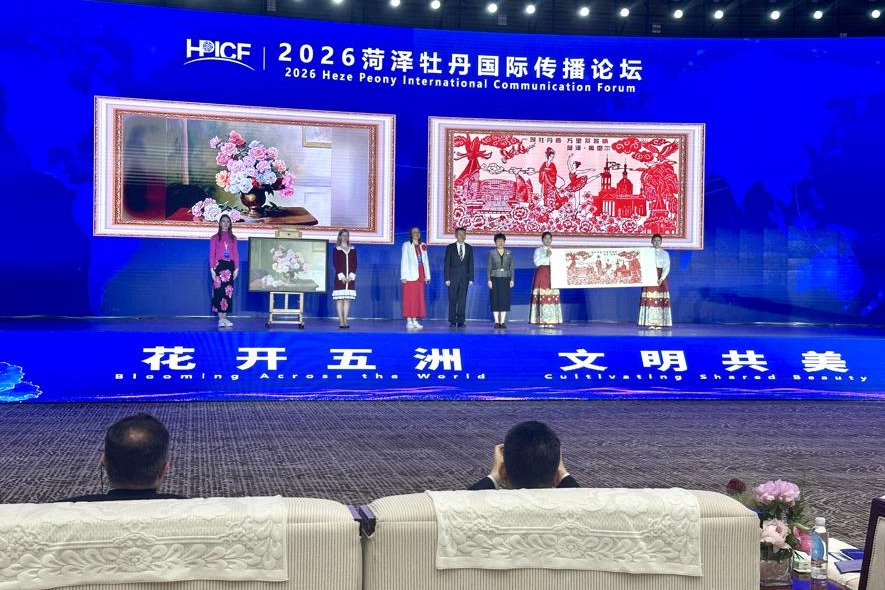
In the heart of China’s famed “Peony Capital” of Heze, Shandong province, global stakeholders from academia, government, and cultural institutions gathered on Saturday for the 2026 Heze Peony International Communication Forum, a landmark event designed to frame the iconic peony flower as a powerful cross-cultural bridge fostering global mutual understanding. Bringing together officials, scholars and industry specialists from nations including Russia and Italy, the forum builds on centuries of peony cultivation heritage in Heze to open new avenues for people-to-people connection across borders.
This gathering marks a core component of the 2026 World Peony Conference, a 30-day global event that launched the previous day under the unifying theme “Blooming Across the World, Cultivating Shared Beauty”. The conference and accompanying forum shine a global spotlight on Heze’s unparalleled legacy as one of the world’s preeminent centers of peony cultivation: the region boasts more than 1,500 years of continuous peony growing history, with 1,308 officially registered varieties spanning nine distinct color groups and 10 unique flower forms. Beyond its cultural significance, Heze’s peony industry has grown into a major economic driver, with the total output value spanning from primary cultivation to high-value processed peony goods surpassing 13 billion yuan in 2025.
The forum opened with a symbolic act of cross-cultural friendship, as Tatiana Bakurova, principal of Oryol State First High School in Russia, presented an original oil painting of peonies titled *Flower of Friendship* — a work created collectively by her school’s teachers and students. In return, the Publicity Department of Heze gifted the Russian delegation a traditional handcrafted peony paper-cut artwork, a tangible example of China’s intangible cultural heritage tied to the iconic bloom. This gift exchange set the collaborative tone for the day’s discussions.
In his opening address, Zhang Lun, secretary of the Heze Municipal Committee of the Communist Party of China, emphasized the universal appeal of floral aesthetics. “Flowers are an aesthetic language that transcends national borders,” Zhang noted. He called for coordinated collective action to advance two complementary goals: expanding global access to Heze’s peony varieties and cultural products, while welcoming international floral expertise and cultural exchange to Heze. This dual approach, Zhang argued, would inject fresh momentum into global efforts to build a harmonious shared global community rooted in mutual respect and understanding.