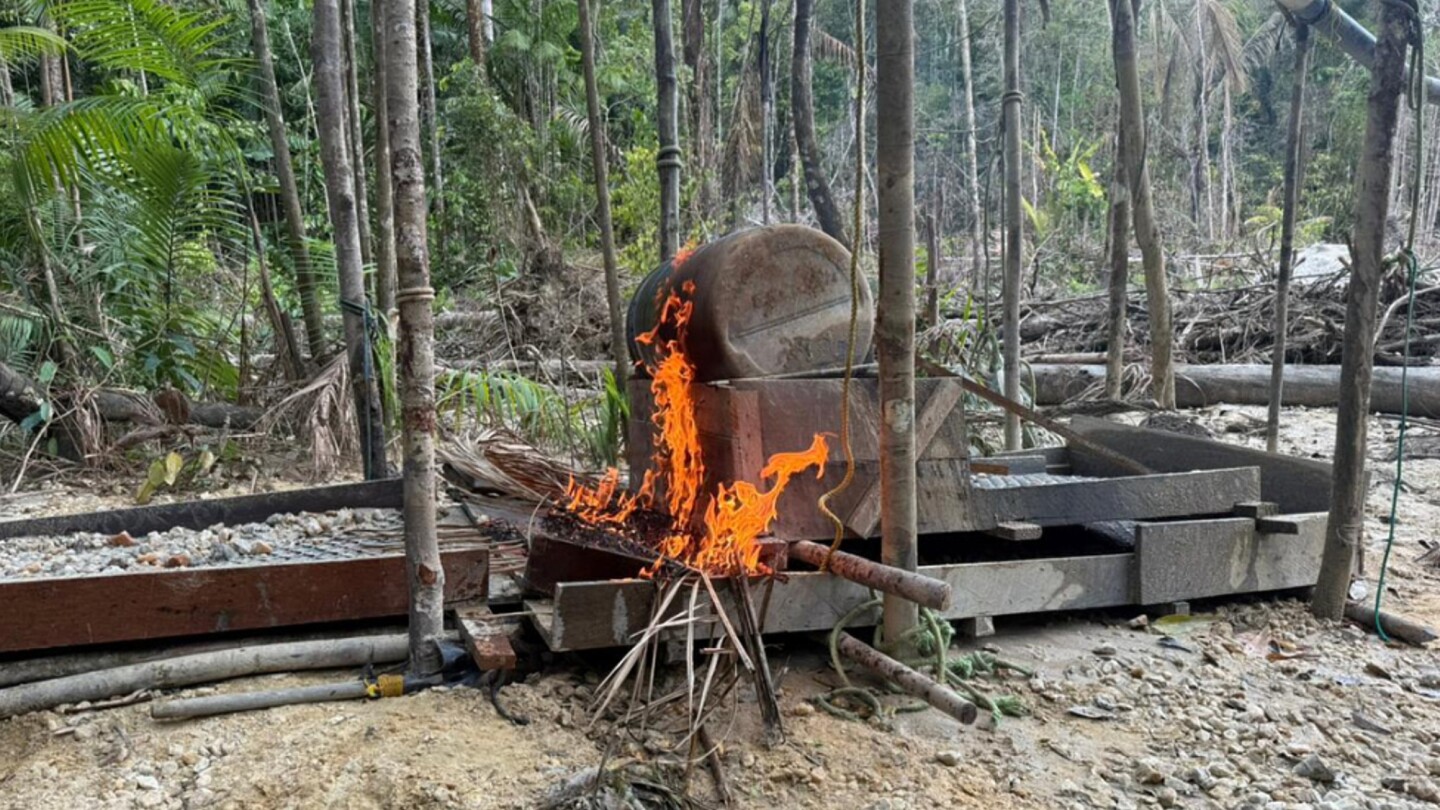
In a landmark cross-border operation, law enforcement agencies from Brazil, French Guiana, Guyana, and Suriname have apprehended nearly 200 individuals in a coordinated assault on illegal gold mining operations devastating the Amazon rainforest. The December initiative, backed by Interpol, European Union authorities, and Dutch environmental crime specialists, represents the first joint multinational effort targeting the environmentally destructive trade.
Operation Guyana Shield involved extensive surveillance across remote border regions, with authorities conducting over 24,500 inspections of vehicles and individuals. The operation yielded significant seizures including substantial amounts of unprocessed gold, mercury containers valued at over $60,000, firearms, narcotics, mining apparatus, and considerable cash reserves. Notably, three suspects were detained in Guyana on charges of gold smuggling and money laundering after investigators confiscated approximately $590,000 in cash and raw gold materials, believed to be connected to a major gold exporting enterprise.
The environmental consequences of illegal gold mining have reached critical levels, driving extensive deforestation and polluting vital waterways with toxic mercury. This destructive practice has expanded rapidly alongside soaring global gold prices, transforming gold into one of the most lucrative commodities for transnational organized crime networks. The operation revealed sophisticated smuggling methods, including mercury concealed within solar panels transported via commercial buses.
Beyond environmental damage, authorities uncovered disturbing human rights violations, including undocumented migrants and minors potentially subjected to forced labor and sexual exploitation within mining networks. Additional seizures included counterfeit medications, alcohol, cigarettes valued at over $40,000, along with specialized mining equipment.
Interpol Secretary General Valdecy Urquiza emphasized the growing threat posed by illegal mining operations, particularly in vulnerable remote regions. The operation marks a significant advancement in regional cooperation, addressing challenges posed by dense rainforest terrain and porous borders that have historically hampered enforcement efforts against environmentally destructive criminal enterprises.