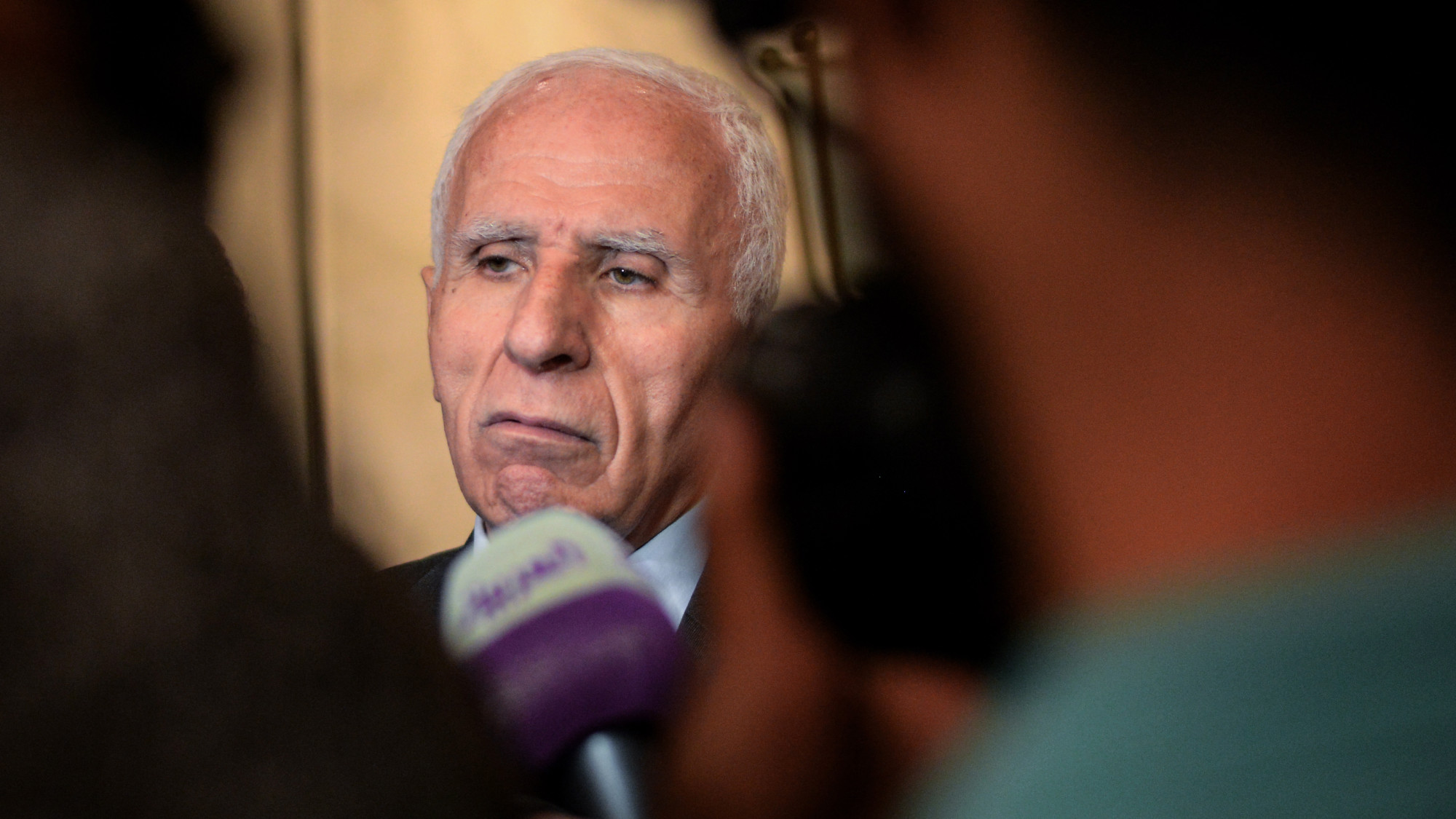
A political storm has erupted within Fatah following surprising statements by senior official Azzam al-Ahmad that appear to endorse Hamas, revealing profound internal divisions within the Palestinian movement. The veteran leader, who serves as secretary-general of the Palestine Liberation Organization’s executive committee, broke from his historically critical stance toward Hamas during an interview with Egyptian outlet Shorouk News.
In his controversial remarks, al-Ahmad explicitly refused to characterize Hamas as a terrorist organization, stating, ‘Everything being said about disarming Hamas and labelling it a terrorist organisation is unacceptable to us. Hamas is not a terrorist organisation.’ He further emphasized that ‘Hamas is part of the Palestinian national movement’ and revealed ongoing dialogue to facilitate the group’s formal entry into the PLO framework.
The comments triggered immediate backlash within Fatah ranks, with social media platforms flooded with demands for al-Ahmad’s dismissal. However, some members defended the statements as personal views rather than official party position. This controversy emerges amid mounting international pressure for Hamas to disarm following Israel’s devastating military campaign in Gaza.
Political analysts interpret al-Ahmad’s shift as indicative of deeper strategic recalculations within Fatah. Researcher Mohammed al-Qeeq identifies two competing factions: one advocating Palestinian unity despite limited regional support, and another resisting reconciliation to protect entrenched interests. Analyst Adel Shadeed suggests a significant segment of Fatah now believes that continued opposition to Hamas ultimately weakens their own movement more than their rivals.
The timing appears significant, coinciding with President Mahmoud Abbas’s call to prepare for Palestinian National Council elections in November. According to analyst Suleiman Bisharat, these statements represent Fatah’s attempt to counter its political marginalization both internationally and regionally. The movement appears to be adopting a unifying discourse to rehabilitate its political trajectory, though Bisharat characterizes this approach as reactive rather than strategically systematic.
Hamas official Bassem Naim welcomed the ‘positive and constructive’ remarks but emphasized the need for actionable programs to address Palestinian divisions. Historically, Fatah has never formally designated Hamas as a terrorist organization, though the relationship has been framed within contexts of rivalry and accusations of pursuing foreign agendas.
The controversy highlights Fatah’s delicate balancing act—attempting to demonstrate its continued relevance in shaping Palestinian politics while maintaining plausible deniability through individual statements that can be disavowed if necessary, a pattern established through previous episodes with other Fatah leaders.