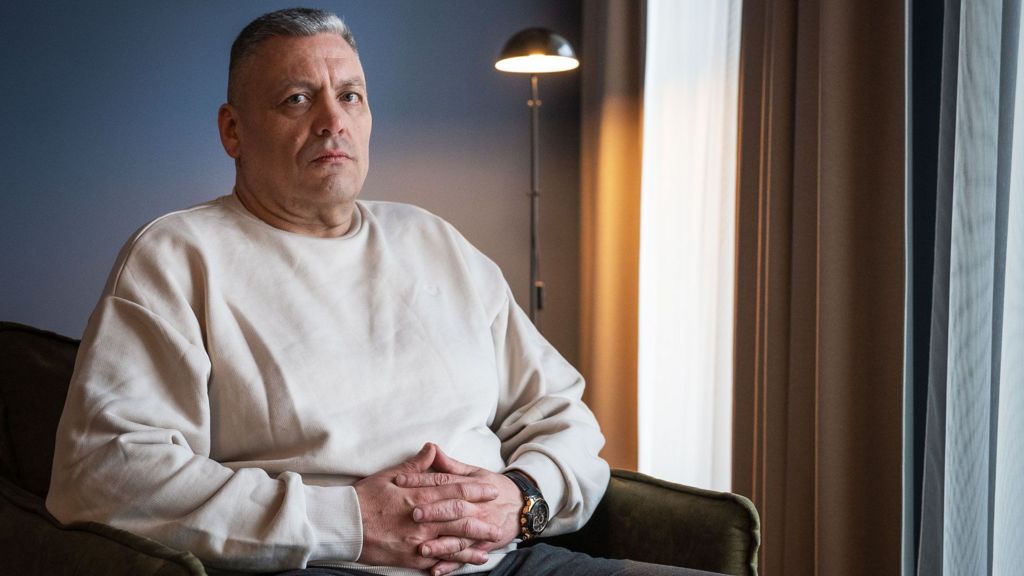
In a startling revelation from Vilnius, Aleksandr Suranovas, a 53-year-old Lithuanian national, finds himself at the center of an international terrorism case after unknowingly transporting incendiary devices disguised as innocent consumer goods. The sophisticated plot, allegedly orchestrated by Russian military intelligence (GRU), targeted destinations in the UK and Poland through expertly concealed explosives in massage cushions and cosmetic containers.
Suranovas was recruited through Telegram by an old acquaintance known only as ‘HK,’ who promised €150 for what appeared to be simple delivery work. Unbeknownst to him, the parcels contained nitromethane-based explosives and hidden ignition systems that evaded standard security screenings. The devices were already activated with countdown timers when he received them in a Vilnius park in July 2024.
Within days, three of the four packages ignited at various locations—Leipzig Airport, a Warsaw distribution center, and a Birmingham warehouse—causing significant damage but no casualties. The fourth device malfunctioned. This triggered a multinational investigation resulting in 22 arrests across Lithuania and Poland.
Security experts identify this operation as part of Russia’s shift toward using criminal proxies for deniable hybrid warfare against nations supporting Ukraine. Vilmantas Vitkauskas, head of Lithuania’s National Crisis Management Centre, characterizes these actions as ‘active aggression against our nations,’ warning that supporters of Kyiv will continue to be targeted.
Suranovas, now under intensive supervision with an electronic tag, maintains his innocence, stating he would ‘never have agreed to that, because I think it’s awful. I was used.’ His case exposes Moscow’s alleged strategy of recruiting from European criminal networks since traditional intelligence operations were compromised after the 2018 Salisbury poisonings.
The White House reportedly delivered a high-level warning to Russia to ‘knock it off’ following these incidents, while investigators discovered additional explosives buried in food cans at a Lithuanian cemetery, suggesting broader preparation for future attacks.