Under the cover of darkness at RAF Akrotiri in Cyprus, the roar of Typhoon and F-35 fighter jets pierces the night sky, followed by the heavy rumble of their aerial refueling partner—the Voyager tanker aircraft. These sophisticated warplanes have maintained continuous patrols over Cyprus and Jordan for the past month, conducting critical defensive operations against Iranian drone incursions.
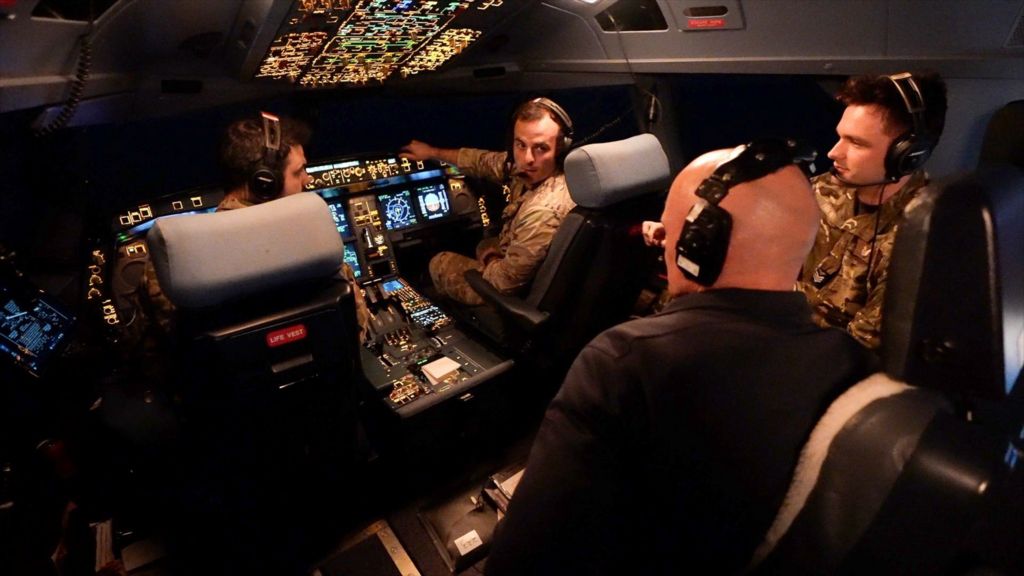
The BBC obtained exclusive aerial access to witness these complex missions firsthand. From the Voyager’s cockpit, journalists observed the shimmering lights of Cyprus fading into the distance as the aircraft approached the coasts of Israel and Lebanon. The crew pointed out brief orange flashes on the horizon—potential evidence of incoming Iranian missiles or Israeli countermeasures, including the Iron Dome defense system.
During these extended nine-hour missions, fighter jets refuel up to seven times, consuming approximately 30 tonnes of aviation fuel. The delicate mid-air refueling procedure requires precision flying as pilots connect to fuel hoses trailing from the tanker’s wings. While refueling has become routine, the primary challenge remains detecting and neutralizing Iranian drones.
British jets operating from Cyprus and Qatar have successfully intercepted multiple Iranian drones using advanced ASRAAM missiles, though officials remain discreet about exact engagement numbers. The cost-effectiveness of employing sophisticated missiles against relatively inexpensive fibreglass drones presents ongoing tactical considerations.
Squadron Leader ‘Bally’, an RAF F-35 pilot, detailed the operational complexities: ‘Operating fast jets is inherently dangerous, particularly when targeting low-flying drones near the surface. Risks include terrain collision and coordinating with multiple aircraft in contested airspace.’
Despite government assurances about sufficient pre-conflict preparations, the base experienced a drone strike during the war’s second night. A small drone with a two-meter wingspan—likely launched from Lebanon—struck a hangar on the American sector of the base. Base commander Maj Gen Tom Bewick acknowledged the incident but noted minimal damage, suggesting defenders had adequate warning to implement protective measures.
In response, Akrotiri’s defenses have been significantly enhanced with eight Typhoons, eight F-35s, Wildcat helicopters equipped with short-range air defense missiles, and Merlin helicopters featuring early warning radar systems. The Royal Navy destroyer HMS Dragon now provides additional coastal defense capabilities.
Gen Bewick publicly acknowledges Iran’s declared targeting of RAF Akrotiri and states the base remains vulnerable to future attacks despite strengthened defenses. Most military families evacuated after the initial attack have now returned, with air raid warnings becoming less frequent due to improved intelligence and detection systems.
The UK maintains its sovereign control over the base despite diplomatic discussions with Cypriot authorities. The prolonged defensive posture strains British armed forces, diverting resources from other missions including counter-ISIS operations and naval deployments. Military leaders anticipate extended defensive operations, reflecting the region’s historical pattern of prolonged conflicts.