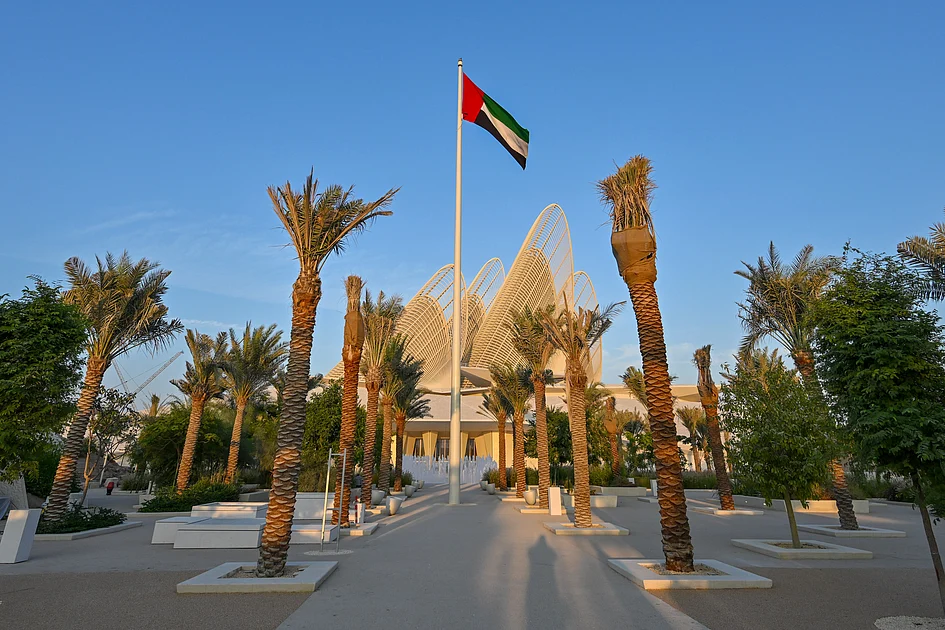
Abu Dhabi’s highly anticipated Zayed National Museum officially opened its doors to the public today, offering an unprecedented journey through 300,000 years of Emirati history. The institution stands as a monumental tribute to the nation’s rich cultural legacy, blending archaeological marvels with community narratives in a groundbreaking approach to heritage preservation.
At the heart of the museum’s atrium rests an extraordinary reconstruction of a 4,000-year-old Mesopotamian cargo boat—an 18-meter vessel meticulously crafted without nails using ancient techniques. Museum organizers conducted an authentic sea trial, successfully sailing this replica across the Arabian Gulf at speeds reaching five knots. This experimental archaeology project demonstrates the vessel’s seaworthiness while honoring ancient maritime traditions.
The galleries showcase remarkable discoveries including the burial site of an 8,000-year-old woman from Marawah Island, accompanied by a shark-tooth necklace and traces of what experts believe to be ancient henna. According to Mohamed Al Mubarak, Chairman of the Department of Culture and Tourism – Abu Dhabi, the sophistication of her burial suggests she held significant status, possibly as a community leader. Alongside this ancient resting place, visitors can examine a Bronze Age sword recently unearthed in Al Ain, providing new insights into burial customs where weapons accompanied the deceased.
Beyond physical artifacts, the museum pioneers an innovative ‘vault’ system where visitors can contribute personal memories and family histories, ensuring the preservation of intangible heritage. This commitment to oral history reflects Sheikh Zayed’s philosophy that ‘if you do not know your past, you cannot know your future’—a guiding principle throughout the institution’s narrative.
The museum’s architecture, designed by Norman Foster, features five towers evoking falcon wings—symbolizing the UAE’s aspirations toward great heights. Interior spaces maintain a warm sand-colored palette that seamlessly blends past and future aesthetics.
Six permanent galleries present Emirati history from a distinctly local perspective, covering maritime heritage, early Arab navigation, pearling economies, and trade networks. Interactive elements include scent stations featuring traditional spice mixes and a pearling water tank highlighting women’s contributions to coastal economies.
The institution also serves as a research hub, offering scholarships to young Emiratis in archaeology, geology, and related fields while continuing archaeological excavations throughout the region. This dual focus on preservation and education ensures the museum will remain a living institution that grows alongside the nation it represents.