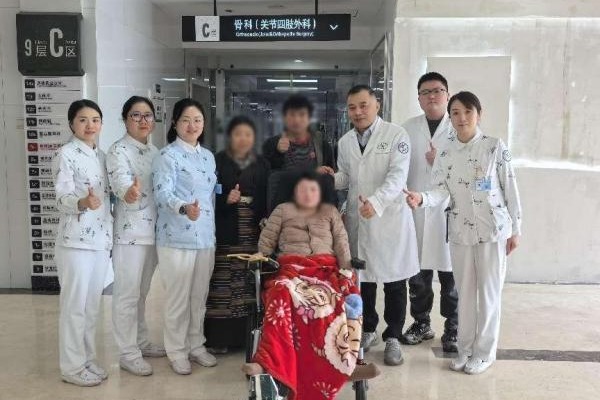
A remarkable medical journey spanning over 3,000 kilometers has brought newfound hope to Pema Drolma, a 29-year-old Tibetan woman who spent more than 14 years confined to bed due to severe joint deformities from systemic juvenile idiopathic arthritis. Her transformative treatment at Chongqing’s Daping Hospital (Army Medical Center of Army Medical University) represents a triumph of specialized healthcare intervention for rare conditions.
Born to a nomadic family in a remote Himalayan village within the Xizang Autonomous Region, Drolma’s condition left her completely dependent on her mother’s care since diagnosis at age 14. Her situation changed dramatically in 2024 when officials from the Tibet Development Fund identified her during rural outreach efforts and facilitated her transfer to the advanced medical facility in Chongqing.
Under the guidance of orthopedic specialist Gou Wenlong, a multidisciplinary team spanning 12 hospital departments orchestrated a comprehensive treatment strategy. The medical breakthrough began with successful hip replacement surgeries in early 2025, requiring exceptionally delicate procedures to address fused bones. Subsequent operations addressed her knee joints, with February marking her fourth successful surgery.
The rehabilitation process extends beyond surgical intervention, incorporating challenging physical exercises to restore joint function and muscle strength. Nutritionists have designed customized meal plans, while psychologists address social anxiety resulting from years of isolation and educational disruption.
Lead surgeon Wang Ziming outlines the treatment roadmap: ‘We will progressively restore functional movement in her elbows and shoulder joints to enable self-feeding capabilities. We are confident that in the foreseeable future, she will not only stand independently but walk with her mother to the foothills of Mount Qomolangma.’
Medical experts have revised the treatment timeline from an initial 3-5 year projection to 2-4 years, reflecting the remarkable progress achieved. This case occurs within the broader context of Chongqing’s medical assistance program for Tibetan communities, which since 2015 has deployed 11 medical teams comprising over 500 specialists to the region.
Through WeChat, Drolma expressed her gratitude: ‘I never dared to imagine improvement, but meeting these exceptional officials, doctors, and nurses has been incredibly fortunate. The treatment has dramatically improved my quality of life, and my emotional state continues to elevate.’