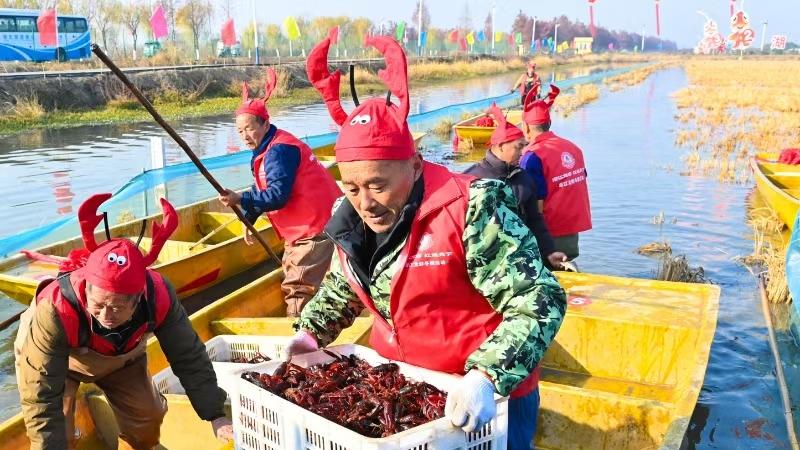
A revolutionary advancement in aquaculture technology has transformed Beijing’s winter dining scene, enabling year-round availability of fresh crayfish—a delicacy previously confined to summer months. The culinary breakthrough originates from Qianjiang, Hubei province, where agricultural innovators have successfully overcome longstanding technical barriers in winter rice paddy co-cultivation systems.
Despite recent snowfall blanketing Beijing’s streets, restaurants in popular dining districts like Sanlitun and Guijie Street now emanate the distinctive aroma of chili-oil and garlic-infused crayfish throughout the winter season. This unprecedented supply chain achievement marks a significant departure from traditional seasonal limitations that once restricted fresh crayfish availability during colder months.
Agricultural authorities in Hubei province, responsible for nearly 40% of China’s total crayfish output, have implemented technological innovations that transitioned the industry from seasonal harvesting to continuous year-round production. The breakthrough specifically addresses winter farming challenges in integrated rice-crayfish agricultural systems, where low temperatures previously hindered large-scale production.
According to Zhang Yun, director of the Qianjiang Crayfish Industry Promotion Center, the city’s winter output is projected to exceed 26,000 tons this year—representing a 30% year-on-year increase. Since November, Beijing has received a consistent daily supply of 11 tons of fresh winter crayfish, ensuring stable market availability.
The economic implications extend beyond consumer benefits. Local farmers report substantial income improvements, with the new winter model generating approximately 30,000 yuan ($4,896) in additional net profit per hectare compared to traditional seasonal farming practices.
Industry leaders including Wang Zhongwei, culinary research director at COFCO Group, celebrate this development as achieving ‘crayfish freedom’ for consumers. Restaurant associations note that the reliable supply of quality ingredients during winter months injects new vitality into Beijing’s culinary landscape, offering chefs and establishments previously unavailable menu options during the coldest season.