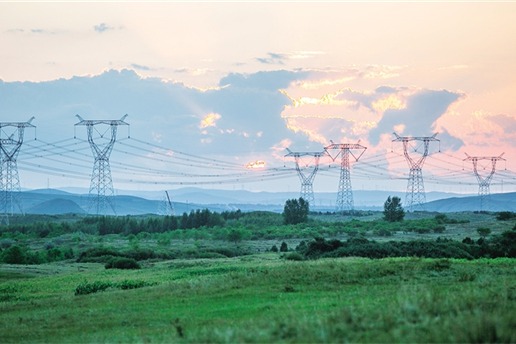
Inner Mongolia has achieved a significant milestone in its ultra-high-voltage (UHV) power transmission, with outbound electricity surpassing 801.54 billion kilowatt-hours (kWh) as of October 31, according to the State Grid Inner Mongolia Eastern Electric Power Co. This monumental achievement, facilitated through eight UHV transmission channels, could supply annual electricity to approximately 280 million households, while reducing coal consumption by 270 million metric tons and cutting carbon dioxide emissions by 700 million tons. As a pivotal national energy and resource base, Inner Mongolia’s UHV grid development is integral to China’s broader energy strategy. Leveraging its abundant coal, wind, and solar resources, the region has established a robust network connecting major eastern load centers such as Shandong, Tianjin, Shanxi, Jiangsu, and Hebei. Annual power transmission has surged from 7.37 billion kWh in 2017 to 170.6 billion kWh in 2024, marking seven consecutive years of growth and solidifying Inner Mongolia’s role as a critical hub for interregional energy distribution. To ensure the safe and stable operation of UHV systems, the grid operator has implemented a comprehensive strategy encompassing smart control, multi-dimensional inspection, and precise maintenance. Customized maintenance plans tailored to geographic and climatic conditions, coupled with a two-hour emergency repair response network, have been established. Additionally, nine local monitoring teams, comprising herders and collaboration mechanisms with local power and wind energy companies, have enhanced joint risk management. The efficient operation of UHV channels is also accelerating the region’s green energy transition, with over 102 billion kWh of clean energy delivered to areas including Beijing, Tianjin, and Hebei, fostering cleaner and more sustainable energy structures across northern China.