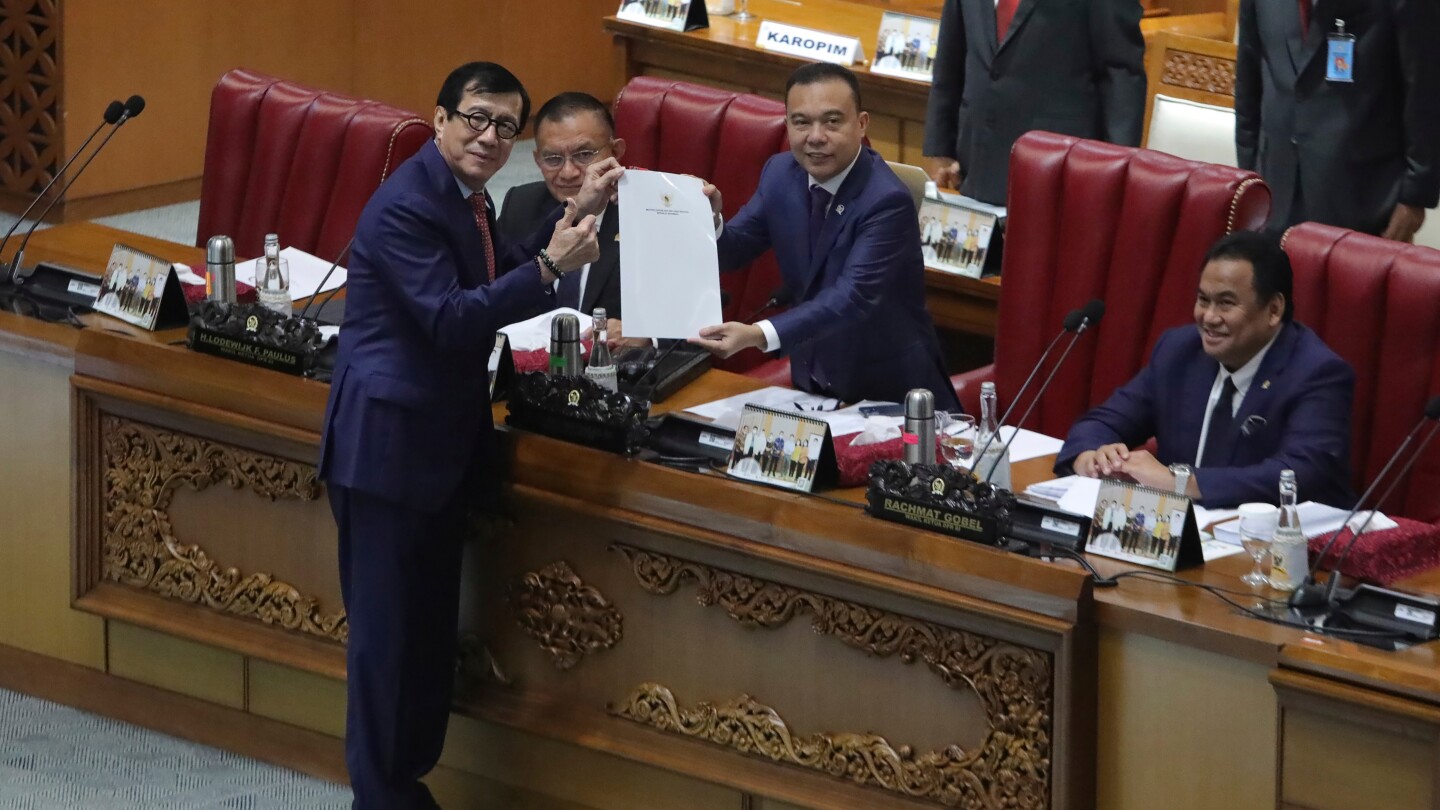
JAKARTA, Indonesia — Indonesia has initiated enforcement of its groundbreaking penal code, effectively terminating the application of Dutch colonial-era criminal legislation that had governed the nation for over eight decades. This transformative legal overhaul represents one of the most substantial judicial reforms since the country’s independence proclamation in 1945.
The newly implemented Indonesian Penal Code (KUHP), spanning 345 pages, received parliamentary approval in December 2022 following extensive deliberation. The legislation addresses the long-standing incongruence between colonial legal structures and contemporary Indonesian social values, though its development faced repeated delays due to complex negotiations balancing human rights considerations, religious principles, and cultural traditions.
Among the most contentious provisions are those criminalizing extramarital sexual relations, punishable by up to one-year imprisonment, and cohabitation between unmarried partners, carrying a six-month sentence. Enforcement requires formal complaints from immediate family members, a mechanism government officials assert will prevent arbitrary implementation against foreign visitors.
The code reinstates lèse-majesté statutes prohibiting insults against the president, vice president, and state institutions, with violations carrying potential three-year prison terms. Deputy Minister of Law Edward Hiariej emphasized that official guidelines distinguish between permissible criticism and criminal defamation, though human rights organizations remain unconvinced.
Notably absent from the final legislation is a previously contemplated ban on homosexual relations, representing a significant victory for LGBTQ advocacy groups. The code maintains capital punishment while introducing innovative probationary measures that could commute death sentences after ten years based on demonstrable rehabilitation.
Legal scholars identify a philosophical shift in sentencing approaches, expanding non-custodial alternatives including community service and supervisory measures. The Institute for Criminal Justice Reform acknowledges these provisions may alleviate systemic prison overcrowding while promoting restorative justice principles.
Government officials, including Coordinating Minister for Law Yusril Ihza Mahendra, characterize the implementation as historic, marking Indonesia’s judicial emancipation from colonial legacy and the establishment of a legal system reflecting indigenous cultural values.