Indonesia’s electric vehicle sector demonstrates remarkable resilience as industry leaders project sustained growth regardless of potential changes to government tax incentives. The current tax exemption program, implemented in 2023 to stimulate EV adoption through reduced import and sales taxes, is scheduled to conclude by December 2025. Despite this impending policy uncertainty, automotive executives express confidence in the market’s underlying strength.
Setia Diarta, Director-General for Metal, Machinery, Transportation Equipment and Electronics at Indonesia’s Ministry of Industry, confirmed that officials are actively deliberating whether to extend or terminate the EV tax exemption framework. “Hopefully, a decision will be made soon,” Diarta stated during a February 5 briefing at the Indonesia International Motor Show 2026 in Jakarta.
Moeldoko, Chairman of the Indonesian Electric Vehicle Industry Association, echoed the need for prompt government clarification while emphasizing that technological advancements have fundamentally altered the economic landscape. “The rapid development of EV technology has substantially reduced battery manufacturing costs, ensuring retail prices remain competitive even without tax incentives,” Moeldoko explained.
Market data substantiates Indonesia’s position as Southeast Asia’s premier EV destination. The Association of Indonesian Automotive Industries reported total 2025 vehicle sales exceeding 800,000 units, with EVs capturing 15% market share—representing over 100,000 units sold and a fourfold increase from 2023 figures. Jongkie Sugiarto, the Association’s Chairman, attributes this growth to Indonesia’s demographic advantage: “With a population exceeding 280 million, Indonesia presents the region’s most attractive market for EV business development.”
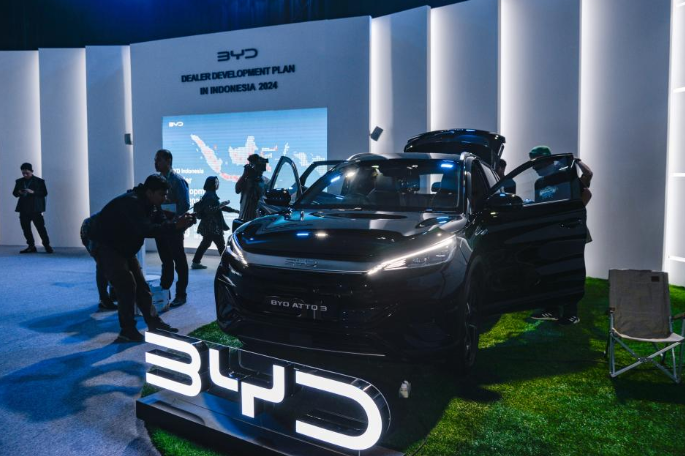
Chinese manufacturers have capitalized on this expansion, with BYD Indonesia now commanding over half of domestic EV sales since its 2024 market entry. Luther Panjaitan, Head of Public and Government Relations at BYD Indonesia, acknowledged tax incentives’ role in boosting sales while affirming price competitiveness regardless of policy outcomes. The company is currently establishing a West Java manufacturing facility with planned annual capacity of 150,000 EVs.
Industry analysts emphasize the strategic importance of sustained EV growth. Bhima Yudhistira, Founder of the Center of Economic and Law Studies, highlighted Indonesia’s need for Chinese technology transfer and nickel downstreaming investments. Meanwhile, Fabby Tumiwa, CEO of the Institute for Essential Services Reform, advocated for maintained incentives to reduce energy imports and alleviate trade balance pressures through increased EV adoption.