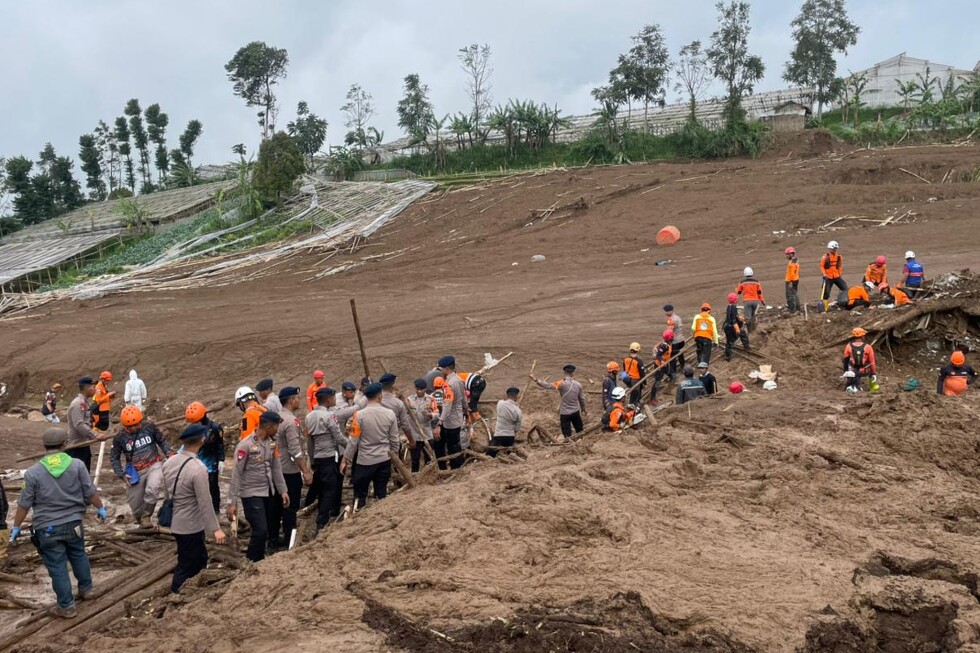
BANDUNG, Indonesia — A catastrophic landslide has unleashed devastation in West Java’s mountainous region, leaving at least 80 individuals missing—including 19 members of Indonesia’s elite marine corps—amid treacherous conditions that have hampered rescue operations. The disaster struck Pasir Langu village on the slopes of Mount Burangrang during predawn hours Saturday, swallowing a military training camp and approximately 34 residential structures under tons of mud and debris.
According to official statements released Monday, the landslide occurred during intensive rainfall that triggered slope failure across a massive 2-kilometer (1.2-mile) stretch of terrain. National Disaster Management Agency spokesperson Abdul Muhari confirmed 17 fatalities, with 11 victims identified and six others undergoing identification procedures. Among the confirmed dead are four marines from a specialized unit preparing for extended border duty along the Indonesia-Papua New Guinea frontier.
Navy Chief of Staff Adm. Muhammad Ali revealed that the 23-member marine unit was conducting rugged terrain training when the landslide obliterated their camp. The search operation has dramatically escalated from 500 to 2,100 personnel employing a multifaceted approach including manual digging, water pumps, drone surveillance, and excavators. However, rescue efforts face significant challenges due to unstable ground conditions and limited access through narrow roads that restrict heavy machinery deployment.
Yudhi Bramantyo, operation director of the National Search and Rescue Agency, described the scene as a landscape transformed into a mudscape reaching depths of 8 meters (26 feet) in some areas, with uprooted trees and massive rocks complicating recovery operations. Approximately 230 nearby residents have been evacuated to government shelters as authorities continue to battle both the elements and the unstable terrain.
The tragedy highlights Indonesia’s vulnerability to seasonal natural disasters, with the archipelago nation experiencing frequent flooding and landslides during the October-April rainy period due to its mountainous topography and dense population settlements in fertile flood plains.