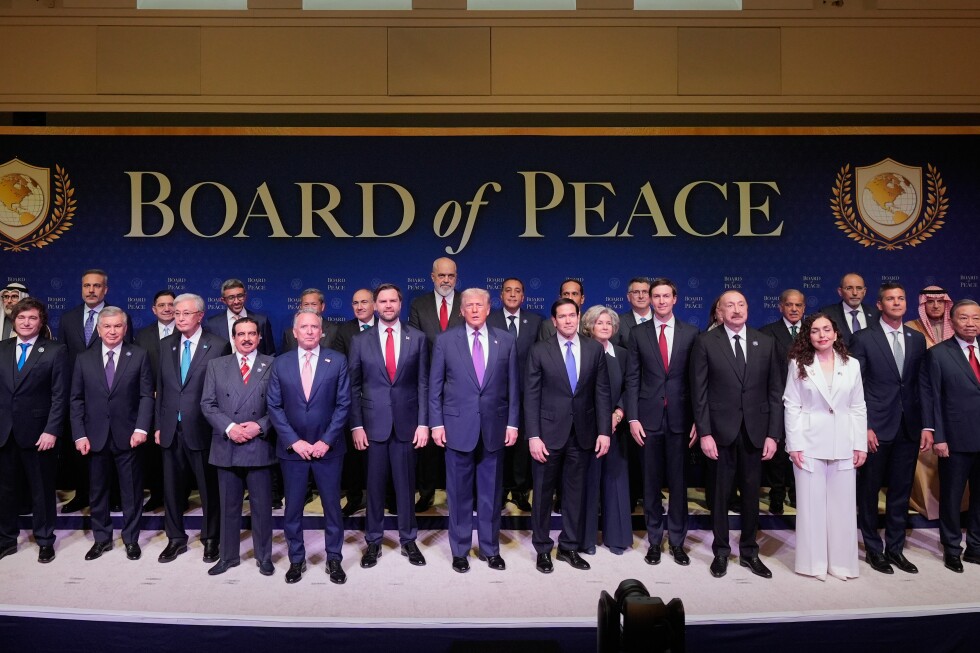
In a significant diplomatic convergence in Washington, Indonesian President Prabowo Subianto and U.S. President Donald Trump solidified a comprehensive trade agreement while attending the inaugural session of the Trump-led Board of Peace. The pact, characterized by the White House as a “great deal,” represents a major advancement in bilateral economic relations.
The arrangement establishes a reciprocal tariff structure wherein Southeast Asia’s largest economy will eliminate duties on most American products, while the United States will implement a fixed 19% tariff on Indonesian imports—mirroring rates applied to Cambodia and Malaysia. This framework, initially conceptualized last summer, achieved formalization during the Washington summit.
Complementing the government-level agreement, Indonesian and American corporations finalized eleven commercial deals valued at $38.4 billion. These encompass substantial purchases of U.S. agricultural commodities including soybeans, corn, cotton, and wheat, alongside cooperative ventures in critical mineral extraction, petroleum field rehabilitation, and semiconductor manufacturing joint ventures.
Concurrently, President Prabowo, leading the world’s most populous Muslim nation, reaffirmed Indonesia’s commitment to international stabilization efforts in Gaza by pledging 8,000 troops—or “more if necessary”—to a prospective peacekeeping force. This commitment constitutes a foundational element of Trump’s postwar reconstruction strategy for the region.
The trade negotiations incorporated strategic dimensions regarding critical minerals, with Washington seeking Indonesia’s commitment to relax export restrictions on these vital resources. This initiative aims to fortify U.S. manufacturing supply chains against disruptions and counter China’s dominant position in supplying minerals essential for defense systems and consumer electronics.
President Prabowo positioned Indonesia as a potential “bridge” and “honest broker” between competing global powers, alluding to the ongoing U.S.-China rivalry. The Board of Peace meeting also featured participation from Cambodia and Vietnam, with the latter engaged in ongoing trade discussions following U.S. imposition of 20% tariffs on Vietnamese exports.