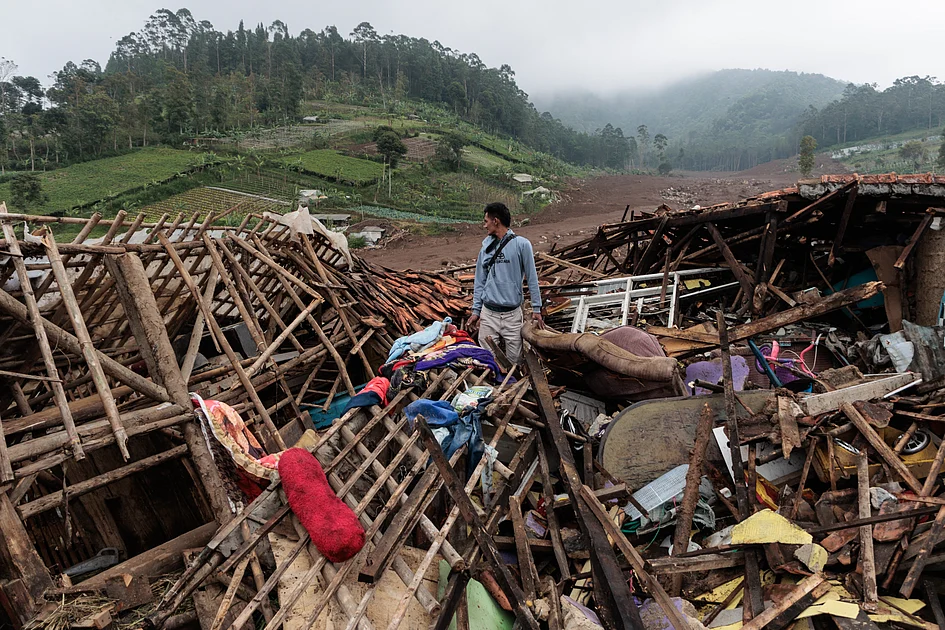
Rescue operations continue in Indonesia’s West Java province as the confirmed death toll from Saturday’s devastating landslide has climbed to 34, with approximately 32 individuals still unaccounted for. The catastrophic event occurred in the mountainous village of Pasirlangu when torrential rains triggered a massive debris flow that engulfed the community.
According to Abdul Muhari, spokesman for Indonesia’s national disaster mitigation agency, the identified victims have been released to their families for burial ceremonies. Despite the official missing persons count being revised downward, local authorities express concerns that the actual number of missing individuals may be substantially higher than current estimates.
Emergency responders face extremely challenging conditions as they comb through unstable terrain in West Bandung region on Java island. Teams are employing both manual search techniques and heavy machinery while exercising extreme caution due to continuing adverse weather conditions that heighten the risk of subsequent landslides.
The natural disaster has inflicted severe damage to more than 50 residential structures and forced the displacement of over 650 local inhabitants. West Java Governor Dedi Mulyadi has attributed the catastrophe to extensive vegetable plantations surrounding Pasirlangu, which may have compromised soil stability. The governor has committed to relocating affected residents to safer areas.
This tragic event echoes similar environmental disasters that have plagued the Indonesian archipelago, particularly during the annual rainy season from October through March. The government has previously highlighted the critical role of deforestation in exacerbating flooding and landslide risks, referencing last year’s catastrophic events on Sumatra island that resulted in approximately 1,200 fatalities and displaced more than 240,000 people.
Environmental experts emphasize that forest cover plays a vital role in absorbing rainfall and stabilizing soil through root systems, with vegetation loss significantly increasing regional vulnerability to landslides across Indonesia’s diverse topography.