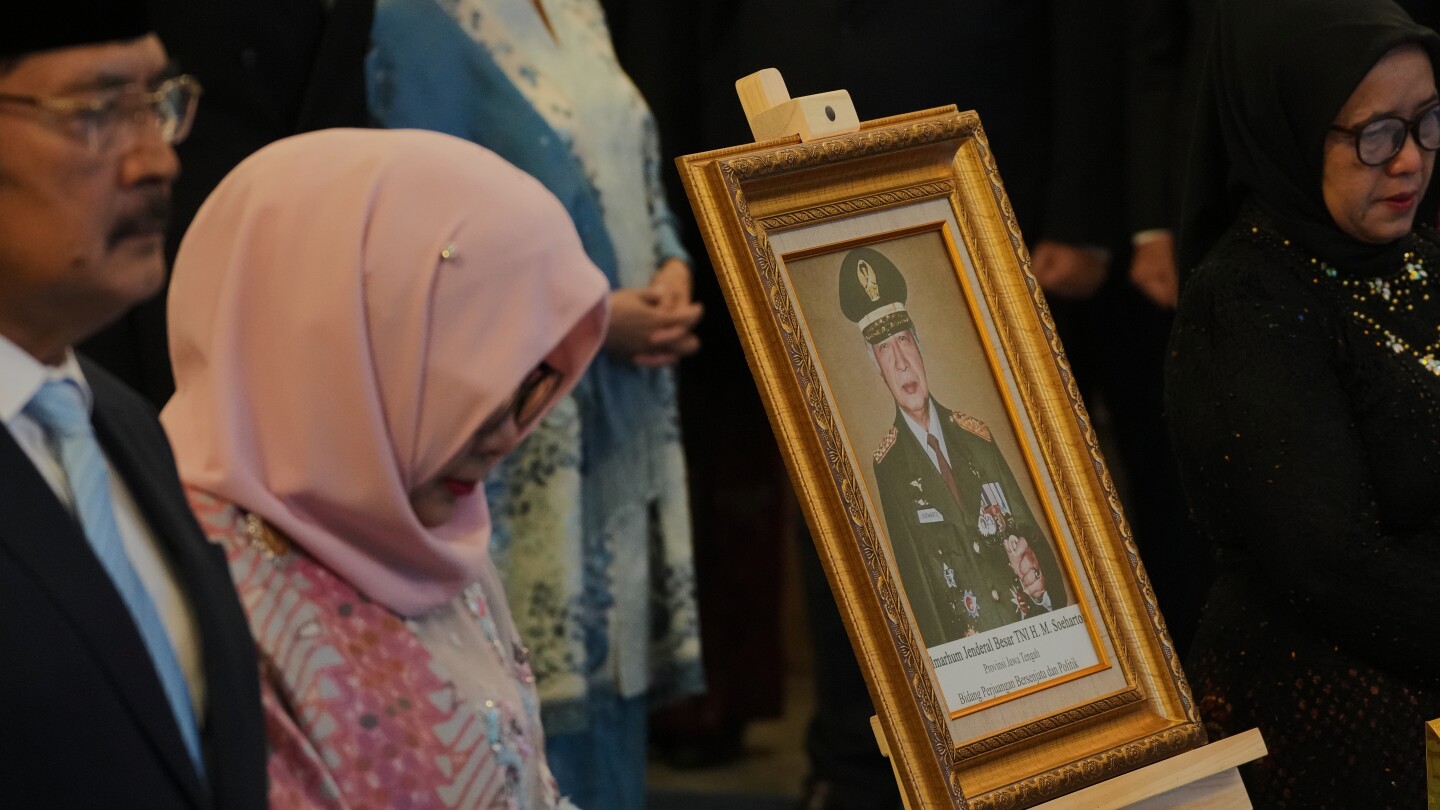
Indonesia’s recent declaration of former dictator Suharto as a national hero has ignited widespread controversy and condemnation. The decision, announced by President Prabowo Subianto during a televised ceremony on National Hero Day, has been criticized by human rights groups as an attempt to whitewash the severe abuses and corruption that marked Suharto’s 32-year authoritarian rule. Suharto, a Cold War ally of the U.S., was ousted in 1998 following mass protests amid the Asian financial crisis. His regime is accused of orchestrating the deaths of up to a million political opponents, including the mass killings of alleged communists in 1965-1966 and atrocities in regions like East Timor, Aceh, and Papua. Minister of Culture Fadli Zon defended the honor, citing Suharto’s role in Indonesia’s independence struggle and his economic achievements, while dismissing allegations of human rights violations as unproven. Survivors of Suharto’s regime, such as Bedjo Untung, who endured imprisonment and torture, expressed outrage, calling the decision deeply unjust. Critics argue that the move undermines Indonesia’s commitment to transitional justice and the 1998 reform movement. The debate highlights the nation’s struggle to reconcile its past with its aspirations for justice and democracy.
Indonesia declares late dictator Suharto a national hero, despite outrage from rights groups