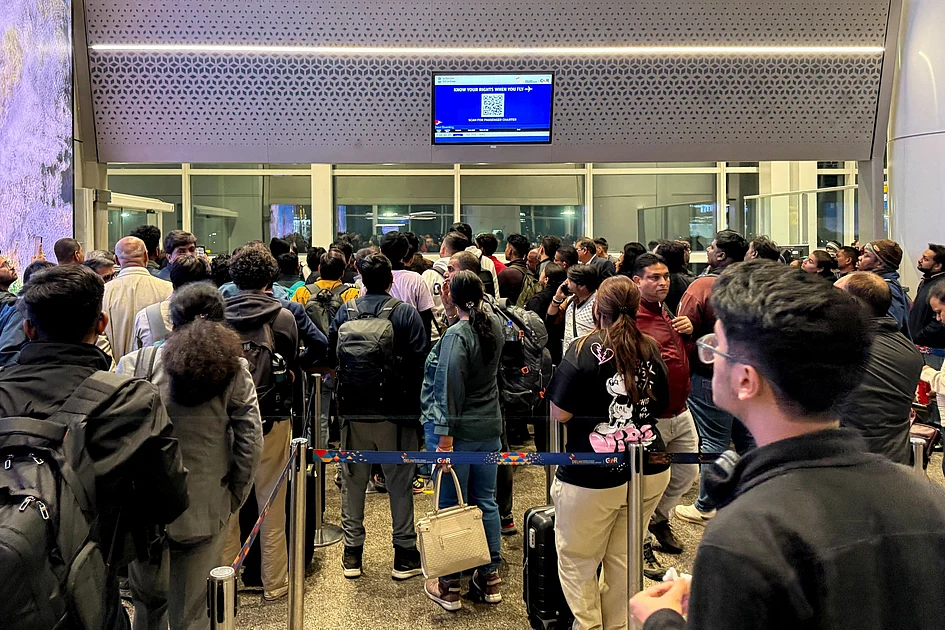
India’s aviation sector faces mounting turbulence as IndiGo, the nation’s dominant carrier with over 60% market share, canceled 175 flights on Thursday—marking the third consecutive day of severe operational disruptions. The crisis has stranded thousands of passengers across major hubs, with Mumbai recording 85 cancellations, Delhi approximately 95, Bengaluru 73, and Hyderabad 68, according to airport authorities and ANI reports.
The root cause traces back to stringent Flight Duty Time Limitations (FDTL) implemented by India’s Directorate General of Civil Aviation (DGCA) in January 2024. These revamped regulations mandate 48-hour weekly rest periods for pilots, reduce permitted night landings from six to two, and require airlines to submit quarterly fatigue reports. While designed to combat pilot fatigue, the rules have exposed critical staffing deficiencies at IndiGo.
Data reveals the scale of the challenge: of IndiGo’s 1,232 canceled flights in November, 755 were attributed to crew and FDTL constraints. Additional cancellations stemmed from Air Traffic Control failures (92), airport/airspace restrictions (258), and other factors (127).
The Federation of Indian Pilots contends IndiGo failed to adjust rosters adequately ahead of the November 1 implementation deadline. Meanwhile, the Airline Pilots’ Association of India (ALPA) has questioned whether the cancellations represent “a failure in planning or a calculated strategy,” suggesting airlines might be pressuring regulators to dilute safety norms for commercial gain.
This operational meltdown strikes at the core of IndiGo’s brand identity, built on punctuality and its famed “IndiGo Standard Time” reputation. The airline acknowledged making “calibrated adjustments” to schedules over the coming days while the DGCA investigates the situation and collaborates on solutions.