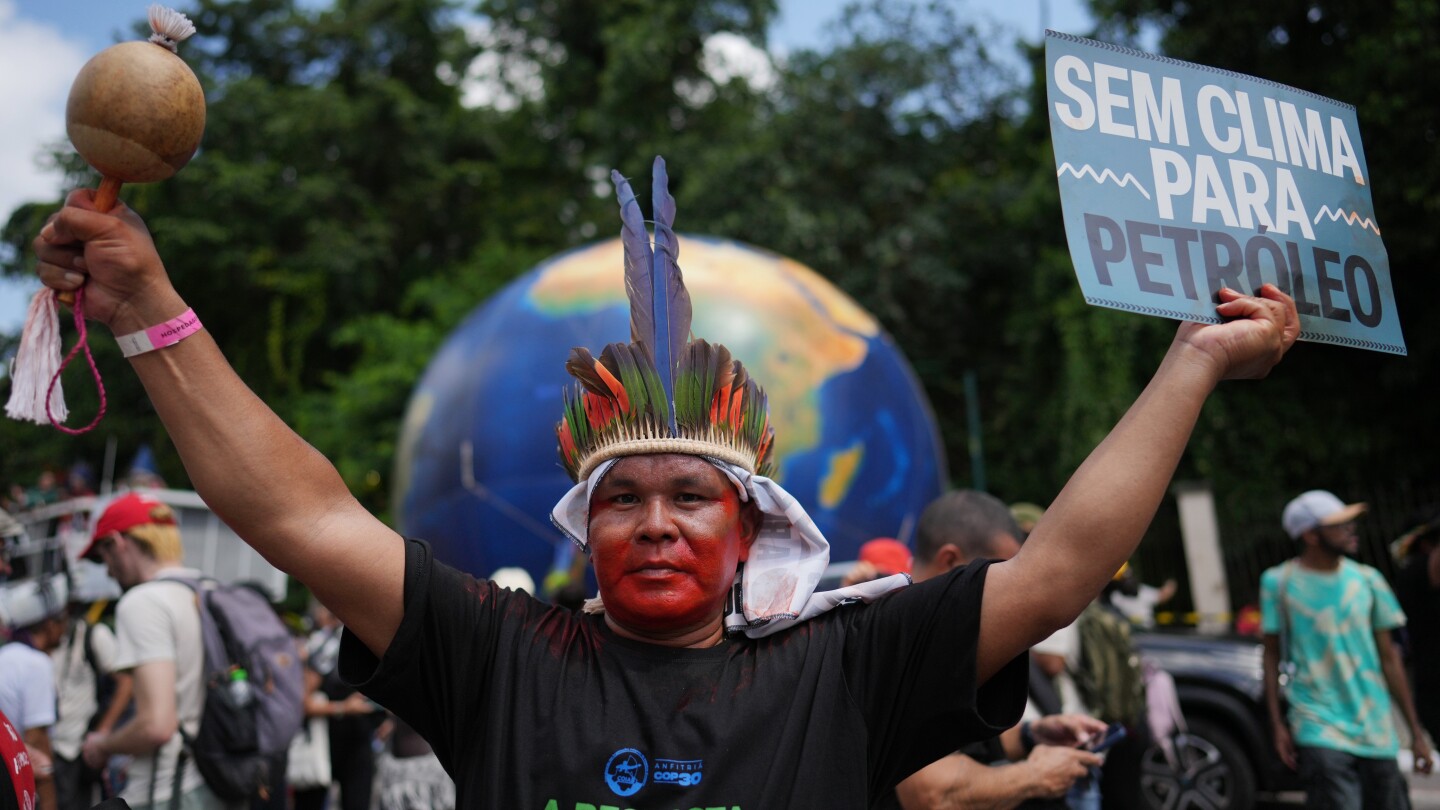
The streets of Belem, Brazil, echoed with the voices of Indigenous communities during the United Nations COP30 climate talks, held in the heart of the Amazon. While the conference aimed to amplify Indigenous representation like never before, many attendees left feeling that their voices were heard but not truly empowered. The summit, which concluded on Saturday, was hosted in a region critical to global biodiversity and climate regulation, yet Indigenous leaders expressed frustration over the lack of meaningful action and representation. Brazilian officials had hoped the event would empower local communities and protect the Amazon rainforest, a vital carbon sink. However, despite small victories, such as the explicit acknowledgment of Indigenous rights in the final text, the conference fell short on addressing critical issues like fossil fuel phase-outs and equitable participation. Indigenous leaders criticized the focus on symbolic gestures rather than substantive policy changes. Protests outside the venue highlighted the solidarity among Indigenous groups, with demonstrations breaking barriers—both literal and metaphorical—to ensure their voices reached the negotiation tables. While the conference marked a step forward in visibility, it underscored the need for genuine empowerment and action to address the climate crisis affecting Indigenous communities worldwide.
Indigenous people reflect on the meaning of their participation in COP30 climate talks