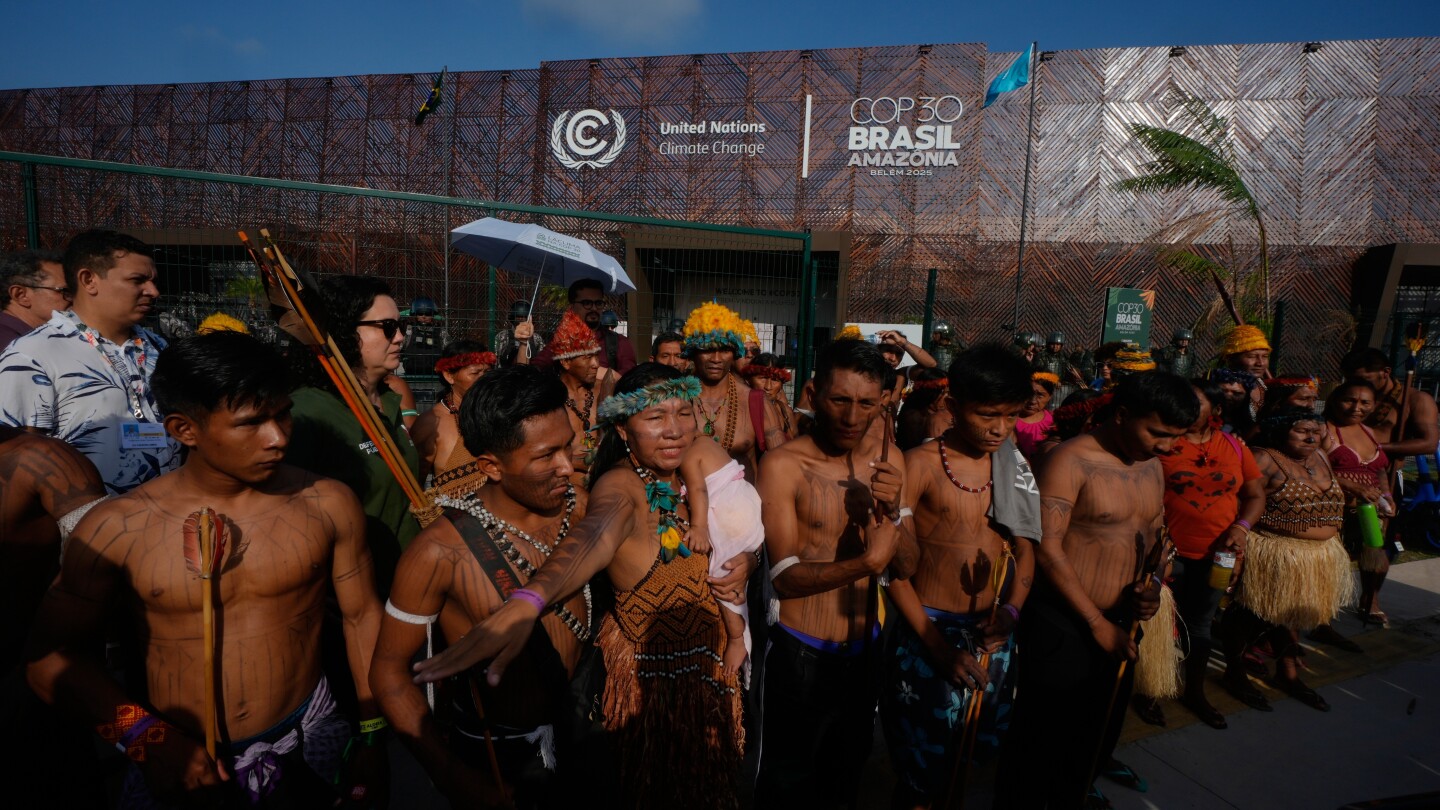
In Belem, Brazil, the 2025 United Nations Climate Change Conference (COP30) has become a platform for Indigenous communities to amplify their voices. On Friday, Indigenous protesters disrupted access to the main venue, demanding urgent action on climate change and greater respect for their rights. The peaceful demonstration, led by members of the Munduruku Indigenous group, blocked the entrance, forcing attendees to use a side door and causing significant delays. Cris Julião Pankararu, a representative of the Pankararu people, described the protest as ‘a scream’ against the violation of Indigenous rights and exclusion from decision-making processes. Brazilian military personnel prevented demonstrators from entering the site, while activists formed human chains around the venue. COP30 President André Corrêa do Lago engaged with the protesters, even holding a baby during discussions, before the entrance reopened at 9:37 a.m. The Munduruku group presented a list of demands to Brazilian President Luiz Inácio Lula da Silva, including the cancellation of commercial river development projects, a grain railway initiative, and deforestation carbon credits. They emphasized their role as protectors of the Amazon and climate, rejecting the destruction of their lands for corporate gain. Conference CEO Ana Toni highlighted the inclusivity of COP30, with over 900 Indigenous participants, a record number. However, activists like Harjeet Singh expressed frustration over the lack of progress in past COPs, calling for tangible actions rather than mere discussions. Meanwhile, Indigenous leaders from the Ecuadorian Amazon warned of an irreversible tipping point due to oil drilling, mining, and agribusiness expansion. They urged for direct climate finance and stronger protections for Indigenous rights and nature. The protests underscore the growing urgency for global climate action and the need to center Indigenous voices in environmental decision-making.