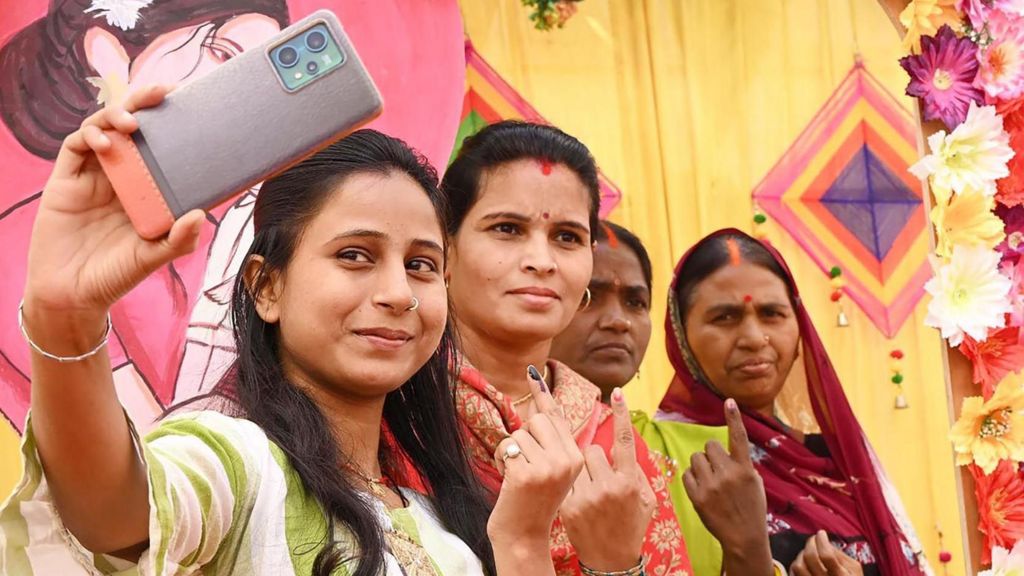
In India, the distribution of freebies has become a cornerstone of electoral strategy, particularly in the lead-up to elections. From televisions and bicycles to gold ornaments, political parties have employed a variety of handouts to sway voters, blurring the lines between welfare economics and populism. Recently, cash transfers targeting women have emerged as a particularly effective tactic. For instance, a ₹10,000 ($112) cash handout to women in Bihar, India’s poorest state, is credited with contributing to a sweeping victory for Prime Minister Narendra Modi’s alliance in the state’s recent election. This strategy has also been replicated in other states, such as Maharashtra, where Modi’s party launched similar women-oriented financial schemes. Opposition parties have followed suit, promising comparable initiatives in their election campaigns. Economists like Jean Drèze argue that such giveaways, while sometimes wasteful, are often the only means by which India’s poor can extract promises from their political representatives. However, Modi himself has warned against the dangers of what he terms ‘revdi culture,’ likening election freebies to the frivolous distribution of sweets. The Indian Supreme Court has also sought to curb the distribution of ‘irrational freebies’ during elections. Despite these warnings, the practice of offering unaffordable handouts as electoral bait continues to dominate Indian politics. Research from brokerage Emkay Global highlights the fiscal pressures this creates. Bihar, for example, announced pre-election schemes amounting to 4% of its GDP, exceeding its capital outlay and diverting funds from long-term, job-creating investments. This trend is not isolated; 21 of India’s 29 states have exceeded the mandated 3% fiscal deficit ceiling, largely due to election-driven spending. The unsustainable nature of such populism is evident in Maharashtra, where the Ladki Bahin financial assistance scheme led to a 0.4% increase in the state’s deficit, forcing the government to roll back some promises post-election. The Reserve Bank of India (RBI) has flagged the rising burden of subsidies on state-level debt as a key concern. While overall state debt has declined to 28.5% of GDP, it remains well above the recommended 20% threshold, with subsidies for farm loan waivers, free electricity, and cash transfers exacerbating the issue. The RBI has urged states to rationalize their subsidy outgoes to avoid crowding out productive expenditure. Despite these warnings, the success of freebies in Bihar and the upcoming state elections in Tamil Nadu, Kerala, and West Bengal suggest that this trend is unlikely to abate. As Emkay Global economists Medhavi Arora and Harshal Patel noted, ‘This election outcome reinforces the freebie wave that has swept states in the last two years, and with more elections on the horizon, one can expect this race to the bottom to continue.’
India’s politicians are dishing out election freebies – but can states afford them?