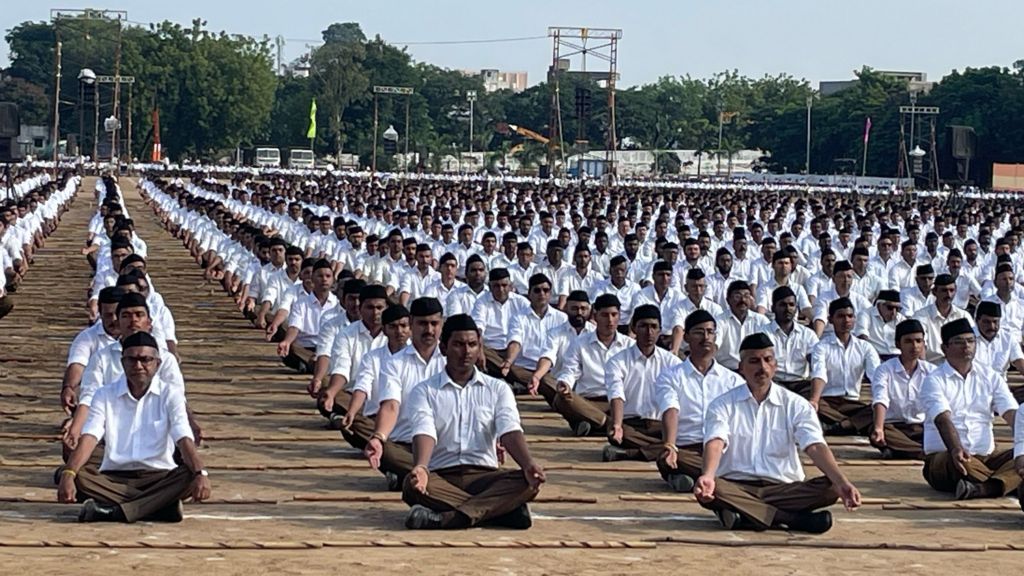
The Rashtriya Swayamsevak Sangh (RSS), a prominent Hindu nationalist organization and a key ideological force behind Indian Prime Minister Narendra Modi’s rise to power, celebrated its 100th anniversary with a grand event attended by thousands of volunteers. The centenary celebrations, held at the RSS headquarters in Nagpur, saw 3,800 participants donning the organization’s iconic khaki uniforms and performing synchronized exercises in a military-like formation. RSS chief Mohan Bhagwat addressed the gathering, touching on topics ranging from India’s recent conflict with Pakistan to climate change and economic inequality. He emphasized interdependence among nations, echoing Modi’s advocacy for self-reliance in the face of global challenges. Despite its claims of being a non-political entity, the RSS wields significant influence in Indian politics, particularly through its ties to the ruling Bharatiya Janata Party (BJP). Founded in 1925 by Keshav Baliram Hedgewar, the RSS has grown into the world’s largest volunteer organization, though its membership numbers remain undisclosed. Critics accuse the RSS of promoting divisive ideologies, particularly its alleged Islamophobia and exclusionary stance toward non-Hindus. The organization’s history is marred by controversies, including its involvement in the 1992 demolition of the Babri Mosque, which triggered nationwide riots. While the RSS has recently sought to soften its image through public outreach, minority communities remain skeptical of its core belief that India is primarily for Hindus. Prime Minister Modi, a former RSS member, lauded the organization during the celebrations and released commemorative stamps and coins, drawing criticism from opposition parties.