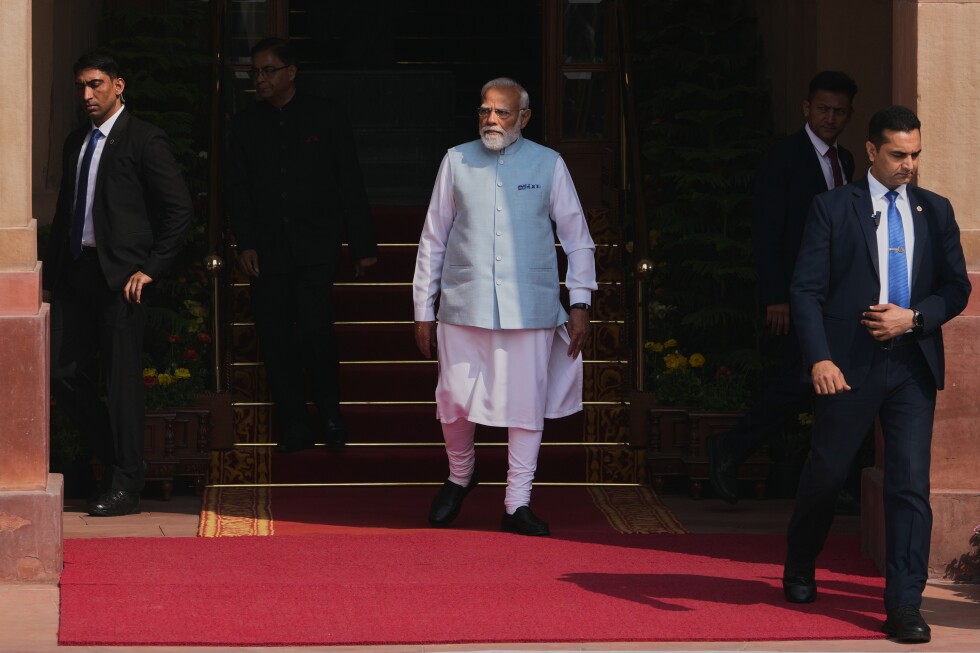
Indian Prime Minister Narendra Modi arrived in Jerusalem on Wednesday for a pivotal two-day diplomatic mission aimed at deepening security, economic, and technological cooperation with Israel. The visit marks a significant moment in bilateral relations as both nations seek to reinforce their strategic partnership amid ongoing regional instability.
Modi’s itinerary includes high-level discussions with Israeli Prime Minister Benjamin Netanyahu and President Isaac Herzog, followed by an address to the Israeli parliament. The Indian leader characterized the relationship as ‘a robust and multifaceted Strategic Partnership’ that has ‘significantly strengthened in recent years’ in a pre-visit statement on social media platform X.
Netanyahu, who previously described himself and Modi as ‘personal friends,’ emphasized the importance of economic and security collaboration, particularly in emerging technologies including artificial intelligence and quantum computing. The Israeli leader noted both countries are building ‘an axis of nations committed to stability and progress.’
The timing of Modi’s visit provides Israel with valuable international backing as it faces deteriorating relations with traditional allies following the Gaza conflict that erupted in October 2023. India represents Israel’s second-largest trading partner in Asia, with bilateral trade reaching $3.62 billion during the 2025 fiscal year according to India’s Commerce Ministry.
This diplomatic engagement continues the momentum established during Modi’s groundbreaking 2017 visit—the first by an Indian prime minister to Israel—and Netanyahu’s reciprocal trip to India the following year. The growing partnership signals a notable evolution in India’s foreign policy, which historically supported Palestinian causes and only established full diplomatic relations with Israel in 1992.
While Modi quickly expressed solidarity with Israel following Hamas’ October 2023 attack, India recently joined over 100 nations in criticizing Israel’s expanded measures in the occupied West Bank that further weaken the Palestinian Authority’s limited governance capabilities.