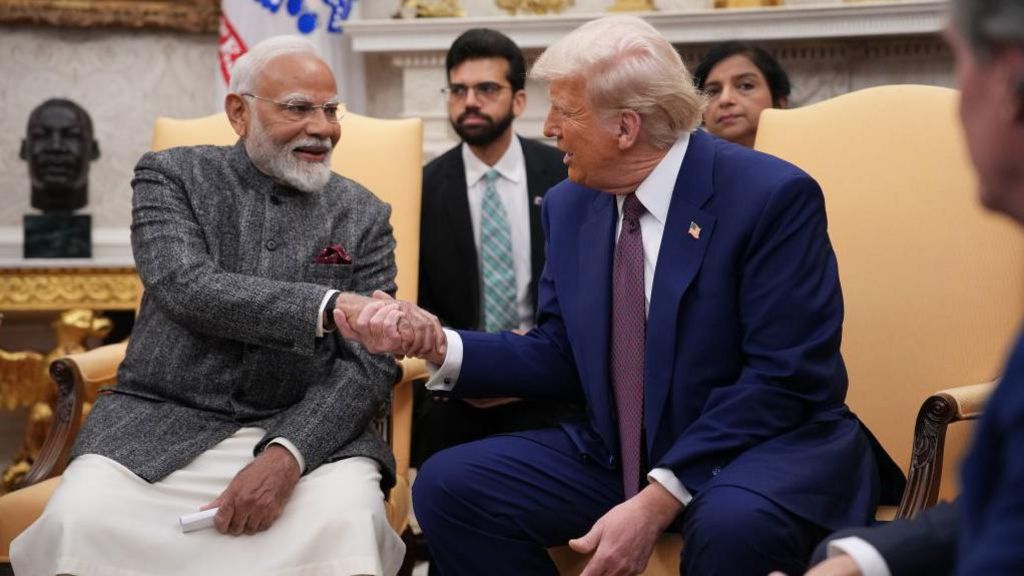
India, a key exporter of garments, shrimp, and gems and jewellery to the United States, has witnessed a dramatic decline in its goods exports to its largest foreign market. Data reveals a sharp 20% drop in September alone, with a staggering 37.5% decline over the past four months, as the impact of steep US tariffs intensifies. The tariffs, which include a 50% levy on Indian goods and an additional 25% penalty for India’s continued oil purchases from Russia, took full effect in August. Ajay Srivastava of the Global Trade Research Initiative (GTRI) noted, ‘The US has become India’s most severely affected market since the tariff escalation began.’ Labour-intensive sectors such as textiles, gems and jewellery, engineering goods, and chemicals have borne the brunt of these measures, suffering significant losses. The decline in exports has also exacerbated India’s trade deficit, which surged to a 13-month high of $32.15 billion in September. While improved trade with countries like the UAE and China has partially offset the US export slump, negotiations between India and the US remain fraught with challenges. Talks resumed last month after a prolonged stalemate, with an Indian delegation currently in the US. Despite claims by former US President Donald Trump that Indian Prime Minister Narendra Modi agreed to halt Russian oil imports, the Indian foreign ministry described discussions as ‘ongoing,’ emphasizing US interest in deepening energy cooperation. Key trade disputes, particularly over access to India’s agriculture and dairy sectors, persist. Washington views India’s farm sector as a lucrative untapped market, but New Delhi has staunchly defended its protectionist stance, citing food security and the livelihoods of millions of small farmers. Bilateral trade between the two nations reached $190 billion in 2024, with ambitious targets to more than double this figure to $500 billion.