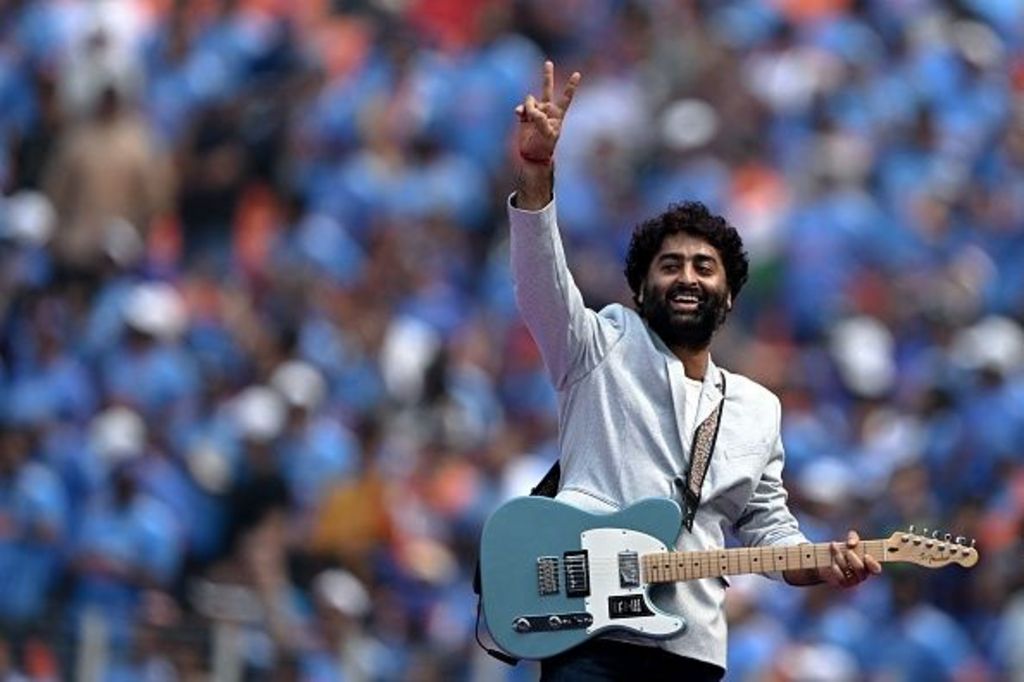
In a seismic shift for India’s music industry, Bollywood’s most recognizable voice has announced his departure from playback singing. Arijit Singh, whose emotionally resonant vocals have defined contemporary Indian cinema for over a decade, declared via Instagram that he would no longer accept new film singing assignments, effectively ending an era in Bollywood music.
The 38-year-old vocalist, whose collaborations span from Ed Sheeran to AR Rahman, characterized his journey as “wonderful” while providing no specific reasons for his departure. Industry reports indicate Singh will honor existing commitments while pivoting toward independent musical projects beyond commercial cinema.
Singh’s decision comes at an unprecedented career peak—fresh from sold-out performances at London’s Wembley Arena, a rare achievement for Indian playback artists. His distinctive bruised-yet-buttery vocal quality became the auditory backdrop for millions, articulating heartbreak, longing, and reconciliation through chart-topping soundtracks.
The artist’s relationship with fame has always been complex. Despite commercial dominance, Singh consistently avoided celebrity culture—rarely granting interviews, skipping award ceremonies, and maintaining residence in his West Bengal hometown rather than industry hubs. His public appearances typically feature hoodie-concealed anonymity, a stark contrast to his stadium-filling celebrity.
Singh’s musical origins trace to Jiaganj, where born into a family of classical musicians, he received early training in tabla and vocals. His first teacher, Birendra Prasad Hazari, recalled extraordinary talent evident even in toddlerhood. Despite an early setback on reality show Fame Gurukul in 2005, Singh persisted through years of industry marginalia before achieving explosive success with 2013’s “Tum Hi Ho” from Aashiqui 2.
That ballad revolutionized Bollywood romance music, replacing spectacle with vulnerability and becoming a national phenomenon that transcended its source film. The subsequent years brought record-breaking output across multiple languages and collaborations with every major composer, though recent criticism noted vocal homogeneity across projects.
Singh had previously acknowledged reducing his workload, expressing discomfort with ubiquitous playback and noting artistic exhaustion from recording hundreds of annual songs. His selective recent output and focus on independent work foreshadowed this transition.
Fans now speculate whether this move reflects artistic evolution, rejection of commercial pressures, or personal rediscovery. Regardless, Singh’s voice remains indelibly woven into India’s cultural fabric—a testament to an artist who redefined Bollywood music while remaining profoundly ambivalent about the fame it brought.