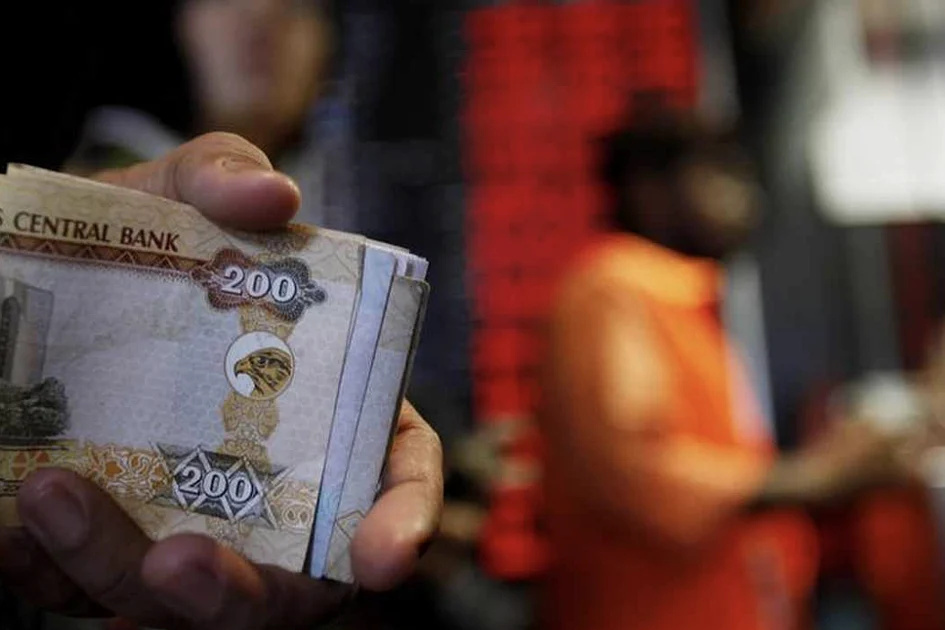
The Indian rupee is approaching a psychologically significant threshold of 25 against the UAE dirham, creating favorable conditions for expatriate workers across the Gulf Cooperation Council (GCC) region. This currency movement signals potential gains for remittance flows as overseas earners benefit from improved exchange rates.
Current trading positions the rupee at approximately 90.87 against the US dollar, translating to a UAE dirham rate between 24.70 and 24.75 rupees. Market analysts project further depreciation potentially reaching 92 rupees per dollar, which would push the dirham beyond the unprecedented 25-rupee benchmark. This development would substantially increase the rupee value of monthly transfers sent home by millions of GCC-based workers.
The Reserve Bank of India (RBI) has indicated a flexible approach to currency management. Governor Sanjay Malhotra clarified that the central bank does not target specific exchange levels, focusing instead on curbing excessive volatility rather than defending psychological thresholds. This policy stance reflects India’s commitment to market-driven exchange rates while maintaining financial stability.
Several factors contribute to the rupee’s downward trajectory, including global dollar strength, sustained foreign investor outflows, and widening external imbalances. The currency recorded its most significant annual decline in three years during 2025, falling 4.72 percent to close at 89.87 against the dollar—the weakest performance since 2022.
Economists note that unlike the 2022 currency crisis driven by Federal Reserve rate hikes, the current depreciation occurs despite a 9.5 percent decline in the dollar index. This divergence suggests domestic and regional factors are increasingly influencing the rupee’s trajectory. IDFC First Bank economist Gaura Sen Gupta describes the situation as “largely a capital-flow story” with the RBI adopting a more pragmatic approach to currency management.
Despite short-term pressures, India’s macroeconomic fundamentals remain robust. The country maintains substantial foreign exchange reserves of approximately $690 billion, coupled with high growth rates and relatively manageable inflation. The RBI governor noted that the rupee’s average annual depreciation of about 3 percent aligns with historical patterns given India’s inflation differential with advanced economies.
For GCC expatriates, the currency movement translates to tangible financial benefits. Each incremental decline in the rupee’s value amplifies remittance purchasing power, potentially generating thousands of additional rupees annually for families managing education, housing, and healthcare costs in India.